


Subwoofer with Speaker article
Subwoofer with Speaker for Beginners: A Complete Guide
You don't need to understand crossovers and phase before you start — here's the calm, one-step-at-a-time way to add a subwoofer to your speakers.
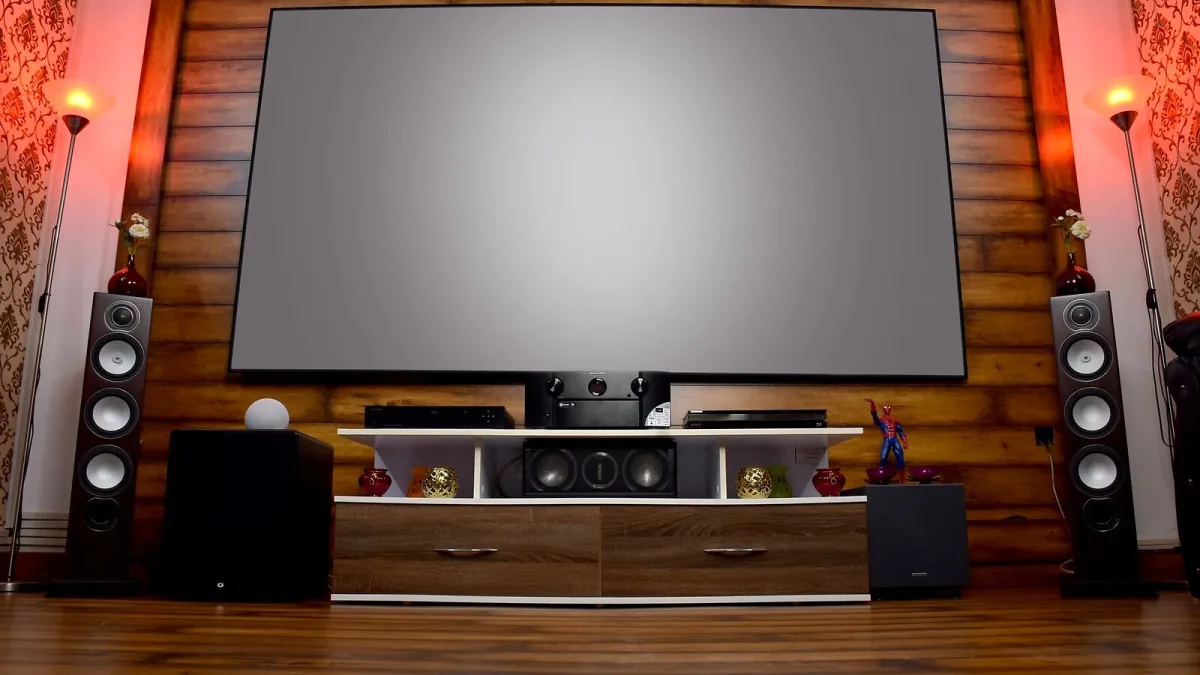
If the words "crossover," "phase" and "LFE" already have you reaching for the manual, take a breath — you don't need to understand all of it before you start. A subwoofer is simply a speaker built to handle the very lowest notes, the ones your existing speakers struggle to reproduce on their own. This guide takes it slowly, one decision at a time, so a first attempt goes smoothly rather than becoming an evening of frustration.
Do You Actually Need One Yet?
If your speakers already sound thin or hollow on bass-heavy music, or dialogue in films feels loud while explosions feel weedy, that's usually the sign. If you're mostly happy with how things sound now, there's no rush — a subwoofer is an addition, not a fix for a system that's already working for you.
The Simplest Way to Get Started
You don't need to buy the most feature-packed model on the shelf. A straightforward one with a single volume knob and a basic crossover dial is genuinely enough to learn on.
- Choose one with a plug-and-play connection. If your amplifier or receiver has a socket clearly marked for a subwoofer, buy a model that matches it — that one cable is all you'll need to begin.
- Put it somewhere sensible for now. Near your existing speakers, out of the walkway, is a perfectly good starting spot. You can always move it later once your ears know what to listen for.
- Turn the volume down low before switching on. It's much easier to bring the level up gradually than to work out why something sounds overwhelming.
- Play something familiar. A song you know well, at a comfortable volume, tells you far more than a test tone ever will.
Where to Put It When You're Not Sure
Low notes travel differently to the rest of the music, so a subwoofer is more forgiving about placement than a normal speaker. A sensible first spot is near — but not directly behind — one of your main speakers. If the bass sounds muddy or boomy, try moving it a foot or two along the same wall before assuming anything is faulty. Small changes in position often make a bigger difference than any dial on the unit itself.
One Knob at a Time: Getting the Level Right
Resist the urge to set everything at once. Start with the volume alone: bring it up slowly until you can just notice it's there, then back it off slightly. A well-set subwoofer should support the music rather than draw attention to itself — if you can immediately point at the box and say "that's where the bass is coming from," it's usually turned up a little too far. Once the level feels right, you can move on to the crossover dial, which simply decides how much of the low end your subwoofer takes over versus your main speakers; a middle setting is a safe place to begin.
Common Worries, Answered
Worried about damaging your speakers? You won't, by experimenting with these controls — they're designed to be adjusted. Worried about getting it "wrong"? There's no single correct setting; a subwoofer that sounds good to you, on the music you actually listen to, is a subwoofer that's set up correctly. And if something sounds distinctly off — buzzing, rattling, or a hum when nothing's playing — that's worth checking with the manual before assuming you've made a mistake with the settings.
What You'll Need Before You Start
You won't need any special tools. Check the box for the cable that matches your amplifier's socket — most subwoofers include one, but it's worth confirming before the shop closes for the day. You'll also want a bit of floor or shelf space near your existing speakers, and access to the mains for its own power lead, since almost every home subwoofer has a built-in amplifier and plugs in separately from the rest of the system. That's genuinely everything. No extra boxes, no special software, nothing to install.
How You'll Know It's Working
You should hear a gentle change in the music's foundation, not a dramatic transformation. Kick drums and basslines will have more weight; film soundtracks will feel fuller during quiet, tense moments as well as loud ones. If you switch the subwoofer off and the music suddenly feels thin, and switching it back on restores that fullness without anything sounding boomy or separate, you've set it up well. That's the whole test — trust it over any dial reading.
Ready for the Next Step
Once the basics feel comfortable, our full setup guide covers phase, precise crossover placement and room correction for when you want to refine things further. If you're still deciding which model to buy in the first place, our buyer's guide explains what's genuinely worth paying for, and our list of common mistakes is a quick way to double-check you haven't picked up any bad habits along the way. Take it one setting at a time, trust your own ears, and you'll get there.





Comments