


Subwoofer with Speaker article
Common Subwoofer with Speaker Mistakes to Avoid
Most bad-bass complaints aren't about the box itself — they're about setup habits. Here's the honest list of what usually goes wrong.
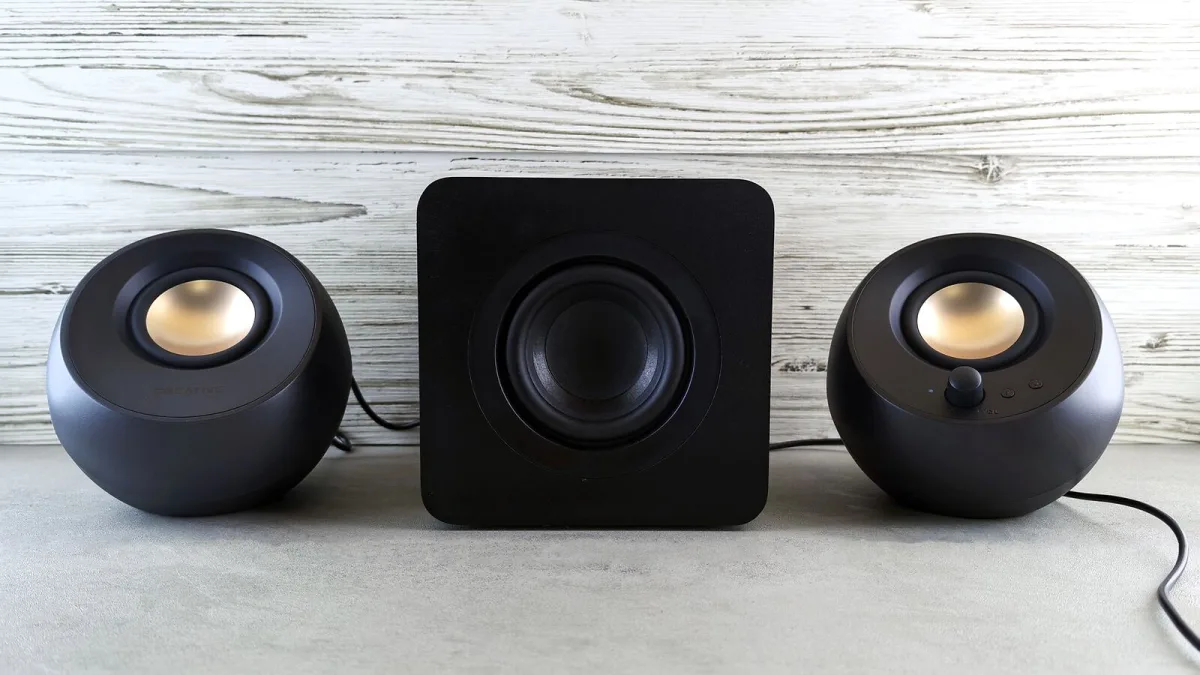
Most subwoofer complaints I hear aren't about the box itself — they're about how it was set up. A few small habits are responsible for nearly every "why does my bass sound awful" question I get asked. Here's the honest list, so you can skip the trial and error.
Mistake 1: Turning the Level Up to "Fix" a Problem
If the bass sounds thin, weak or missing, the instinctive move is to turn the subwoofer up. Nine times out of ten that just trades one problem for a worse one — now it's too loud, and the actual cause, usually a crossover or placement issue, is still sitting there underneath. Turn it down first and diagnose properly before touching the gain again.
Mistake 2: Leaving Two Crossovers Fighting Each Other
If your receiver is already managing bass redirection, the subwoofer's own low-pass filter should be switched to LFE, bypass, or its highest setting. Leave both active and you're applying two filters to the same signal, which can create a dip or an odd hump right around the crossover point — and it's genuinely one of the hardest problems to diagnose by ear if you don't know to look for it.
Mistake 3: Choosing Placement for Looks, Not Sound
The tidiest corner in the room is rarely the best-sounding spot. Corners reinforce bass, which sounds impressive for about a week and then starts to feel boomy and one-note. Walk the room while it's playing before you commit to a permanent position — five minutes now saves months of low-level irritation later.
Mistake 4: Ignoring the Phase Switch
It looks like an afterthought — a small 0°/180° switch — but it genuinely changes whether the subwoofer's output adds to or partially cancels your main speakers around the crossover. Leaving it on the factory default without checking both settings from your actual listening seat means you might be running with weaker bass than the room is capable of, for no reason at all.
Mistake 5: Setting the Crossover Too High
Push the crossover too high and low frequencies stop being neutral and start becoming locatable — you can point at the box, which rather defeats the purpose. It also hands the subwoofer frequencies your main speakers were handling perfectly well already, which is where that "detached" sound comes from. Bring the crossover down until the transition disappears.
Mistake 6: Judging It on One Song
A single bass-heavy track will make almost any setting sound dramatic. Test across a few genres and a film or two — quiet dialogue scenes reveal a poorly set subwoofer just as clearly as a loud action sequence does, sometimes more so, because there's nothing else masking the problem.
Mistake 7: Assuming a Bigger Subwoofer Fixes Bad Placement
A larger, more powerful subwoofer in the wrong spot is still in the wrong spot — it'll just be a louder version of the same problem. Sort placement, crossover and phase first, on whatever unit you've already got, before deciding the answer is more money and a bigger box.
Mistake 8: Never Revisiting the Settings After Moving Anything
New sofa, new rug, a bookcase moved to the other wall — any of it can shift how bass behaves in the room, because low frequencies interact heavily with everything solid nearby. A setting that sounded perfect for a year can drift once the room's contents change, even though the subwoofer itself hasn't moved an inch. It costs nothing to recheck level, crossover and phase after a rearrange, and it's an easy step to forget entirely.
Mistake 9: Buying Based on the Loudest Demo in the Shop
Shop demos are almost always tuned to impress on the shop floor, which usually means more bass than you'd actually want at home, in a much larger and more echoey space than your living room. A subwoofer that sounds thrilling in a showroom can sound bloated and unfocused once it's sitting in a normal-sized room with soft furnishings soaking up the excess. Judge it on your own room, not theirs.
The Bottom Line
Nearly every one of these comes back to the same thing: check the basics before assuming the equipment is at fault. If you want the full step-by-step process done properly from the start, our setup guide covers it in order, and our beginner's guide is the gentler version if you're just starting out. Shopping for a replacement instead? See our buyer's guide and our round-up by budget before you spend anything.





Comments