


Disco Lights article
Disco Lights Explained: Features, Types and Tips
From the classic mirror ball to fully programmed DMX rigs, here is what disco lights actually are, how they're controlled, and how to tell the types apart.
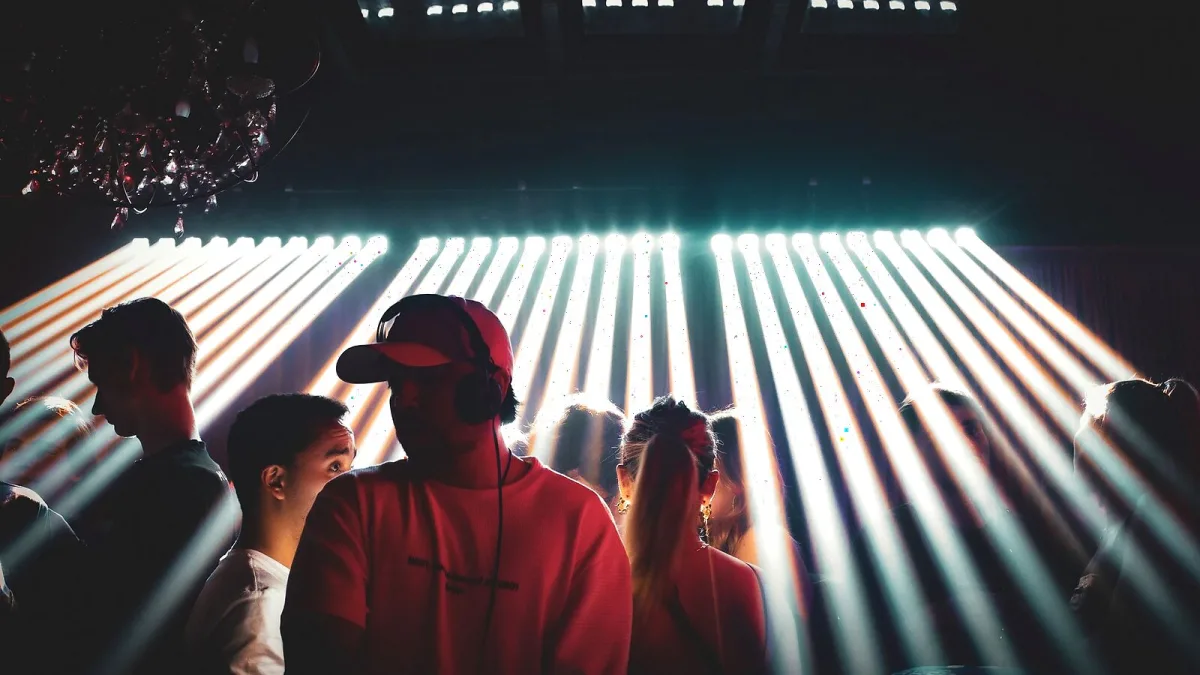
Say “disco lights” and most people picture one thing: a spinning mirror ball throwing dots of light around a room. Fair enough — it is the icon. But that image barely scratches the surface of what is actually a huge, fast-moving category of gear, from a cheap sound-reactive LED gadget to a fully programmed DMX rig lighting up a club. Here is the full picture, decoded properly.
What Do We Actually Mean by “Disco Lights”?
Here is the first thing worth knowing: “disco lights” is not one standardised product, it is a catch-all term. It covers mirror balls, rotating LED effects, derby or moonflower fixtures, strobes, lasers, UV lights, colour washes and full moving-head systems — all sold under the same loose banner. That is exactly why comparing products gets confusing fast: a compact party light and a professional DMX-controlled moving head might both be marketed the same way, despite doing very different jobs.
The Icon: The Mirror Ball
The mirror ball is the most recognisable disco lighting symbol there is, though it actually predates the disco era — it was already knocking around entertainment venues before disco music took over dance floors in the 1970s and made it iconic. Here is the bit people often get wrong: the ball itself makes no light at all. It is purely reflective. Point a spotlight at it, and its hundreds of tiny mirrored facets scatter that beam into a room full of moving points. No spotlight, no effect — just a very sparkly, motionless ball.
The Modern Toolkit: LEDs and Beyond
Most current fixtures run on LEDs rather than the older lamp-based lights, and that shift matters: LEDs allow proper RGB or RGBW colour mixing (that fourth “W” adding a dedicated white channel for cleaner colours), run cooler, and use noticeably less power. That said, more LEDs does not automatically mean a better light — optical design and beam angle affect the actual usable output far more than a spec sheet's LED count.
Types of Disco Light, Decoded
| Type | What it actually does | Where it shines |
|---|---|---|
| Mirror ball | Reflects a spotlight into scattered moving points | Classic disco atmosphere |
| Rotating LED effect | Projects moving multicoloured patterns | Home parties, small DJ setups |
| Derby / moonflower | Sends multiple beams radiating outward | Dance floors, mobile DJ rigs |
| LED PAR | Broad, often static colour wash | Room ambience, uplighting |
| Moving-head spot | Focused, movable beam, often with gobos | Clubs, programmed shows |
| Moving-head wash | Sweeps broad colour across a space | Larger stages and dance floors |
| LED bar | Linear washes, chases, pixel effects | Backdrops, wall washing |
| Strobe | Rapid flashes | Musical peaks, dramatic moments |
| Laser | Narrow, concentrated beams | Large venues, aerial effects |
UV Light: The Odd One Out
Worth a special mention: UV or “black” light does not add colour to a room the way everything else on this list does. It makes fluorescent materials glow — white clothing, certain paints, some drinks and decorations — while leaving everything else looking almost normal. It only works alongside the right materials, which is why it tends to get paired with a themed night rather than used as a general-purpose fixture on its own.
How They're Controlled
Whatever type of disco lights you're looking at, the way they're triggered matters as much as what they look like. Automatic mode runs built-in programs on its own; sound-active mode reacts to a microphone or audio input (worth knowing: this responds to volume and transients, not to the actual musical structure, so don't expect it to follow a drop the way a human operator would); remote control gives basic manual control; and DMX, the industry-standard lighting protocol, lets a controller address individual functions — colour, brightness, pan, tilt, strobe rate — on every fixture at once. Bigger shows increasingly run from software or a console for fully programmed cues.
Haze, Fog and Why Beams Suddenly Appear
Ever wondered why a laser looks invisible in one room and dramatic in another? That is haze or fog doing its job — scattering light so beams become visible in the air, rather than only landing where they hit a surface. Neither produces light itself; they simply reveal the light that is already there. Used properly, with decent ventilation and venue sign-off, haze turns a flat lighting setup into something with real depth.
Worth Taking Seriously: Safety
Strobes can trigger discomfort or seizures in people with photosensitive epilepsy, so their use should be flagged or avoided where venue policy requires it. Lasers demand real caution too — never pointed at audiences, vehicles or reflective surfaces that could redirect the beam, and always used within local regulations. None of this should put you off; it is just the responsible baseline for anyone running lighting beyond a living-room party.
Getting Started
Ready to actually buy something? Our buyer's guide breaks down what genuinely matters when choosing between fixture types, and our beginner's guide walks through setting up your very first light step by step. If you want a shortlist rather than a spec sheet, our best disco lights for the money covers what suits different budgets and setups.
The Bottom Line
“Disco lights” will keep meaning very different things depending on who is selling them, but now you know the categories underneath the marketing: reflective versus light-emitting, static versus moving, sound-triggered versus fully programmed. Once you can name what you are actually looking at, choosing the right one gets a whole lot easier.



Comments