


Behringer Wing article
Behringer Wing Explained: Features, Types and Tips
The Behringer Wing rethinks how a digital console organises itself. Here's what it is, how the family breaks down, and what to know before you dive in.
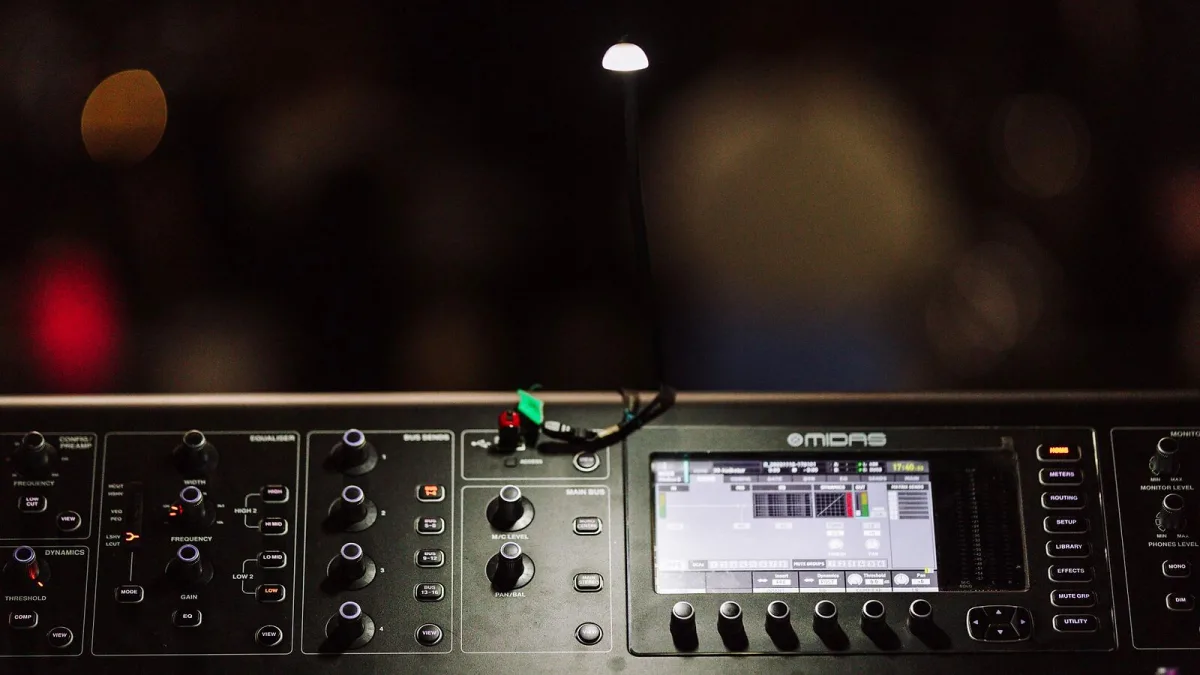
If you've spent any time behind a desk at front-of-house, you'll know the Behringer Wing by reputation before you ever touch one. It's the console Behringer built to sit above the X32, and it does things differently enough that old X32 habits won't carry straight across. Here's what it actually is, what the family looks like, and a few things worth knowing before you start pushing faders.
What Is the Behringer Wing?
The Behringer Wing is a networked digital mixing console aimed at live sound, theatre, broadcast, houses of worship and studio work. It runs eight local MIDAS-branded microphone preamps, twenty-four motorised faders and a 10.1-inch touchscreen, and it's built around a genuinely different idea of how a mixer should organise itself.
Behringer's own figures put the platform at more than 360 routable inputs and outputs, with sixteen true-stereo effects engines running at once. That's not a typo — it reflects how many separate signal paths the Wing can juggle between its physical connections, its network ports and its internal processing, which is a very different number from "how many XLR sockets are on the back".
Source-Based Routing: The Big Idea
Every traditional mixer, digital or analogue, ties a physical input to a channel strip. Plug the vocal mic into input three, and channel three is the vocal, full stop. The Behringer Wing breaks that link on purpose.
Instead, you build a list of sources first — a local preamp, an input arriving over the network, a USB return from a laptop — and give each one a proper name. Only then do you assign a source to a channel, a bus, or an aux send. Change your mind halfway through soundcheck and you can re-patch without tearing the whole show apart.
- Sources — the raw inputs: local XLR, network (AES50), USB, playback.
- Channels — the processing strips a source gets assigned to.
- Buses — your groups, auxes, mains and matrices.
- Outputs — wherever the finished mix actually goes.
It sounds fiddly written down, but in practice it means the same stage input can feed front-of-house, a monitor mix and a multitrack recording without a single extra cable.
Meet the Wing Family
The Behringer Wing isn't one box any more — it's a small range, and picking the right one matters more than picking the "best" one. For the full buying breakdown, see our complete buyer's guide.
| Model | Format | Local mic inputs | Faders | Best for |
|---|---|---|---|---|
| Wing | Full-size console | 8 MIDAS preamps | 24 motorised | Front-of-house, monitors, bigger shows |
| Wing Compact | Smaller console | 24 MIDAS preamps | 13 motorised | Touring, venues, churches needing more local inputs |
| Wing Rack | 4U rackmount | 24 MIDAS preamps | None — touchscreen only | Installs, remote control, broadcast |
| Wing Black | Full-size, black finish | 8 MIDAS preamps | 24 motorised | Same as Wing, different colourway |
The Compact and Rack share most of the Wing's processing and routing brains; what changes is the physical control surface and how many local inputs you get on the box itself.
Key Features Worth Knowing
- AES50 networking — three ports, each carrying up to 48 inputs and 48 outputs, for connecting stageboxes and splitting signal between console positions.
- 48-in/48-out USB audio interface — plug the Wing straight into a laptop for multitrack recording or virtual soundcheck.
- Dual-SD-card recorder — capture a full multitrack show without a computer anywhere near the stage.
- Five plug-in slots per stereo channel on the full-size Wing and Compact, for modelled compressors and EQs.
- X32-era stagebox compatibility through AES50, so an existing rig doesn't have to be scrapped wholesale.
Firmware and Updates
Behringer keeps the Wing moving with regular firmware. Version 3.0 was a significant one, adding bus-to-bus and channel-to-matrix sends along with custom control improvements; later 3.0.x releases added workflow tweaks and better integration with Behringer's P24 personal monitoring system, and firmware 3.1 arrived with further effects updates. The one thing to watch: Behringer ships separate firmware files for the Wing, Wing Compact and Wing Rack, so always double-check you're downloading the right one for your actual hardware before you update.
A Few Practical Tips
- Build your source list first. Name everything properly before you start assigning channels — future you will be grateful.
- Use stereo channels on purpose. Great for keyboards and playback, less great if you need independent mono control later.
- Save templates. A show file with your usual names, sends and output patches saves a genuinely painful amount of setup time.
- Back up before updating firmware, and confirm the file matches your specific model.
- Use virtual soundcheck. Record isolated channels once, then replay them to dial in processing without the band standing around.
If you're brand new to the desk rather than shopping for one, our beginner's guide to the Wing walks through your first session on it step by step. And if you already own one, it's worth reading up on the common mistakes owners make in their first few months.
The Bottom Line
The Behringer Wing earns its place above the X32 by rethinking how a console organises signal, not just by adding more channels. Source-based routing takes a session to get your head around and about a week to genuinely appreciate. Once you're there, the extra flexibility — feeding front-of-house, monitors and a multitrack recording off one input — is hard to give up. Whichever model suits your rig, it rewards a bit of patience up front. For a shortlist of which version to actually buy, our guide to the best Behringer Wings for the money breaks it down by use case and budget.






Comments