


Allen and Heath roundup
The Best Allen and Heaths for the Money
There's no single 'best' Allen & Heath desk — here's how the range actually splits by budget, gig size and what you're running.
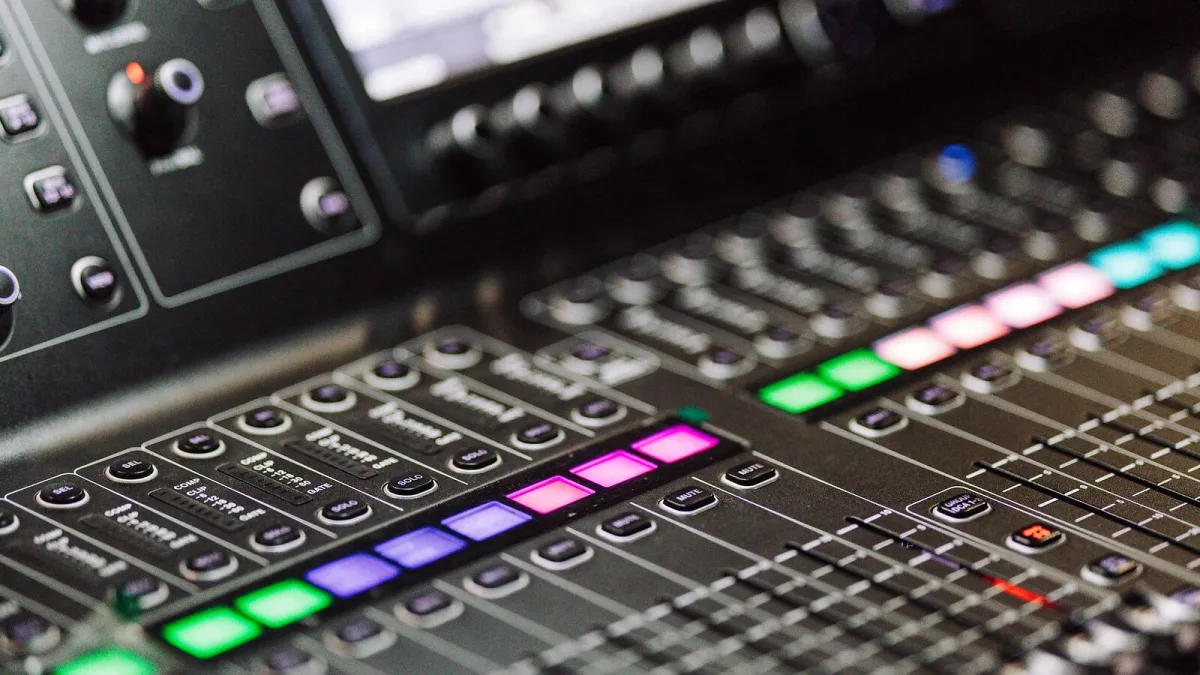
People ask me what the "best" Allen & Heath desk is more than any other question, and it genuinely depends on the gig. Rather than pretending there's one winner, here's how the range actually breaks down by budget and by what you're running — so you can find the tier that suits you rather than the one that just sounds most impressive.
Best for Home Producers and Solo Acts: CQ
If you're recording at home or running a very small live setup, CQ is the sensible starting point. It's built for musicians, bands and home producers who want digital mixing — scene recall, per-channel processing — without wading through a menu system built for a full touring rig. It's the cheapest entry into the Allen & Heath digital ecosystem, and for a lot of people it's genuinely all they'll ever need.
Best for Small-to-Medium Venues: Qu
Once you're running a proper venue, a worship space or a growing production, Qu is where I'd point most buyers. The newer generation has picked up 96kHz processing, Dante networking on selected models, and a more capable feature set than CQ without the price or complexity of the professional tier above it. It sits in that sweet spot of "does more than you'd expect for the money."
Best Value in the Professional Tier: SQ and SQ+
SQ is the compact end of the Allen & Heath professional range, built around a 96kHz XCVI engine with roughly 0.7 milliseconds of quoted latency, and it punches well above its size. The new SQ+ models (SQ5+, SQ6+, SQ7+) add 48 input channels and RackUltra FX processing on top, sitting alongside the existing SQ range rather than replacing it. If you want serious touring-grade processing without the size or cost of a flagship desk, this is the tier to focus on.
Best for Big Productions: Avantis and dLive
| Model | Scale | Best suited to |
|---|---|---|
| Avantis | 64 channels, 42 configurable buses | Serious professional touring, theatre, larger venues |
| dLive | Up to 128 channels, 64 buses | Flagship touring, broadcast, major production |
Avantis' V2.0 firmware update pushes capacity even further on dPack-enabled systems, raising channel and bus counts substantially. dLive, meanwhile, separates the control surface from the processing rack entirely, which is exactly what large touring productions need — the rig stays at the stage, and the surface can sit wherever the engineer needs to be.
Best for Analogue Purists: ZED
Not every gig needs firmware. ZED is the analogue line from Allen & Heath, aimed at musicians, podcasters and content creators who want immediate, hands-on control with nothing to update or reboot. If your setup is simple and repeatable, and you'd rather turn a knob than navigate a menu, ZED remains a genuinely good buy rather than an outdated one.
It's easy to assume analogue is only for beginners or hobbyists, but plenty of working engineers keep a ZED desk in the van precisely because it never needs a firmware update mid-gig.
Best for DJs and Clubs: Xone
Xone is a different animal entirely — built for clubs, festivals and electronic-music setups rather than bands and PA work. If you're after a DJ mixer rather than a live-sound desk, this is the range to look at, and it's worth treating as a separate decision from the rest of the Allen & Heath live-sound line-up.
My Actual Recommendation
If you're not sure where to start, be honest about your ceiling, not just your current gig. Buying into CQ or Qu now and outgrowing it within a year is a false economy compared with stretching slightly into the next tier of Allen & Heath desks if you can see your needs growing. Our buyer's guide goes through channel and bus counting properly if you want to work that out precisely, and the full range guide is there if you want the technical detail behind each platform.



Comments