


Allen and Heath article
Allen and Heath: A Complete Guide
From hand-built consoles for Pink Floyd to the new SQ+ range — here's the honest, no-hype rundown of who Allen & Heath are and what they make.
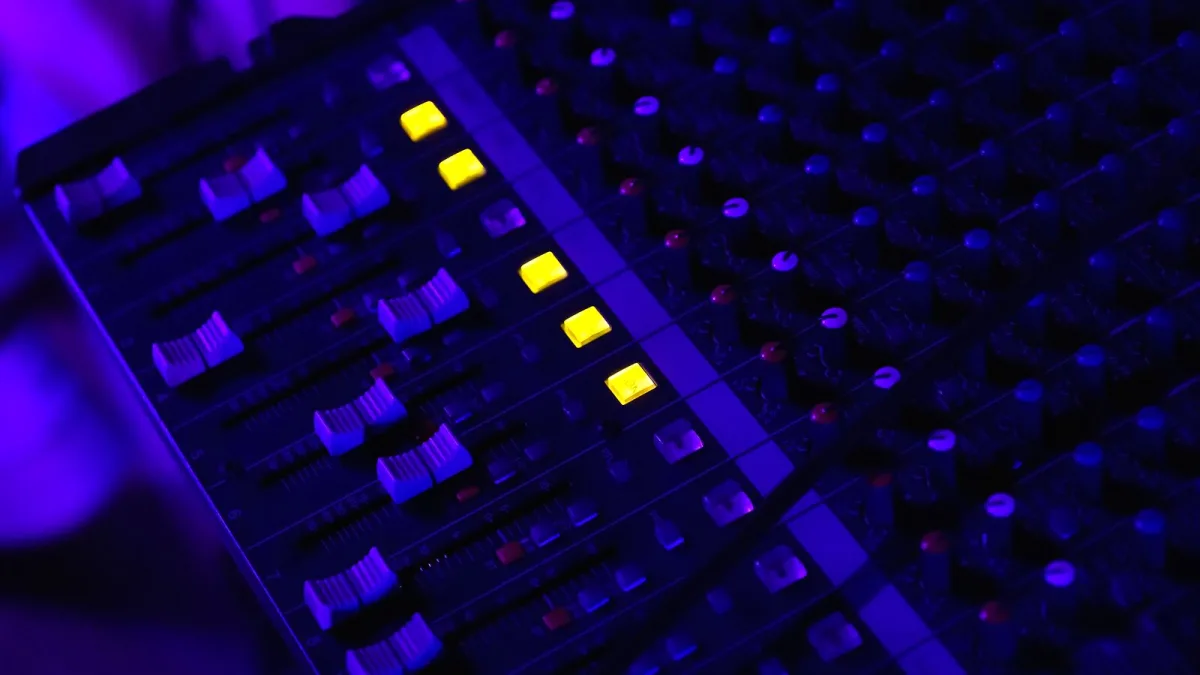
Allen & Heath is one of those names you'll hear at almost every venue with a proper desk in the room, and there's a reason for that: the company's been building mixing consoles since 1969, and it's still one of the few British manufacturers making the full range, from bedroom-friendly boxes to flagship touring rigs. Here's the honest, no-hype rundown of who they are and what they actually make.
Who Are Allen & Heath?
Allen & Heath was founded in London in 1969 and is now based in Penryn, Cornwall. Early on, the company built custom consoles by hand for touring artists of the era, and it names Pink Floyd, The Who and Genesis among the acts it worked with — useful context for the brand's reputation, though the specific console models and sessions involved aren't something I'd state as documented fact without primary sources. These days the company sits within the Audiotonix group, alongside several other well-known console brands.
The Range at a Glance
The product line splits fairly cleanly by scale and application:
| Range | What it's for | Roughly aimed at |
|---|---|---|
| dLive | Flagship digital touring, theatre, broadcast | Up to 128 inputs, 64 buses |
| Avantis | Professional digital live sound | 64 channels, 42 configurable buses |
| SQ / SQ+ | Compact professional digital | ~0.7ms latency, 48 inputs on SQ+ |
| Qu | Small-to-mid venues, worship, education | 96kHz digital, Dante on some models |
| CQ | Ultra-compact digital | Bands, home producers, small venues |
| ZED | Analogue mixing | Musicians, podcasters, content creators |
| Xone | DJ mixers | Clubs, festivals, electronic music |
| AHM | Installed audio matrix processing | Corporate, retail, hospitality, education |
What's Actually Under the Hood: XCVI and 96kHz
Across most of the digital range, Allen & Heath uses its own FPGA-based processing platform called XCVI, running at 96kHz. In plain terms, that's the engine doing the routing, EQ and dynamics processing, and it's built for low latency — SQ is quoted at roughly 0.7 milliseconds, which is fast enough that you won't feel any lag between hitting a note and hearing it through the PA. Manufacturer-quoted figures like that are worth treating as platform specifications rather than gospel, since real-world latency depends on your whole signal chain, not just the desk.
dLive, Avantis and SQ: The Professional Tier
These three sit above each other roughly by scale. dLive separates the control surface from the MixRack, so the processing can live at the stage while the surface sits at front of house — genuinely useful for big touring rigs. Avantis is a strong professional middle ground with a 64-channel platform and dual-screen control (or a smaller single-screen Avantis Solo). SQ is the compact end of the professional range, and it's just been joined by SQ+, which brings 48 input channels alongside expanded processing.
Qu and CQ: The Accessible End
Qu covers small-to-medium venues, bands and houses of worship, and the newer generation has picked up 96kHz processing and Dante networking on selected models. CQ is even more compact, aimed squarely at solo performers, bands and home producers who want digital mixing without a steep learning curve. If you're moving up from an analogue mixer for the first time, CQ or entry-level Qu is the sensible landing spot.
ZED and Xone: Analogue and DJ
Not everything the brand makes is digital. ZED is the analogue family — straightforward signal flow, no firmware, no menus, just knobs doing what they say on the tin. Xone, meanwhile, is the company's DJ-mixer range, built for clubs and electronic-music setups rather than bands and live PA.
What's New in 2026
The company has had a genuinely active year. The SQ+ range (SQ5+, SQ6+, SQ7+) launched in May 2026 with RackUltra FX processing and a larger interface. Avantis also picked up a V2.0 firmware update that, on dPack-enabled systems, raises input channels from 64 to 96 and buses from 42 to 56. The company showed off the updated RackUltra FX architecture on dLive at NAMM 2026, and its gear was deployed across more than 30 venues at SXSW 2026 — a decent sign of how widely the ecosystem is trusted for real touring work.
Where to Go Next
If you're actually shopping, our buyer's guide walks through matching a range to your actual gigs, and if you're newer to mixing altogether, the beginner's guide starts a lot further back. Allen & Heath's range is broad enough that there's a sensible entry point whatever stage you're at, and that's arguably the real strength of the brand.




Comments