


Allen and Heath Mixer article
The Ultimate Guide to Allen and Heath Mixer
There isn't one Allen & Heath mixer — there's a whole ladder of them. Here's how the range actually fits together, family by family.
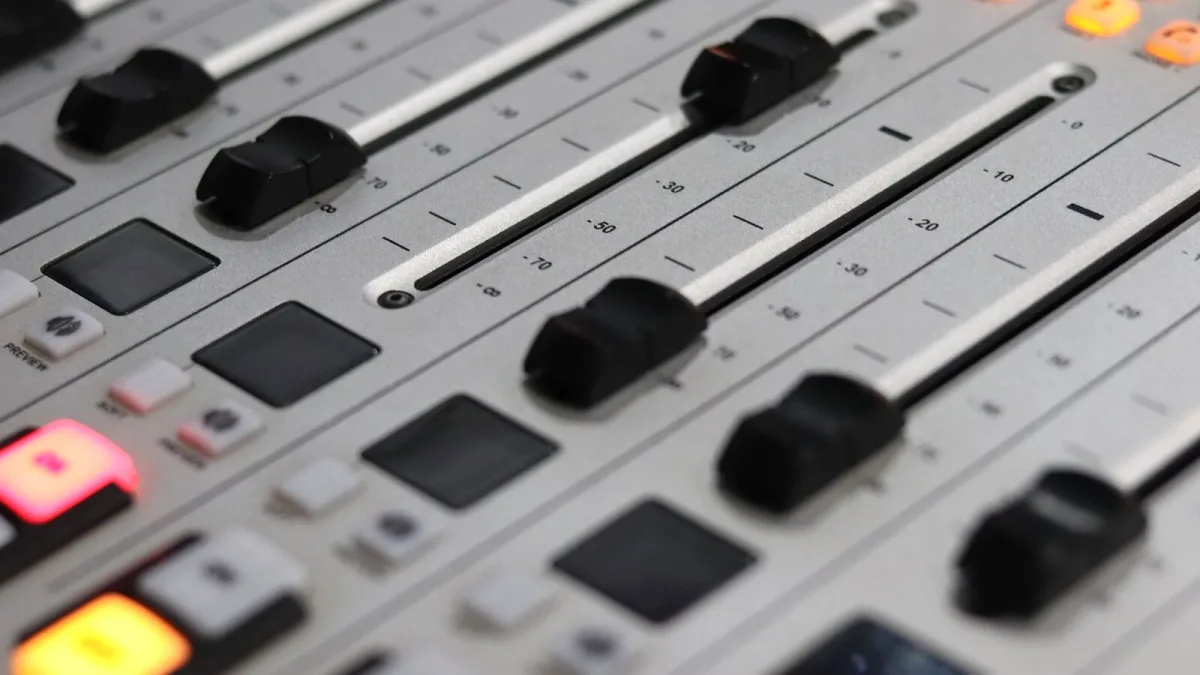
Right, let's get this straight from the start: there isn't one "Allen & Heath mixer" — there's a proper ladder of them, each built for a different job. Understanding that ladder before you shop saves a lot of wasted research later. Here's how the whole range actually fits together.
Where Allen & Heath comes from
Allen & Heath is a British company with roots in London's late-1960s music scene, and company profiles associate its early mixer-building work with Genesis, Pink Floyd and The Who — useful historical context, though the exact dates and specific desks involved aren't fully documented in the material available, and even the founding year varies between 1968 and 1969 depending on the source. Treat the heritage as genuine but not precisely pinned down.
The current Allen & Heath mixer ladder
| Family | Type | Built for |
|---|---|---|
| ZED | Analogue | Musicians, podcasters, content creators, small venues |
| CQ | Compact digital | Bands, home producers, small venues, AV installs — with built-in Wi-Fi |
| Qu | Digital | Compact live sound, rehearsal rooms, recording, installed sound |
| SQ | Digital, 96kHz | Professional live sound, monitors, theatre, houses of worship |
| Avantis | Digital, dual-touchscreen | Larger live production and professional installs |
| dLive | Digital, modular | Touring, broadcast, large installation — surface separate from the MixRack |
That's an application ladder, not a strict price ladder — the right choice depends on what you're actually mixing, not simply spending more for the sake of it.
Analogue versus digital, honestly
ZED gives you physical knobs and faders and an immediate, simple signal path — genuinely appealing if your setup is small and stable and you don't need scene recall. Everything from CQ upward is digital, which buys you recall, effects, remote control and (on Qu, SQ and CQ models) direct multitrack recording to USB storage without a separate computer. The trade-off is a steeper learning curve the further up the ladder you go.
Why dLive works differently to the rest
Here's a detail worth understanding properly: most digital consoles keep their processing engine inside the surface you're touching. dLive doesn't — it separates the control surface from an external MixRack that does the actual 128×64-channel processing. That matters operationally, because the surface and the processing engine don't need to sit in the same physical location, which is genuinely useful for touring and large installations where cabling and positioning get complicated.
About those 96kHz and latency claims
Allen & Heath quotes 96kHz processing and 0.7ms latency for SQ and Avantis-related platforms. These are real, published manufacturer specifications, but worth reading precisely: they typically describe a particular signal path under specific conditions, not automatically the round-trip latency of your entire recording chain once you add converters, computer buffers, drivers and plug-ins. Treat the number as a strong indicator of engineering quality, not a guarantee of your exact real-world result.
Recording and expansion
Qu, SQ and CQ models support multitrack capture straight to USB storage, though the exact implementation — channel count, routing limits, whether it's stereo or full multitrack — varies by specific model, so check the manual rather than assuming. Higher up the range, the ecosystem expands to AudioRacks, expanders, dSnake-compatible digital snakes and personal-monitoring tools, letting a system grow well beyond what any single console does on its own.
Physical control versus touchscreen, family by family
How much you interact with knobs and faders versus a screen changes noticeably as you move up the range. ZED is almost entirely physical — what you see is what you touch. Qu keeps a conventional physical console workflow with model-specific variations. SQ adds more advanced processing and routing on a similarly compact physical footprint. Avantis leans into a touchscreen-oriented interface backed by substantial physical control either side. dLive pairs physical surface control with the separate MixRack doing the processing work behind the scenes. None of these approaches is objectively better — it comes down to how you personally like to work under pressure during a live show.
Where to go next
Working out which family actually fits your setup? Our Allen & Heath mixer buyer's guide covers exactly what to check. New to mixing consoles generally? Our beginner's guide starts from first principles, and our pick of the best Allen & Heath mixers for the money sorts recommendations by use case.
The bottom line
The Allen & Heath range genuinely is a ladder, not a single product — ZED for simple analogue immediacy, CQ and Qu for compact digital flexibility, SQ and Avantis for serious professional work, and dLive for the most demanding touring and installation jobs. Work out which rung actually matches your work, and the rest of the decision gets much easier.



Comments