


Marshall Speaker article
Marshall Speaker Explained: Features, Types and Tips
There are two completely different things called a Marshall speaker — here's how to tell them apart and what each one actually does.
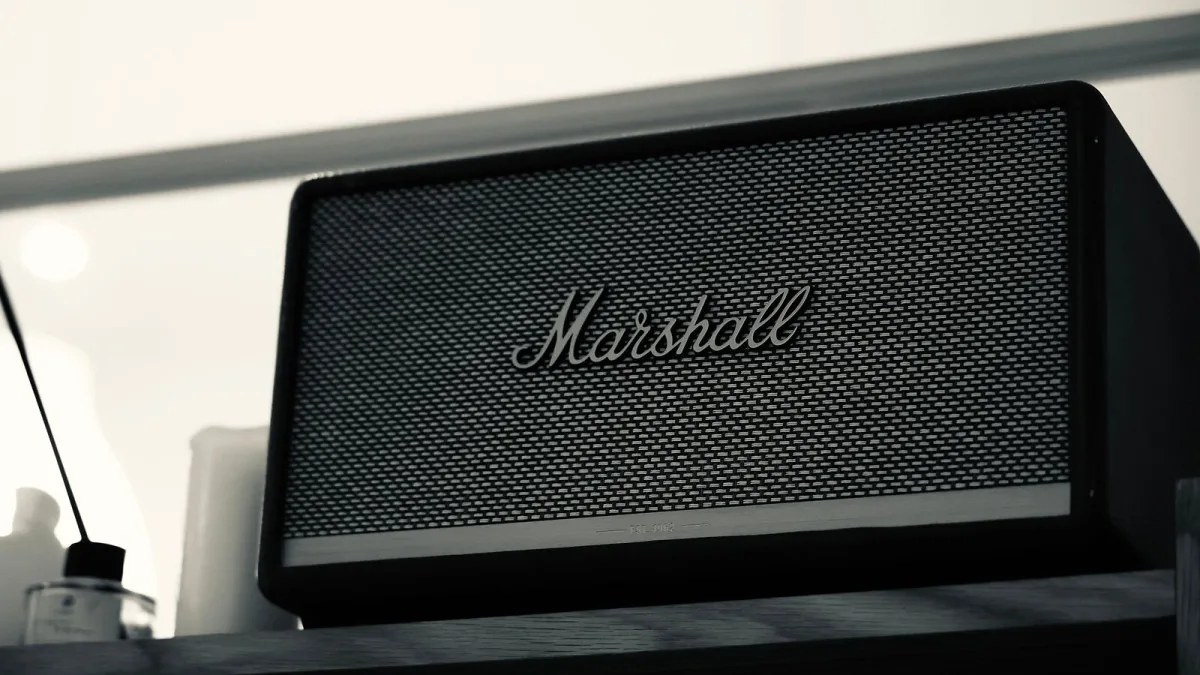
Say “Marshall speaker” to two different music fans and you’ll get two different pictures in their heads. One pictures a squat little Bluetooth box on a kitchen shelf, gold knobs glinting. The other pictures a wall of black cabinets behind a guitarist, loud enough to move your trouser legs. Both are correct — Marshall really does make both — and untangling which is which is the whole point of this guide.
Two Very Different Families, One Famous Badge
Marshall the amplifier company has been building loud guitar rigs since the 1960s, and that heritage is where every piece of Marshall styling comes from: the black vinyl covering, the gold control panel, the white script logo. Somewhere along the way, that look got borrowed for an entirely separate product line — home and portable Bluetooth speakers designed for ordinary listening, not for standing behind a Stratocaster.
A Marshall speaker in the consumer sense is a self-powered, ready-to-plug-in unit with its own amplification and a phone app. A Marshall guitar cabinet is the opposite: a passive box of drivers with no amplifier of its own, entirely dependent on a valve or solid-state head to feed it a signal. Mix the two up and you’ll end up disappointed, or worse, with a damaged amp head. We’ll come back to that.
The Consumer Range: Portable, Home and Party
Marshall splits its current Bluetooth speaker line into three rough categories, and knowing which one you actually need saves a lot of scrolling. Every Marshall speaker in the current range shares the same amp-inspired look, but the guts underneath differ a good deal by tier.
Portable speakers
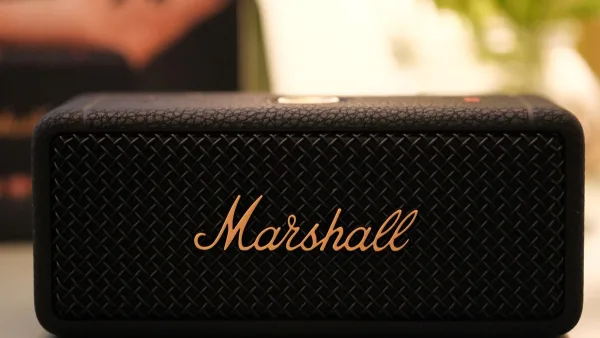
Battery-powered, grab-and-go units such as the Kilburn III and the newer Stockwell III, built for moving around the house, the garden or further afield. The Stockwell III, announced in 2026, is reported to offer more than 40 hours of battery life, USB-C power-bank functionality and an IP55 rating — meaning it’s sealed against dust and can shrug off water jets, though that isn’t the same as being safe to dunk. The Kilburn III pairs two small full-range drivers with a dedicated woofer and a rear bass port, with physical bass and treble dials on top for quick tweaks without opening an app.
Home speakers
Mains-powered and designed to stay in one room, this tier runs from the compact Acton IV up through the Stanmore IV to the larger Woburn. The newer IV-generation models add Bluetooth 5.3, broadcast-audio feature Auracast, and support for higher-quality codecs like LDAC and LC3 on some configurations, alongside a redesigned bass port and outward-angled tweeters aimed at widening the soundstage from a single box.
Party speakers
Bigger, louder, and built to fill a room rather than a corner of one. The Bromley 450, announced in March 2026, is the current compact option here — 360-degree sound, over 40 hours of playtime, and built-in stage lighting for the sort of gathering where subtlety isn’t the goal.
What the Buzzwords Actually Mean
Marshall’s marketing leans on a handful of terms worth translating before you take them at face value.
- True Stereophonic — Marshall’s name for a multidirectional sound spread from a single speaker. It genuinely widens the presentation compared with an old-fashioned mono box, but it isn’t the same as proper left-right separation from two speakers set apart in a room.
- Auracast — a Bluetooth broadcast feature that lets compatible devices share or receive one audio stream. It’s not the same thing as classic Bluetooth multipoint, which simply lets a speaker remember and switch between two paired devices.
- Placement Compensation — the app-side EQ adjustment some newer models use to correct for a speaker sitting close to a wall or in a corner, where bass naturally piles up.
- Dynamic Loudness — processing that reshapes the tonal balance depending on volume, so quiet listening doesn’t sound thin. Worth knowing it exists if you ever wonder why the tone shifts as you turn the dial.
Marshall’s Other Half: Guitar Cabinets
The look on every Bluetooth speaker traces back to the guitar side of the business, and it’s worth knowing the basics even if you’ll never plug in an electric guitar. The classic Marshall rig is an amplifier head feeding a 4×12 cabinet — four 12-inch drivers in one enclosure — and it's that combination, driven hard, that gave Jimi Hendrix, Ritchie Blackmore and generations of rock guitarists their wall-of-sound roar. Swap the driver brand or the cabinet design and the character changes: lower-powered Greenback-style drivers break up early and sound compressed, while Vintage 30-style drivers push harder mids and project further. None of this is remotely compatible with the home listening range — a guitar cabinet has no amplifier inside it at all, and needs a proper speaker cable, never an instrument lead, to connect safely to a head.
Which One Do You Actually Need?
The right Marshall speaker for you comes down almost entirely to where it will live and how it will travel, so it’s worth being honest with yourself about that before anything else.
| You want to… | Look at |
|---|---|
| Fill a bedroom or small living room | A compact home speaker (Acton IV) |
| Carry music from room to room, or outside | A portable speaker (Kilburn III, Stockwell III) |
| Host a garden party or gathering | A party speaker (Bromley 450) |
| Play electric guitar | A combo amp or head-and-cabinet setup — not a Bluetooth speaker |
If you’re weighing that decision properly, our complete Marshall speaker buyer’s guide goes through the checklist model by model, and if you’d rather skip straight to specific recommendations, we’ve rounded up the best Marshall speakers for the money across each price tier.
The Bottom Line
A Marshall speaker earns its keep by looking like rock history while behaving like a modern, sensible bit of kit — Bluetooth, an app, replaceable parts on the newer models, and a genuine attempt at wide, room-filling sound from a single box. Just be clear about which family you’re shopping in before you hand over any money. If you’re buying your very first one and want the confidence-building version of this article, our beginner’s guide to Marshall speakers walks through it at a gentler pace, and it’s worth reading the common mistakes people make before you commit either way.



Comments