


Marshall Bluetooth Speaker article
Marshall Bluetooth Speaker Explained: Features, Types and Tips
That amp-style look isn't an accident. Here's what actually separates a Marshall Bluetooth speaker from the rest, family by family and feature by feature.
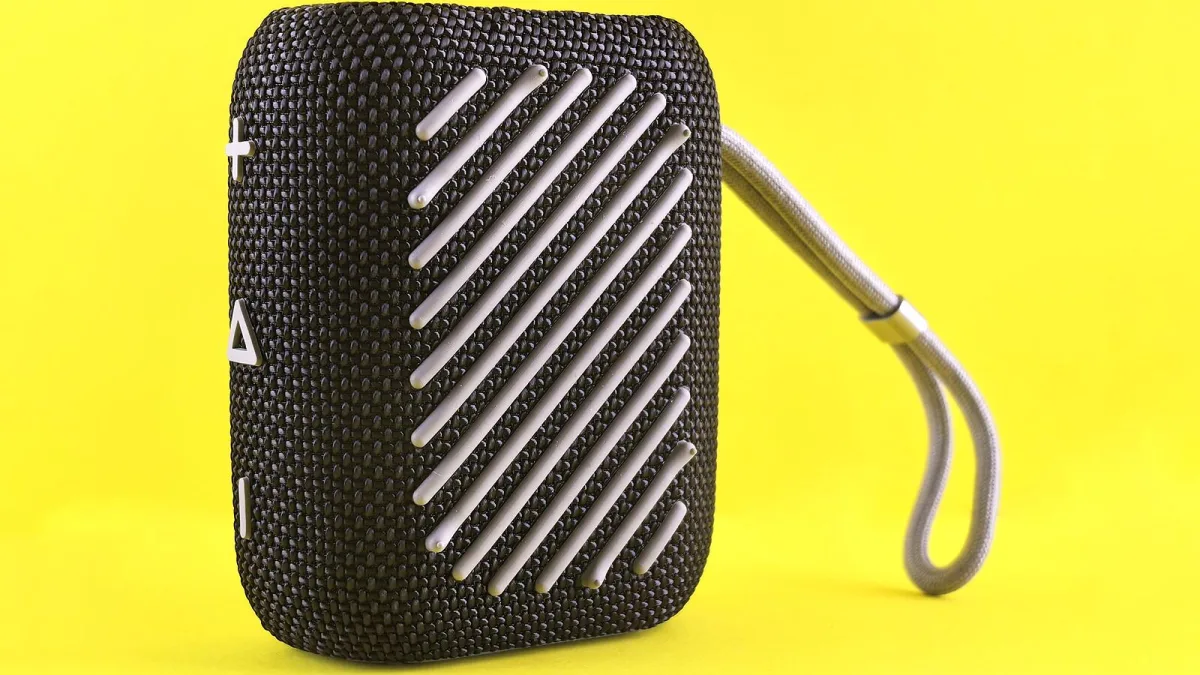
There's a very particular look a Marshall speaker has on a shelf — that textured black finish, the gold script logo, a couple of knurled knobs that wouldn't look out of place on a guitar amp I've spent too many hours standing in front of. Turns out that's not an accident. Here's what actually separates a Marshall Bluetooth speaker from the rest of the pack, the different families in the current range, and a few tips I've picked up for getting the best out of one.
Why a Marshall Speaker Looks (and Sounds) Like That
Marshall started life as a British guitar-amplifier brand, and the consumer-audio side of the business, run by Marshall Group, has leaned hard into that heritage rather than running from it. Textured black vinyl, brass-coloured controls, grille cloth and amp-style knobs are the visual signature across the whole speaker range. Sonically, the house style follows the same idea: an energetic, midrange-forward sound with confident bass and treble, tuned more for rock, pop and casual party listening than the flat, reference-style sound you'd get from a studio monitor.
Two Families, One Design Language
Every Marshall Bluetooth speaker falls into one of two broad camps. Portable speakers run on an internal rechargeable battery, are built to survive being knocked about, and are meant to travel with you. Home speakers plug into the mains, carry larger drivers, and generally offer more input options and headroom — the trade-off being that they stay where you plug them in.
| Model | Family | What It's For |
|---|---|---|
| Willen II | Ultra-compact portable | Personal listening, travel, small spaces |
| Emberton III | Compact portable | General outdoor and everyday use |
| Stockwell III | Medium portable | Balance of size, output and battery life |
| Kilburn III / Middleton | Large portable | Room-filling sound outdoors |
| Acton IV | Compact home | Desk, shelf or small room |
| Stanmore IV | Mid-size home | Main living room listening |
| Woburn III | Large home | Maximum output at home |
A quick word of warning from experience: exact availability and generation numbers shift over time and vary a bit by region, so it's always worth checking Marshall's own product pages for the current line-up before you commit to a specific model.
Features Actually Worth Understanding
A spec sheet full of numbers doesn't tell you much on its own. These are the features that genuinely change how one of these speakers performs day to day:
- Bluetooth version and codecs: newer home models are built around Bluetooth 5.3, with support for codecs like AAC, LDAC and LC3 reported on current generations — though exact codec support still varies model by model.
- IP rating: this is a dust and water resistance rating, not a promise the speaker is waterproof. IP67 means dust-tight and able to survive brief submersion under test conditions; IP54 is a lighter splash-resistance rating. They're not interchangeable.
- Battery life: manufacturer figures like "32-plus hours" or "50-plus hours" are measured under specific test conditions, and real-world use at higher volume will bring that number down.
- Auracast and multi-speaker linking: a newer Bluetooth broadcast feature that lets compatible devices share one audio stream across several receivers. It's a different thing from simple left-right stereo pairing, so check exactly what a given model supports rather than assuming.
- Analogue inputs: home models like the Acton IV and Stanmore IV commonly include a 3.5mm input and, on some models, RCA, for when you'd rather plug in than pair up.
A Few Tips for Getting the Best Sound
Small placement choices make a bigger difference than most people expect with one of these:
- Sit it on a solid surface rather than wedged into a tight, enclosed shelf.
- Keep the front grille clear of cushions, curtains or clutter.
- Avoid pushing a bass-heavy model right into a corner unless you actually want that extra, less controlled low end.
- If you're pairing two speakers for stereo, place them symmetrically either side of where you'll actually be sitting.
- Use the physical bass and treble knobs conservatively — heavy-handed bass boost can blur clarity and drains a portable battery faster.
Where to Go From Here
If you're weighing up which model actually suits you, our complete buyer's guide walks through the decisions that actually matter. And if all of this is your first time buying into wireless audio at all, our beginner's guide covers setup and pairing from a standing start, no assumed knowledge required.
The Bottom Line
A Marshall Bluetooth speaker sells its look as much as its sound, but underneath the amp-style styling is a genuinely sensible split between portable and home models, each with real features worth understanding before you buy or start using one. Know the family, know the features, and the rest is mostly personal taste.



Comments