


Marshall Bluetooth Speaker roundup
Marshall Bluetooth Speaker: A Complete Buyer's Guide
The amp-style knobs are easy to fall for. Here's what to actually check on a Marshall Bluetooth speaker before you hand over your money.
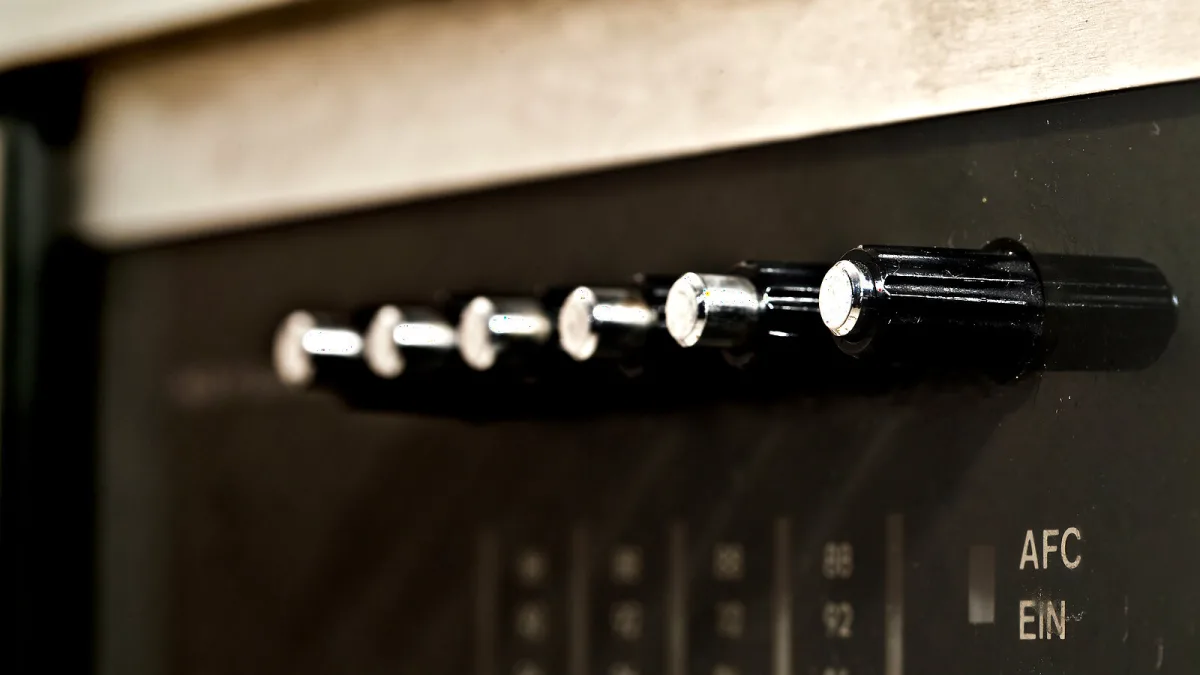
I've bought speakers on looks alone before and regretted it within a month, so let's not do that here. A Marshall Bluetooth speaker is an easy thing to fall for on style, but the spec sheet underneath matters just as much as the amp-style knobs. Here's what to actually check before you hand over your money.
Work Out Which Family You Actually Need
The single biggest decision comes before you look at a single spec: portable or home? Portable models — the Willen II, Emberton III, Stockwell III, Kilburn III and Middleton among them — run on an internal battery and are built to travel. Home models such as the Acton IV, Stanmore IV and Woburn III plug into the mains, use larger drivers, and generally hit harder, but they're not going anywhere once you've found them a spot. Buying a home speaker because you liked the look, then wishing it had a battery for the garden, is the single most common regret I hear about.
Battery Life: What the Marshall Bluetooth Speaker Numbers Actually Mean
Manufacturer and reviewer battery figures — more than 32 hours quoted for the Emberton III, more than 50 for the Kilburn III, up to 40 for the newer Stockwell III — are measured under specific test conditions, usually moderate volume and a fairly typical mix of content. Push the volume up, lean on heavy bass, or use it constantly outdoors, and real-world runtime will come down. Treat these figures as a useful comparison between models, not a guarantee of what you'll personally get.
Water and Dust Resistance: Read the Rating Properly
An IP rating is genuinely worth understanding before you buy, not just glancing at:
| Rating | What It Actually Covers |
|---|---|
| IP67 | Dust-tight, and able to survive brief submersion under standardised test conditions |
| IP54 | Protected against dust ingress and splashing water only |
| IPX-only ratings | Cover water resistance but say nothing about dust protection |
The Emberton III and Middleton are reported at IP67; the Kilburn III at the lower IP54. That's a meaningful difference if you're planning on poolside or beach use rather than an occasional splash of rain in the garden.
Connectivity: Bluetooth Version, Codecs and Auracast
Newer models in the range are built around Bluetooth 5.3, with reported support for codecs including AAC, LDAC and LC3 on current home models. A higher Bluetooth version alone won't transform the sound, but it does generally mean better range and a more stable connection. If a speaker also advertises Auracast or multi-speaker linking, understand that this is a broadcast feature for sharing one audio stream across multiple receivers — it isn't automatically the same thing as pairing two units for proper stereo, so check the specific model's documentation rather than assuming.
Inputs: When You Might Still Want a Cable
Wireless is the headline feature, but plenty of home models, including the Acton IV and Stanmore IV, still include a 3.5mm input and, on some models, RCA. If you've got an existing turntable, CD player or older device without Bluetooth, don't discount a speaker just because the marketing is all about wireless — check the back panel.
Price and What You're Actually Paying For
Every Marshall Bluetooth speaker is priced partly for the badge, and pricing varies by region and retailer, so Marshall's own regional sites are the most reliable place to check current figures where you live. As one data point: the Stockwell III was reported at a US launch price of $249.99. Treat any single price you see online as a snapshot rather than a fixed figure, and always compare against the current listing on Marshall's own site or a trusted UK retailer before buying.
Buying Pitfalls to Avoid
- Assuming model names are consistent everywhere. You may see references to a "Middleton" and a "Middleton II" depending on the source; verify the exact current model against Marshall's own listing.
- Treating "loudest in its class" as an independent measurement. That's brand marketing language, not a verified third-party test result.
- Assuming stereo pairing and multi-speaker linking are the same feature. They're not always interchangeable, and support varies by model.
- Buying the biggest home speaker for a small flat. More output than your room needs just means you're paying for headroom you'll never touch.
Once You've Decided
If you'd rather see the full family line-up laid out before narrowing things down, our features and types guide covers that ground. And if this is your very first Bluetooth speaker of any kind, our beginner's guide walks through setup and pairing without assuming anything.
The Bottom Line
Buy a Marshall Bluetooth speaker for the family that actually fits how you'll use it, not the finish that catches your eye first. Get the portable-versus-home decision right, understand what the IP rating and battery figures genuinely promise, and the rest of the choice gets a lot easier.



Comments