


Harley Benton article
Harley Benton Explained: Features, Types and Tips
Thomann's house brand, explained plainly: how the pricing works, what the main model families are, and where the real value sits.
If you've spent any time browsing guitars online, you've seen the name Harley Benton attached to an awful lot of gear for not a lot of money. It isn't a mysterious budget label — it's Thomann's own house brand, and once you understand how that works, the whole range makes a lot more sense. Here's what it actually is, what you get, and where the catches usually hide.
What Harley Benton Actually Is
Harley Benton is the in-house brand of Thomann, the German music retailer, which has carried the name since 1998. Rather than being an independent manufacturer with its own factories, Thomann specifies the features it wants at a given price point and sources instruments to that brief, then sells them exclusively through its own shop. That's why the range is so enormous — several thousand listings at any one time — and why it covers electric and acoustic guitars, basses, ukuleles, banjos, mandolins, amps, cabinets, pedals, DIY kits and accessories.
Why It's Priced the Way It Is
Cut out the middleman, commit to huge production runs, and specify the exact features you want, and you end up with instruments that carry a genuinely high specification for the price. Depending on the model, that can mean roasted or "lightly caramelised" maple necks, stainless-steel frets, Wilkinson or Roswell pickups, modern bridges and locking tuners — features that would usually push a guitar into a higher price bracket elsewhere.
The catch, and it's an honest one: quality varies model to model. A basic student guitar, a vintage-style bass and a progressive-metal instrument might all wear the same badge while being built to very different priorities. Judge each model on its own merits rather than assuming the name guarantees a particular standard.
The Main Families, at a Glance
| Family | What It's For |
|---|---|
| ST-style | Stratocaster-inspired, general-purpose, blues and pop |
| TE-style | Telecaster-inspired, country, indie and recording |
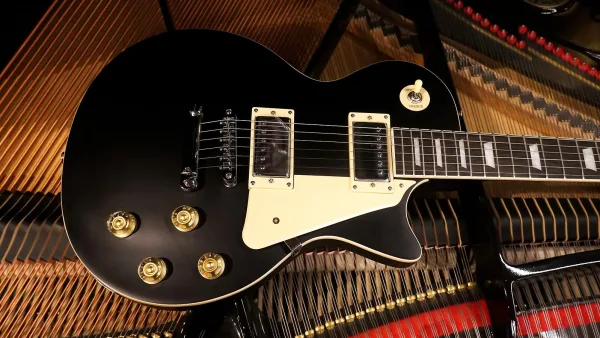
| Single-cut | Les Paul-style, humbuckers, sustain-focused |
| Fusion / CST / Amarok | Modern designs with upgraded hardware and electronics |
| Progressive | Extended-range, high-gain, metal-oriented |
| Vintage Series | Period-inspired guitars and basses |
| DIY kits | Unfinished instruments for assembly and customisation |
A Couple of Real Examples
It's easier to understand the value proposition with actual models rather than generalities. The JB-62HA bass, reviewed by MusicRadar, pairs an alder body with a lightly caramelised Canadian-maple neck, laurel fingerboard, 34-inch scale and two Alnico 5 Jazz Bass-style single coils. The PB-62LA, covered by Guitar World, follows a similar spec sheet — alder body, caramelised maple neck, laurel fingerboard, aged hardware — and was listed at roughly £214 at the time of that review. Neither is presented as equivalent to the premium instruments their designs echo, but both show the brand's approach in practice: real, specific features, at a price that would be unusual from most other manufacturers.
Where the Money Actually Goes
Manufacturing location varies by product — reviewers commonly note Chinese production on individual models, but that shouldn't be generalised across the entire catalogue without checking the specific instrument. What genuinely keeps costs down is the business model itself: one retailer, one brand, huge volume, and specifications set centrally rather than negotiated through a chain of distributors.
Beyond Guitars and Basses
It's easy to think of this purely as a guitar brand, but the catalogue runs much wider than that. Amplifiers, speaker cabinets, effects pedals, recording accessories and replacement parts all carry the same name and the same underlying logic: solid, usable specification at a price most other brands can't match, because there's no separate manufacturer's margin sitting between the factory and Thomann's own shop. DIY kits sit at the more involved end of that range — genuinely good value on paper, but worth budgeting for tools, finishing materials and your own time before assuming the kit price is the whole cost.
Before You Buy One
Reading a spec sheet only gets you so far. Harley Benton: a complete buyer's guide goes through exactly what to check before handing over any money, and if you're weighing up specific models against each other, the best Harley Bentons for the money breaks the range down by what each type of player actually needs. New to guitar altogether? Harley Benton for beginners: a complete guide is the better starting point.





Comments