


Harley Benton roundup
Harley Benton: A Complete Buyer's Guide
A bargain and a headache, potentially in the same guitar. Here's how to shop the range properly and avoid the common regrets.

A friend of mine bought her first "proper" electric on a whim, purely because the spec sheet looked ridiculous for the price, and spent the next month on forums working out whether she'd got a bargain or a headache. Spoiler: it was a bit of both, and that's honestly the truest thing anyone can tell you about buying into Harley Benton. Here's how to actually shop it well.
Start With What You'll Actually Use It For
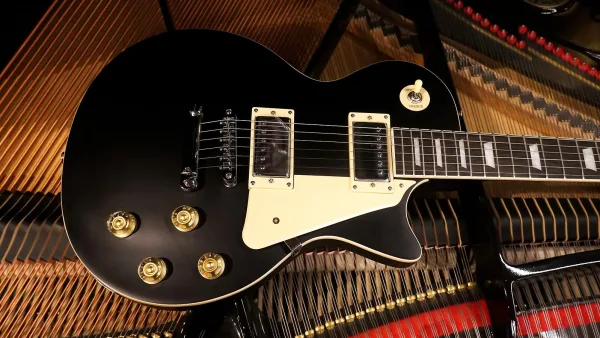
The catalogue is enormous, and it's built around distinct families rather than one house sound. ST- and TE-style models suit blues, indie, pop and general recording work. Single-cut, Les Paul-style guitars lean towards sustain and heavier tones. The Progressive range targets extended-range, high-gain playing, while Fusion, CST and Amarok models aim at more modern, versatile setups. Picking the family that matches how you actually play matters more than chasing the longest feature list.
Read a Harley Benton Spec Sheet Properly
Two real examples show what "high spec for the price" actually looks like in practice. The JB-62HA bass pairs an alder body with a lightly caramelised Canadian-maple neck, laurel fingerboard, 34-inch scale and Alnico 5 Jazz Bass-style pickups. The PB-62LA follows a similar formula — alder body, caramelised maple neck, laurel board, aged hardware — and was priced at roughly £214 when Guitar World reviewed it. Features like these are genuine, but they're not proof of premium performance on their own; a caramelised neck still needs decent fretwork underneath it to actually play well.
The Ten-Minute Checklist
Whether you're buying new or trying one in a shop, this is worth running through every time:
- Sight down the neck for excessive forward bow or back-bow.
- Check the string height at the 12th fret feels right for your style.
- Run a finger along the fret ends, checking for sharp or protruding edges.
- Fret every note up the neck, listening for buzz or dead spots.
- Press a first-position chord and check the nut slots aren't sitting too high.
- Check intonation at the 12th fret against the open string.
- Stretch the strings and test whether tuning holds.
- Rotate every knob and flick every switch, listening for crackle or dropout.
- Check pickup height gives balanced volume across strings and positions.
- Inspect the neck joint, bridge mounting and finish for anything untoward.
None of this is specific to one brand, but it matters more here precisely because quality genuinely varies model to model rather than being guaranteed by the name on the headstock.
Total Cost, Not Sticker Price
The listed price is rarely the full story. Before comparing two Harley Benton models, weigh up setup quality, hardware reliability, whether a case or gig bag is included, warranty and return terms, shipping costs, and the price of any upgrades you'll likely want. A cheaper guitar that needs £80 of fret work and a new set of tuners isn't actually the cheaper option once you add it all up.
Bundles Are Worth Considering
If you're starting from nothing, look at Harley Benton's bundled packages that pair an instrument with an amp, cable and accessories. It's rarely the most exciting way to buy gear, but it removes a lot of the guesswork around matching components, and it's usually cheaper than assembling the same rig piece by piece.
Common Pitfalls Worth Avoiding
Buying decisions go wrong in fairly predictable ways — judging the whole range off one bad review, ignoring setup entirely, or assuming the flashiest spec sheet automatically wins. Common Harley Benton mistakes to avoid goes through the specific ones worth knowing before you commit to anything.
Where to Go From Here
If you want the full picture of what the brand actually is before you start comparing models, Harley Benton explained: features, types and tips is worth reading first. Once you know roughly what you're after, the best Harley Bentons for the money narrows the range down by what suits different kinds of players.





Comments