


Yamaha Dx Synthesizers article
Yamaha Dx Synthesizers: A Complete Guide
The needle-sharp electric piano behind half of 1986: here is how Yamaha DX synthesizers use FM synthesis, the full DX7 family tree, and where that technology lives today.
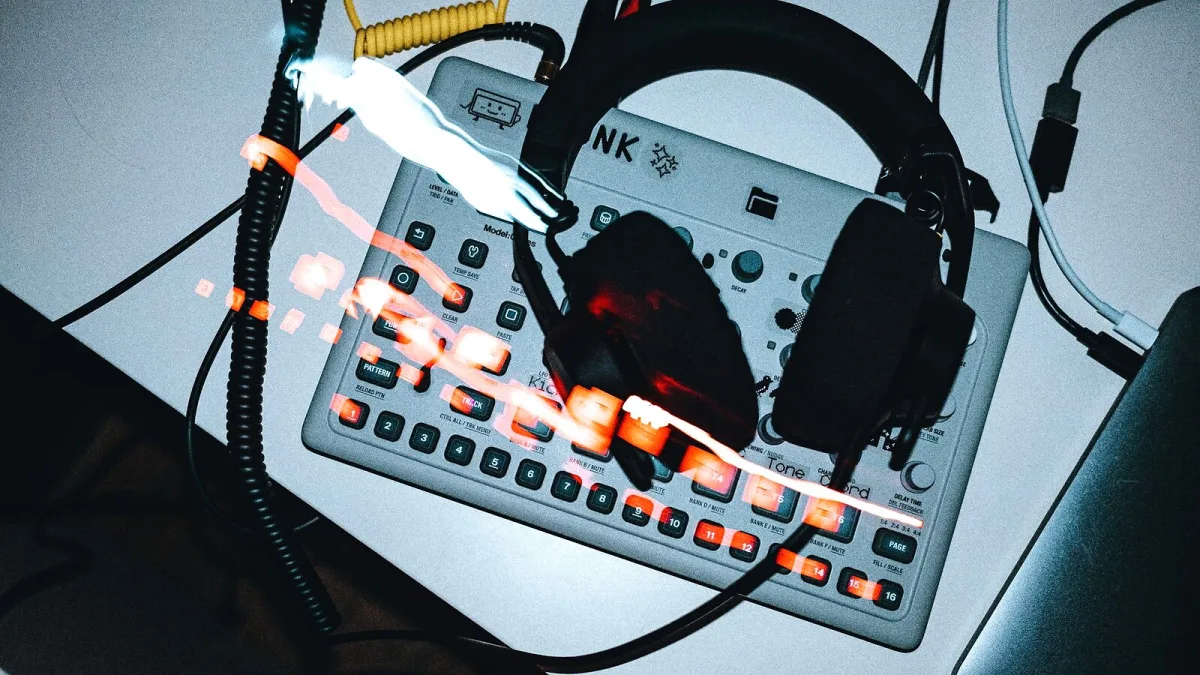
Put a needle-sharp electric piano on any track from 1986 and there is a decent chance you are hearing a Yamaha DX7. The Yamaha DX synthesizers changed what pop, R&B and film music could sound like almost overnight, and they did it with a technology most players had never touched before: frequency modulation. Here is what these machines actually are, how they work, and why they mattered so much.
What Made the DX7 Different
Launched in 1983 alongside the flagship DX1, the DX7 arrived at exactly the moment music was turning digital. Where the analogue synths that came before it built sounds by filtering rich waveforms, the DX7 used frequency modulation (FM) synthesis — a technique developed by Stanford researcher John Chowning, which Yamaha licensed and turned into a genuinely mass-market instrument. Yamaha's own figures put total DX-series sales at roughly 420,000 units worldwide, making it one of the most commercially successful digital synthesizer families ever built.
The DX7 offered stable digital tuning, velocity-sensitive keys, aftertouch, MIDI connectivity and a relatively portable design, all at a price genuinely within reach of working musicians rather than only major studios.
How FM Synthesis Actually Works
In basic terms, one oscillator — the modulator — rapidly changes the frequency of another oscillator, the carrier. Depending on the frequency ratio between them, that relationship can produce anything from a clean, bell-like tone to a harsh, metallic growl. A DX7 voice is built from six of these “operators,” connected according to one of 32 fixed algorithms, with each operator carrying its own envelope, output level and frequency setting.
Four-operator models in the range, like the DX9, DX21 and DX100, use a smaller version of the same idea. They cannot build quite the same layered complexity as a six-operator DX7, but they can still produce convincing basses, bells and electric pianos.
The Full DX Family Tree
| Model | Year | What set it apart |
|---|---|---|
| DX1 | 1983 | Flagship dual-engine model with polyphonic aftertouch |
| DX7 | 1983 | Six operators, 32 algorithms, the definitive DX sound |
| DX9 | 1983 | Cheaper four-operator model, fewer algorithms |
| DX21 / DX27 / DX100 | 1985 | Affordable four-operator FM for home studios |
| DX11 | 1985 | Compact four-operator model with expanded features |
| DX7 II | 1987 | Updated DX7 with improved MIDI and more memory |
| Reface DX | 2015 | Modern, compact FM synth with a friendlier interface |
Yamaha's original Yamaha DX synthesizers are long out of production, but the underlying FM approach lives on today in the company's FM-X engine, found in current instruments like the MODX series.
The Sounds That Defined a Decade
The DX7 became closely associated with one preset above all others: E. PIANO 1, still nicknamed “the DX7 piano” decades later. MusicRadar has reported estimates that this single patch appeared on a striking share of the US charts in 1986 — a figure worth treating as an industry estimate rather than a precise count, but it captures how dominant the sound became. Artists linked with DX7 sounds across the era include a-ha, Whitney Houston, Prince, Stevie Wonder and Tears for Fears, among many others, with Brian May reportedly using a DX7 orchestral patch on Queen's “Who Wants to Live Forever.”
Strengths and Limitations
- Strengths: stable tuning, distinctive electric pianos and bells, expressive velocity response, strong bass attacks, genuine historical significance.
- Limitations: notoriously fiddly front-panel programming, no resonant filter in the analogue sense, no onboard effects on the original DX7, and small, dated displays that make patch editing slow.
That programming difficulty is precisely why so many players leaned on factory presets and third-party patch libraries rather than building sounds from scratch — and why a handful of patches became so recognisable.
Where FM Synthesis Lives Today
You do not need a forty-year-old machine to hear this technology in action. Yamaha's modern FM-X engine, built into the MODX range, extends the same basic operator-and-algorithm idea with deeper modulation and modern workflow features, while the compact Reface DX brought a friendlier version of the classic sound back into current production. Vintage units remain popular too, prized specifically for their historical sound and hands-on hardware feel. Software emulations have also multiplied over the years, giving producers who will never own the original hardware a practical way to reach for that same E. PIANO 1 tone without hunting down a forty-year-old keyboard.
Explore the Range Further
If you are thinking about buying one, our buyer's guide covers exactly what to check on vintage hardware. For a tier-by-tier look at which model suits which player, see our round-up of the best options. Total newcomers to FM synthesis will find a gentler starting point in our beginner's guide, and anyone already owns one should read our list of common mistakes to avoid.
The Bottom Line
Few instruments changed the sound of a decade the way the Yamaha DX synthesizers did. Understanding the basic idea behind FM — one wave shaping another — unlocks why these machines sound the way they do, and why their DNA is still audible in Yamaha's synths today.





Comments