


Yamaha Dx Synthesizers roundup
Yamaha Dx Synthesizers: A Complete Buyer's Guide
Vintage hardware or modern FM? Here is exactly what to check before buying Yamaha DX synthesizers, from the internal battery to MIDI implementation and aftertouch.
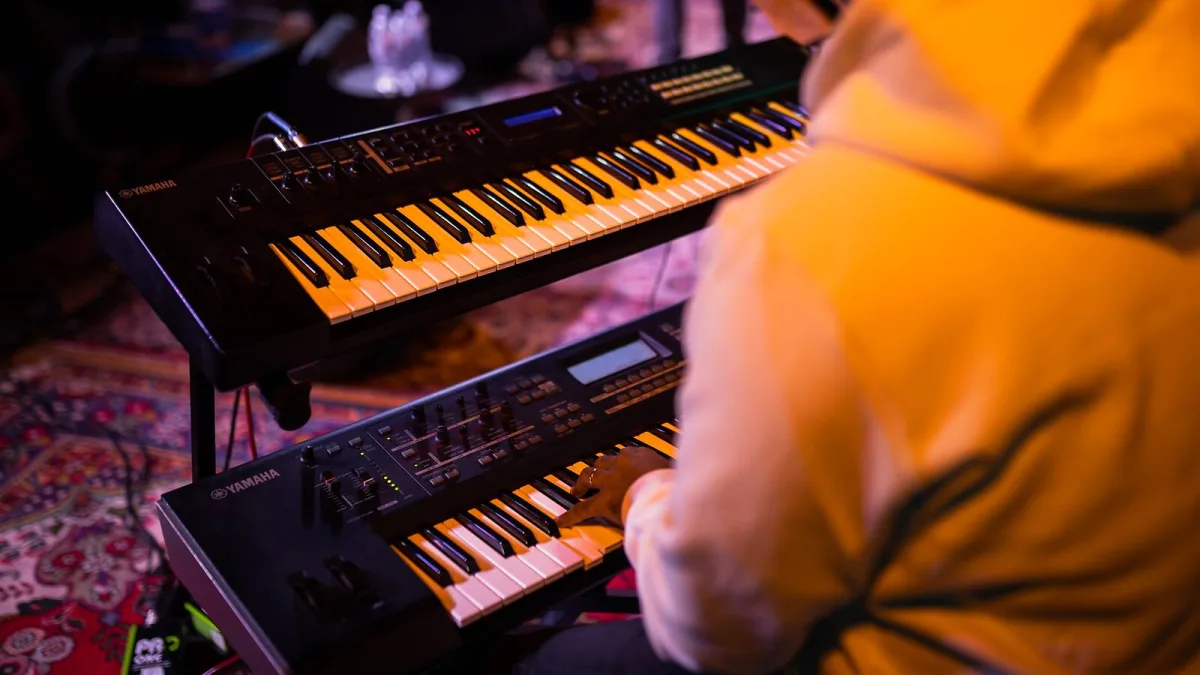
Buying into the world of Yamaha DX synthesizers is genuinely not a single decision — it is really two: vintage hardware or a modern route to the same FM sound, and if hardware, exactly which era of DX to chase. No history lesson here, just what actually matters when money is about to change hands.
Vintage Hardware or Modern FM?
Original DX7s and their siblings are decades old now, and buying one is as much about accepting a vintage instrument's quirks as it is about the sound. If you want the historically authentic workflow, hunting hardware makes sense. If you mainly want the tones without the maintenance risk, Yamaha's Reface DX and current FM-X instruments like the MODX range deliver a modern route to the same underlying technology, with none of the forty-year-old capacitors to worry about.
What to Check on a Vintage Unit
| Check | Why it matters |
|---|---|
| Internal battery | Old batteries can leak and corrode internal circuitry, and a dead one wipes patch memory |
| Patch retention after power-off | Confirms the battery and memory circuit are actually healthy |
| Key contacts and velocity response | Sticky or inconsistent contacts are common after decades of use |
| Aftertouch operation | A worn aftertouch strip is a frequent, fiddly-to-repair fault |
| Display condition | A dim or damaged screen makes an already fiddly instrument harder to program |
| MIDI in/out/thru | Confirms the unit can actually integrate with a modern studio |
| Cartridge port | Relevant if you want to use original factory sound cartridges |
Whichever Yamaha DX synthesizers you're considering, ask specifically whether the seller has replaced the internal battery. If they have not and cannot confirm patch retention, budget for that job immediately — it is the single most common failure point on these machines.
Six Operators or Four? What You Actually Gain
A six-operator DX7 gives you more possible modulation routings across its 32 algorithms than the four-operator models like the DX9, DX21 or DX100. That extra complexity buys you richer, more layered evolving textures. But do not assume four operators means a compromise everywhere: those smaller models still produce genuinely convincing basses, bells and electric pianos, and their simpler architecture can actually be a little quicker to grasp when you are starting to build patches from scratch.
MIDI, Aftertouch and Velocity: Why They Matter
These three specs decide how expressive and how compatible your purchase will actually be:
- MIDI implementation — check it can talk properly to your DAW or other gear; the later DX7 II improved on the original's MIDI spec.
- Velocity sensitivity — on FM instruments, velocity often shapes timbre, not just volume, so a worn or inconsistent velocity response genuinely changes how patches sound.
- Aftertouch — useful for expressive modulation while holding a note, but a common wear point worth testing before buying.
Patches, Cartridges and Software Editors
Because programming these instruments from the front panel is genuinely fiddly, a huge amount of the DX7's appeal historically came from factory presets and third-party cartridges rather than sound design from scratch. If you are buying a vintage unit, ask whether any original ROM or RAM cartridges are included, since a bare keyboard with only its stock voices is a more limited purchase than one that comes with a decent patch library. A software editor, run from a laptop, also makes programming dramatically less painful than wrestling with a small character display, and is worth factoring into your budget even if it is not part of the instrument itself.
Common Buying Pitfalls
- Assuming every DX model sounds interchangeable. A DX9 and a DX7 are not the same instrument with a different badge.
- Ignoring the battery question. It is the single most predictable maintenance issue across the whole range.
- Chasing rare flagship models like the DX1 or DX5 without budgeting for servicing. Rarity often means harder, costlier repairs.
- Buying vintage purely for the name without checking condition. A rough example can cost more to fix than a cleaner unit cost to buy.
More on Yamaha DX Synthesizers
If some of the technical language above needs unpacking, our complete guide explains FM synthesis and the full model history from first principles. For a tier-by-tier look at which model suits which budget, see our round-up of the best options, and total newcomers to FM might prefer the gentler beginner's guide as a starting point instead.
The Bottom Line
Buying Yamaha DX synthesizers sensibly comes down to three questions: vintage or modern, six operators or four, and has the battery been dealt with. Get honest answers to those three before you spend a penny, and everything else is really just personal taste.





Comments