


Fender article
Fender for Beginners: A Complete Guide
Nervous about your first proper guitar? Here's exactly why a Fender is a kind place to start, and what to expect in those first few weeks.

If you're nervous about buying your first proper guitar, take a breath — a Fender is one of the kindest brands you could start with. The shapes are simple, the parts are easy to service, and there's a genuinely affordable way in at every stage. Here's exactly where to start, what to buy alongside it, and what to expect in those first few weeks.
Why a Fender Makes Sense as a First Guitar
Fender guitars use what's called a bolt-on neck — screwed to the body rather than glued — which means if anything ever needs adjusting or replacing later, it's straightforward and affordable to sort out. That's one less thing to worry about while you're learning, and it's a big part of why so many teachers and shops recommend starting with a Fender.
Start With Squier, Honestly
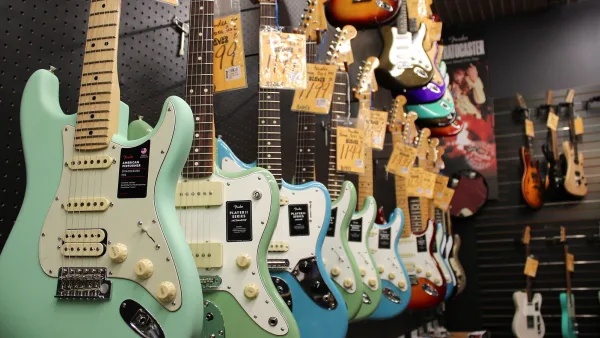
Squier is Fender's own entry-level line, and there's no shame at all in starting there — plenty of experienced players keep one around. You'll find the same familiar shapes, just built to a beginner-friendly price, so you're learning on a genuine, playable instrument rather than something that fights you at every turn. When you're ready to step up, the Player series is the natural next move for a Fender player, and there's no rush to get there.
Stratocaster or Telecaster? Here's the Simple Version
| Telecaster | Stratocaster | |
|---|---|---|
| Pickups | Two, simple to understand | Three, with a five-way switch |
| Bridge | Fixed — very low maintenance | Tremolo — needs a touch more care to stay in tune |
| Feel | Direct, punchy | Rounder body contours, more versatile |
Neither is "better" — if you'd rather have fewer things to think about while you're learning, a Telecaster's fixed bridge is genuinely one less variable. If you like the idea of that wobbly vibrato sound, a Stratocaster is worth the very slightly extra care. Left-handed beginners should simply ask the shop what's available in either shape before falling in love with a specific colour, since left-handed stock is naturally more limited.
What Else You'll Actually Need
- A small practice amp — a modest valve or solid-state combo will make everything you play on a Fender sound far more encouraging.
- A clip-on tuner, so you're never guessing whether you're in tune.
- A soft gig bag to keep your new guitar protected.
- A pack of spare strings and a few picks of different thicknesses to try.
- A cable if your amp isn't built into a headphone practice unit.
Your First Few Weeks
Don't expect it to feel natural straight away — it doesn't, for anyone. A sensible order to work through with a new Fender is: get comfortable holding the guitar and finding a relaxed posture, learn to tune it by ear or with your clip-on tuner, practise a few basic open chords, and only then start worrying about anything more technical like the tremolo. Little and often beats one long, frustrating session every time, and your fingers genuinely do toughen up within a few weeks.
Common Worries, Answered Kindly
Worried you'll buy the "wrong" one? You genuinely won't, provided you stick to a proper Squier or Player instrument rather than a very cheap unbranded copy. Worried about the tremolo going out of tune? A Telecaster's fixed bridge sidesteps that concern entirely if it's putting you off. And if a string buzzes or the action feels high on your Fender, that's an easy, cheap adjustment for a shop to make — not a sign you've made a mistake, and not something to be embarrassed about asking for.
It's Fine to Ask for Help
Take a friend who plays, or ask a member of staff to run through the basics with you in the shop — how to check the tuning, how the tremolo behaves, whether the action feels comfortable for your hands. Nobody expects a first-time buyer to know all of this already, and a decent shop will be happy to talk you through it rather than just take your money and wave you off.
The Bottom Line
Start with a Squier or Player, pick the shape that worries you least, and give yourself permission to sound rough for a few weeks — everyone does. Once you're feeling steadier, our Fender explained guide fills in the bigger picture, and our complete buyer's guide is there for when you're ready to choose your next one. Curious what represents real value along the way? Take a look at the best Fenders for the money — and once you own one, it's worth knowing the common mistakes to avoid.



Comments