


Fender roundup
Fender: A Complete Buyer's Guide
Which shape, which tier, and what to check if it's used: everything you need to buy a Fender with confidence, in the right order.
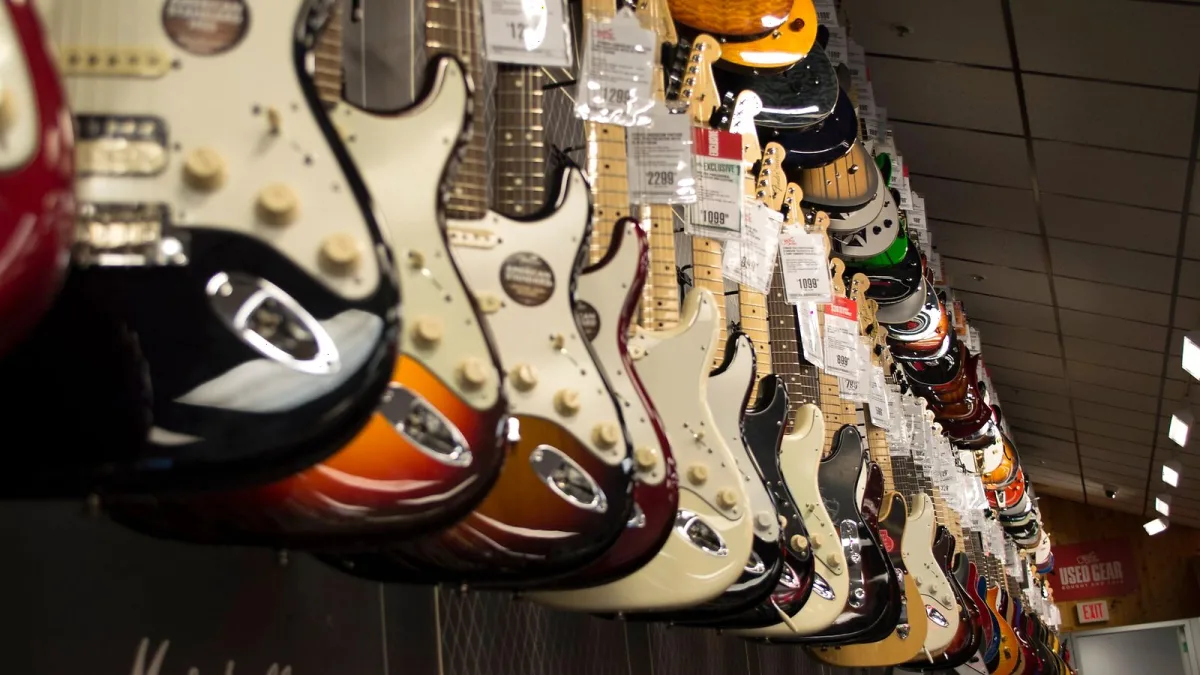
Buying a Fender isn't as simple as walking in and grabbing whichever one looks good under the shop lights — not when the same shape comes in six different tiers and two different countries of manufacture. If you're about to spend real money, here's exactly what to weigh up before you commit, from picking a model to checking a used guitar over properly. None of it takes long once you know what you're actually looking for.
Pick the Sound First, Not the Shape
Before tiers or budgets, work out what you actually want to hear. A Telecaster gives you two pickups, a fixed bridge and a punchy, direct attack that cuts through a band mix — brilliant for rhythm work, country twang or straight-up rock riffs. A Stratocaster adds a third pickup, five-way switching and a tremolo bridge (a spring-loaded system that lets you bend pitch), giving you a much wider tonal spread for blues, funk and expressive lead playing. Want something wilder? The Jazzmaster and Jaguar bring offset bodies, floating vibratos and more complex switching, historically favoured by surf and alternative players, while the short-scale Mustang suits players who want a compact neck and a looser feel. Not sure which shape actually suits you? Our Fender explainer breaks down every model's personality in more depth.
Understand the Tiers Before You Look at a Single Guitar
This is where most Fender buyers get caught out. The same model name is sold across a whole ladder of tiers:
| Tier | What it means |
|---|---|
| Squier | Affordable, entry-level line |
| Player / Player II | Mexican-made, aimed at working musicians |
| Vintera / Classic-style | Historically inspired specifications |
| American Professional II | US-made, modern professional spec |
| American Ultra | Higher-end, refined playability and hardware |
| Custom Shop | Vintage recreations, artist and custom builds |
Know which tier of Fender you're actually looking at before you fall for a colour or a headstock logo — the tier tells you far more about build quality and price than the model name does on its own. It's also worth remembering that lineups, finishes and regional availability shift fairly often, so treat any single retailer's current listing as a snapshot rather than a permanent catalogue.
New vs Used: Both Can Be Brilliant Buys
A brand-new Fender means a full warranty and a factory setup, with no history to worry about. A used one can get you a lot more guitar for the money — but only if you check it properly first. Look at:
- Neck straightness and whether the truss rod (the internal rod that counteracts string tension) still has adjustment left in it.
- Fret wear and how well the fret edges are finished.
- Nut slots and whether open strings hold tuning cleanly.
- Bridge alignment and how much saddle travel is left for setting intonation.
- Pickup height and any obvious electrical noise or hum.
- Whether the pots and switches feel scratchy or crackle when you move them.
- The serial number, country of manufacture and any modifications or refinishing.
On that last point, don't treat a serial number as gospel — it's a useful clue on any Fender, not final proof. Dating a guitar properly means cross-checking the headstock shape, decal style, hardware and construction details too.
What a Proper Setup Should Cover
Whether you're buying new or used, it's worth knowing what a competent setup actually involves, so you can ask the right questions at the till. A full setup runs through the string gauge and tuning, neck relief, bridge or saddle height, pickup height, and finally intonation — fine-tuning each string's length so it plays in tune all the way up the neck. If a shop can't tell you whether any of that has been done, budget for a proper setup yourself before you gig the guitar.
If You're Buying a Bass Instead
The same logic applies to the bass side, just with a different choice at the top: a Precision Bass for a punchy, focused split-coil tone and dead-simple controls, or a Jazz Bass for two single-coil pickups you can blend for a wider tonal range and a slightly narrower neck. Both are proven, gig-ready designs — it genuinely comes down to feel and the sound you're chasing.
Don't Skip the Amp
A brilliant Fender through a mismatched amp will always sound like a missed opportunity. A small valve amp with genuine clean headroom flatters a single-coil-loaded guitar far more than a cheap solid-state practice amp ever will, so budget for the amp before you spend everything on the guitar itself. If you're buying a bass, look specifically for a bass-rated amp or combo rather than assuming a guitar amp will do the job.
The Bottom Line
Choosing a Fender means working through three questions in order: which shape suits your playing, which tier fits your budget, and — if it's used — whether it actually checks out mechanically. Get those three right and you can't really go wrong. Still torn on what actually counts as good value at each price point? Have a look at the best Fenders for the money. Buying your very first electric? Fender for beginners is written exactly for that moment, and it's worth reading common Fender mistakes to avoid before you hand over any money.




Comments