

Epiphone Es 335 roundup
The Best Epiphone Es 335s for the Money
There's more than one sensible budget here, not just one correct answer — here's where each tier actually earns its price.

I remember the first time a mate let me plug into her Epiphone ES-335 at a rehearsal room in Deptford — that warm, slightly woody clean tone completely rearranged what I thought an electric guitar could sound like. If you're chasing that same feeling with an Epiphone ES-335, the good news is there's genuinely a sensible option at more than one budget, not just one "correct" answer.
The Honest Starting Point: The Standard Model
For most people, the standard production model is where the real value lives. You get the fundamental design done properly — the 5-ply maple body, that clever centre block, a proper glued-in mahogany neck, and a pair of Alnico Classic PRO humbuckers that do a genuinely respectable job across clean and driven tones alike. This isn't a "settle for less" option; it's the same core idea that's made the shape famous for decades, just without the extra spend on vintage-specific detailing you might not even notice day to day.
When "Inspired by Gibson Custom" Actually Earns Its Premium
If you're the kind of player who genuinely cares about period-correct detail — the exact pickup voicing, the right hardware, that specific vintage feel under your fingers — the step up to an Inspired by Gibson Custom version is where your money starts buying something you'll actually notice. Think upgraded pickups like Gibson Custombuckers, more historically accurate appointments, and finer construction touches throughout. It's not a subtle upgrade for the sake of it; it genuinely changes the character in your hands, and it's worth every penny to someone who cares about that.
Where it's not worth the money is if you mainly want a good semi-hollow tone for gigging and recording without obsessing over vintage accuracy. In that case, you're paying a premium for details that live more in the spec sheet than in what an audience actually hears.
Signature Models: Buy the Player, Not Just the Name
The Jim James and Joe Bonamassa signature versions are genuinely lovely instruments, each built around that specific player's own pickup and hardware choices — the Bonamassa model, for instance, runs Gibson BurstBucker 2 and 3 pickups rather than the standard Alnico Classic PROs. These are worth seeking out if that particular player's tone is genuinely what you're after. They're not automatically "better" than the regular range for everyone else, so don't buy one purely for the name on the truss rod cover if the tone underneath isn't actually what you need.
The Smart Money Move: Buy Used, Buy Carefully
Here's my honest advice as someone who's spent a lot of weekends digging through secondhand shops: a well-cared-for used example, at any tier, is often the smartest spend of all. Guitars like this hold up well physically when looked after, and you can often get meaningfully more guitar for your money than buying new at the same price. Just do the proper checks — neck alignment, fretwork, electronics, feedback behaviour at real volume — and confirm exactly which tier and model you're actually looking at before you fall in love with it.
Don't Forget the Case
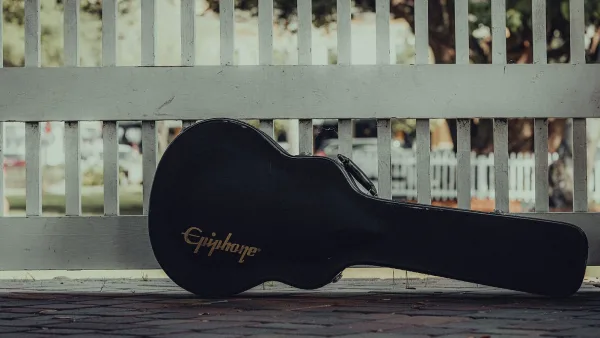
This is the bit people skip when they're excited about a new Epiphone ES-335, and I genuinely understand why — you want to play it, not think about luggage. But that big, gorgeous semi-hollow body with its open f-holes is more vulnerable to a knock than a solid-body guitar's chassis, so a proper hard case or a well-padded gig bag is one upgrade I'd never skip regardless of which tier I'd bought. It's not glamorous money, but it protects everything else you've just spent on.
Where the Money Isn't Worth Spending
- Chasing the most expensive finish option purely for looks, when a cheaper finish carries identical hardware and electronics.
- Buying a signature model for the name alone, without genuinely wanting that specific player's tonal choices.
- Assuming higher price always means better sound for you — personal feel and tonal preference matter more than tier alone.
Bottom Line
For most players, the standard Epiphone ES-335 is the smartest starting point, with the Inspired by Gibson Custom tier reserved for people who'll genuinely notice and value the extra authenticity. Whichever tier calls to you, our buyer's guide covers exactly what to check before you commit, and our full overview is worth a read if you want the complete picture first.




Comments