


Epiphone Es 335 article
Common Epiphone Es 335 Mistakes to Avoid
I've watched plenty of excited players trip over the same handful of things, usually because nobody explained why the guitar behaves this way.
Right, let's talk mistakes, because I've watched plenty of genuinely excited players trip over the same handful of things with an Epiphone ES-335, usually because nobody explained WHY the guitar behaves the way it does. Sort these out on your own Epiphone ES-335 and you'll get so much more out of it, honestly.
Cranking the Gain and Getting Confused by Feedback
This is the classic one. You plug into a loud amp, whack the gain up expecting Les Paul behaviour, and suddenly the whole thing starts howling at you. That's the hollow chambers doing exactly what hollow chambers do at serious volume and gain — it's not a fault, it's physics. The solid centre block genuinely helps compared with a full archtop, but it's not a magic shield. Learn where your particular amp and gain setting starts causing trouble, and work with that limit rather than fighting it every gig.
Assuming Every ES-335 Has the Same Pickups
I still see people compare a standard model's tone to a Bonamassa signature and conclude one's "better," without realising they're not even running the same pickups. Standard models typically carry Alnico Classic PRO humbuckers; Inspired by Gibson Custom versions often run Gibson Custombuckers; the Bonamassa signature uses Gibson BurstBucker 2 and 3s entirely. Compare like with like, or you're not actually comparing the guitar — you're comparing completely different pickups wearing the same body shape.
Treating It Like a Les Paul in Terms of Weight and Balance
It's a genuinely different physical object. The semi-hollow body sits and balances differently on a strap than a chunkier solid-body guitar, and some examples can feel a touch neck-heavy if you're not used to it. Try it properly on a strap, standing up, before you decide the neck feel or balance isn't for you — sitting down with it on your knee tells you almost nothing about how it'll actually behave on stage.
Skipping the Case Because "It Looks Sturdy"
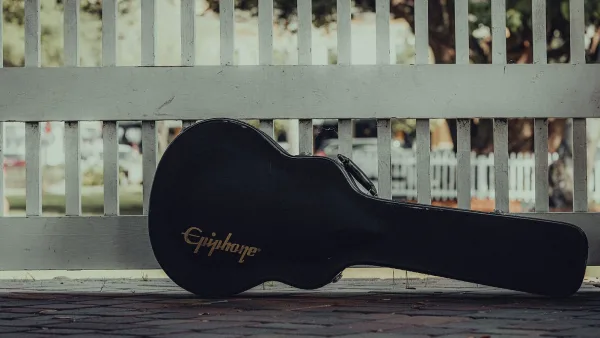
It looks like a solid, substantial guitar, and in a lot of ways it is, but those open f-holes and the semi-hollow construction genuinely make the body more vulnerable to a knock or a drop than a slab of solid mahogany. I've seen more than one lovely example picked up a dent from being casually leant against an amp that a solid-body would've shrugged off. A proper case or padded gig bag isn't optional here, it's just sensible.
Buying on Artist Association Alone
Yes, the shape has serious pedigree — B.B. King, Eric Clapton, Larry Carlton, Noel Gallagher, the list goes on. But that's mostly the Gibson ES-335 lineage in general, and it genuinely doesn't confirm any specific player used the exact Epiphone version you're eyeing up. Buy it because it sounds and feels right in your hands, not because a legend was photographed near something similar-looking decades ago.
Confusing It With the ES-339 in Casual Conversation
These get mixed up constantly online, and it genuinely matters, because the ES-339 is a meaningfully smaller-bodied guitar — about 14 inches across the lower bout against the ES-335's 16. If you're buying based on someone else's recommendation or a forum thread, double-check which one they're actually talking about before you order anything, because the fit and feel are properly different.
Forgetting the Weight of Genuine Semi-Hollow History
It's easy to treat any Epiphone ES-335 as just another shape on the wall, but the design has genuinely earned its reputation across blues, jazz and classic rock for decades. That's not a mistake in the strict sense, more a missed pleasure — take a moment to actually appreciate why this shape has stuck around so long rather than rushing straight past it to the spec sheet. Half the joy of playing one, honestly, is knowing you're holding a genuinely significant piece of electric guitar design history, not just another rectangle of wood with strings on it.
Ignoring the Setup After Changing String Gauge
Factory setups vary — some ship with lighter .009s, plenty with .010–.046 — and if you switch gauge afterwards without getting a proper setup done, you're leaving tone, playability and intonation on the table. It's a cheap, quick job that makes a genuinely noticeable difference, and skipping it is a false economy for the sake of a small saving.
Bottom Line
Most Epiphone ES-335 mistakes come from treating it like a solid-body guitar with extra holes cut in it, rather than understanding what the semi-hollow design actually changes. Get the tier and pickups straight, respect the body a bit, and this guitar will reward you properly. For the full picture, our overview covers the build and model range in depth, and our buyer's guide is there for when you're ready to actually shop.





Comments