


Epiphone Es 335 article
Everything You Need to Know About Epiphone Es 335
Not the marketing blurb version — here's what you're actually getting with a semi-hollow ES-335, and why it feels different.
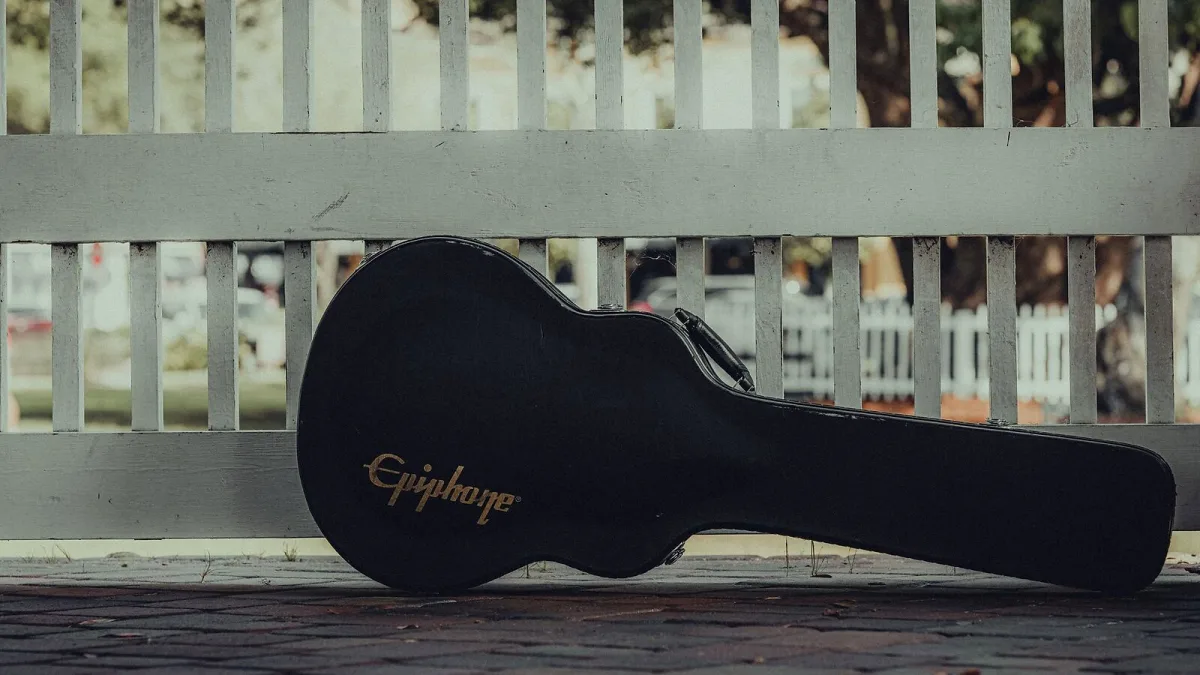
Right, let's talk about the Epiphone ES-335 properly — not the marketing blurb version, the actual "here's what you're getting and why it feels different" version. If you've only ever played solid-body guitars, this one's a bit of a revelation, and it's worth understanding why before you go anywhere near a shop.
What "Semi-Hollow" Actually Means
The clue's in the name, but it's worth spelling out properly. Underneath the top, an ES-335 has a solid maple block running down the centre of the body, directly beneath the bridge and pickups, while the chambers either side of it stay hollow. You get some of the air and resonance of a proper hollow-body guitar, but the centre block gives you sustain and feedback resistance a fully hollow instrument simply can't match at higher volumes. It's a genuinely clever bit of engineering, not just a cosmetic in-between.
Build and Spec
The standard Epiphone ES-335 is built from a 5-ply layered maple body with that maple centre block, paired with a glued-in mahogany neck — a proper set neck, not bolt-on, which matters for sustain and how the guitar resonates as a whole.
| Feature | Typical spec |
|---|---|
| Body | 5-ply layered maple, semi-hollow, maple centre block |
| Neck | Mahogany, glued-in, Rounded C profile |
| Scale length | Approx. 24.75" |
| Fingerboard | 12" radius, 22 medium-jumbo frets |
| Pickups | Two Alnico Classic PRO humbuckers |
| Controls | Two volume, two tone, three-way selector |
| Bridge/tailpiece | Tune-o-matic-style bridge, stopbar tailpiece |
Worth flagging: exact specs shift a bit by year, finish and market — some listings quote a 24.72" scale rather than 24.75", and fingerboard wood varies between models, with laurel appearing on many current standard-issue necks and rosewood turning up on some upgraded versions. Always check the specific product page for the exact guitar in front of you rather than assuming every example on the rack is built identically.
How It Actually Sounds
Clean, it's warm, rounded and genuinely capable of proper jazz clarity — that hollow chamber air doing its job. Push it into overdrive and it holds together beautifully for blues, classic rock and melodic lead work, with more sustain than you'd get from a fully hollow guitar because the pickups and bridge sit over that solid centre block. It is still more prone to feedback than a solid-body guitar at serious gain and volume, just nowhere near as prone as a full archtop hollow-body. Know the difference and you won't get any nasty surprises on a loud stage.
The Model Range, Sorted Properly
This isn't a one-size-fits-all guitar. The standard Epiphone ES-335 is the value play — the fundamental design done well for a sensible price. Step up to an "Inspired by Gibson Custom" version and you're paying for genuinely more historically accurate appointments: period-correct hardware, upgraded pickups such as Gibson Custombuckers, and finer details aimed at players who care about vintage authenticity. Above that sit signature models like the Jim James ES-335 and the Joe Bonamassa 1962 ES-335, each with its own pickup choices and appointments that differ from the standard model — don't assume they're just a standard ES-335 with a different name on the headstock.
ES-335 or ES-339?
If you've also seen the ES-339 mentioned, know that it's the same basic idea in a smaller body — roughly 14 inches across the lower bout against the ES-335's 16 inches. Less acoustic presence and visual size, but easier to handle for some players. Neither is "better"; it's a genuine fit question, not an upgrade path.
A Word on Famous Players
The wider ES-335 family has a genuinely serious pedigree, with players including Larry Carlton, Chuck Berry, B.B. King, Eric Clapton, Alvin Lee, Noel Gallagher and Dave Grohl all associated with the shape over the decades. Worth being honest here, though: that's the ES-335 lineage in general, mostly on Gibson-branded instruments, not proof that any particular player used an Epiphone version specifically. Enjoy the heritage for what it is, but don't let it do the deciding for you when you're choosing your own guitar.
Where to Go Next
If you're actually shopping, our buyer's guide covers exactly what to check before you commit, and our value guide looks at which tier makes sense for your budget. New to semi-hollows entirely? Our beginner's guide is the gentler starting point, and it's worth a read of common mistakes to avoid before you buy.
The Bottom Line
The Epiphone ES-335 earns its reputation honestly: real semi-hollow tone and feel, at a price that doesn't require a Gibson budget. Understand the centre block, know which tier you're actually looking at, and it stops being a mysterious "in-between" guitar and starts making complete sense.





Comments