


Yamaha Electric Bass Guitar article
Yamaha Electric Bass Guitar for Beginners: A Complete Guide
Why a passive, four-string Yamaha bass guitar like the TRBX174 is the sensible starting point, and what beginners can safely ignore for now.
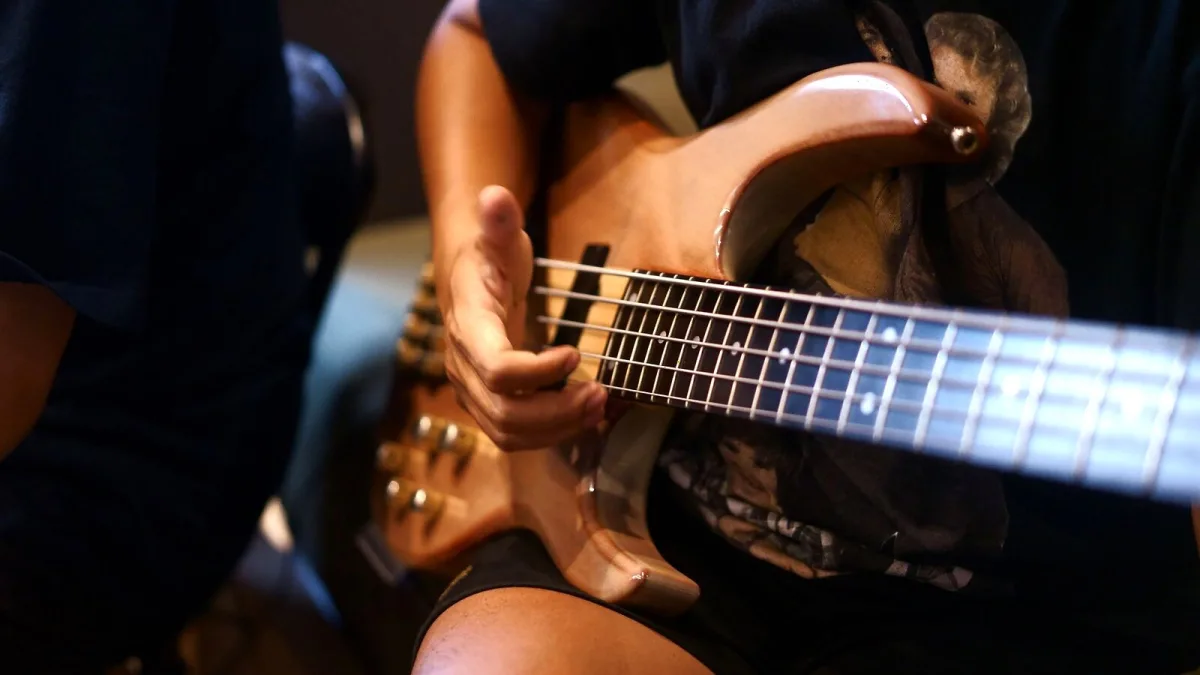
Picking your first Yamaha bass guitar is a good problem to have — the range is wide enough to actually suit a beginner properly, rather than forcing you into something built for someone three years ahead of you. Let's go through the bits that actually matter when you're starting out, and skip the bits that don't yet.
Why Yamaha is a sensible place to start
Yamaha builds across a genuinely huge range, from proper entry-level instruments through to professional-grade basses used by players like Billy Sheehan and John Patitucci. That matters for a beginner because it means the cheapest models in the range aren't afterthoughts — they're built by the same company applying the same manufacturing standards to instruments that professionals also rely on further up the catalogue.
The one decision that actually matters early on: TRBX174
For a first bass, the TRBX174 — the entry point into the TRBX Series — is the model most worth looking at. It runs passive electronics, which is exactly what you want as a beginner: no battery to worry about, no extra EQ knobs to get confused by, just a straightforward signal you can focus on actually playing. It sits on the standard 34-inch scale too, so you're learning on the same string spacing and feel you'll likely stick with for years.
Passive electronics: why simpler is better here
Some Yamaha basses, especially further up the TRBX and BB700 ranges, run active electronics — an onboard preamp powered by a 9V battery, giving you extra bass, mid and treble control. It's a genuinely useful feature once you know what you're listening for. As a beginner, though, it's one more thing that can go wrong (a dead battery kills your signal entirely) and one more set of controls to learn before you've even got your right-hand technique sorted. Passive first, active later — that's the sensible order.
BB or TRBX for a beginner?
Technically, either family can work as a first Yamaha bass guitar, but they suit slightly different starting points:
- TRBX — broader tonal range, modern feel, and the clearest entry-level pricing ladder if you want to know exactly what you're stepping up to later.
- BB — a more traditional P/J pickup tone, worth considering if you already know you're chasing a classic rock or pop sound specifically.
If you're not sure yet what style you'll end up playing most, TRBX is the more flexible starting point.
Setting realistic expectations about tone
It's tempting to think a fancier body wood or a flamed top will transform how you sound. In reality, a flamed maple top on something like the TRBX604FM is mostly a visual upgrade — your pickups, your amp, your technique and a decent setup will shape your actual tone far more than the wood grain will. Save the tone-chasing questions for once you've got a year or two of playing under your fingers.
Getting comfortable with the instrument
A few basics worth checking on any bass you're considering, new or used:
- Does the neck feel comfortable, or does it feel too wide or too narrow for your hand right now?
- Is the action (string height) reasonably low and easy to press, rather than requiring real effort per note?
- Does it stay roughly in tune as you play up and down the neck (a rough check on intonation)?
- Is the weight manageable when you're standing with a strap on for a full practice session?
None of these need to be perfect on day one — a good local shop or a competent tech can sort minor setup issues cheaply. But a bass that's fundamentally uncomfortable to hold is worth avoiding from the start.
What you don't need to worry about yet
Five- and six-string basses, the extended-range TRB Series, and signature instruments like Billy Sheehan's Attitude are all genuinely interesting once you're further into playing — but they solve problems you haven't run into yet. A standard four-string is the right starting point for essentially every beginner, regardless of what style you end up gravitating towards.
Where to go next
Once the basics feel comfortable, our overview guide lays out the full family tree, and our best-for-the-money round-up is worth a look when you're ready to think about your second bass rather than your first.
The bottom line
Start with a passive, four-string, standard-scale Yamaha bass guitar — the TRBX174 is the obvious candidate — and don't worry about active electronics, extended range or fancy tops until you actually know what problem they'd solve for you. Everything else can wait.






Comments