


Powered Amps roundup
The Best Powered Amps for the Money
Forget one universal "best" amp — here's how to match the right type of powered amp to your actual situation and get genuine value.
Forget chasing one "best" amp and ignore anyone claiming a single box does everything brilliantly. Powered amps split naturally into a handful of jobs, and good powered amps for one job are rarely the right powered amps for another, and the smart move is picking the type built for yours rather than the one with the biggest number on the box. Here's how to think about value across every corner of the market.
Bedroom and Practice Rig: Prioritise Efficiency
If you're powering a modest practice setup or a small home PA, a compact Class D design gets you a genuinely useful amount of clean power without eating your whole budget on size, weight or a cooling system you don't need. You're not chasing headroom for a packed venue here, so efficiency and a small footprint matter more than raw wattage.
Gigging Guitarist: Where Tube Still Earns Its Keep
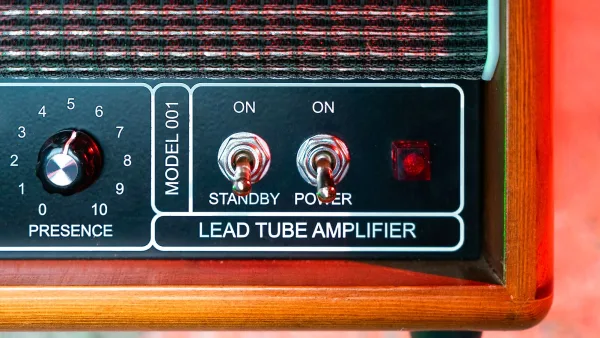
This is the one corner of the market where paying for character genuinely makes sense. Brands like Fender, Marshall and Vox built their reputations on tube power sections that overload and compress in a way solid-state circuits still struggle to match. If your sound depends on how the power amp itself behaves under pressure, not just how loud it gets, this is where the extra weight and maintenance are worth it. Mesa/Boogie, Orange, Peavey and EVH round out the field with tube, solid-state and hybrid options depending on how much of that classic behaviour you actually want.
Bass Players: Lightweight Class D Rules Here
Bass has quietly had the biggest shift of any instrument category. Where a serious bass rig once meant hauling a heavy valve head, brands like Gallien-Krueger, Aguilar, Markbass, Hartke and Darkglass now build genuinely powerful Class D heads that fit in a gig bag pocket. You get the clean low-end power bass actually needs, at a fraction of the weight, with some hybrid designs still offering a tube preamp stage if you want a touch of that classic coloration on top.
Touring and Installed PA: Efficiency at Scale
Once you're talking about proper venue-level sound reinforcement, names like Crown, QSC, Lab Gruppen, Powersoft, d&b audiotechnik, L-Acoustics and Meyer Sound dominate for good reason: efficient, DSP-equipped Class D amplification that can run all night without cooking itself, with built-in loudspeaker management, limiting and network control increasingly standard. This is where the value case for Class D is completely one-sided — the weight and heat savings scale up fast when you're carrying a whole PA rig.
Home Hi-Fi: A Different Set of Priorities Entirely
Hi-fi power amps play by different rules again. Brands like NAD, Marantz, Rotel, McIntosh and Hegel are built around transparency and long-term listening comfort rather than portability or stage volume, and the market still supports genuine Class A and Class AB designs alongside modern Class D options for listeners chasing a particular sonic signature.
A Word on Secondhand Value
Don't overlook the used market when you're weighing up powered amps against a budget. Professional PA amplifiers and bass heads in particular tend to be built to last, get serviced regularly by working musicians and engineers, and often turn up secondhand at a genuine discount with plenty of life left in them. Buying used from a reputable dealer or seller can get you into a genuinely higher tier of amp than a new-only budget would otherwise allow.
Matching the Right Type to Your Situation
| Your situation | What to prioritise | Typical territory |
|---|---|---|
| Bedroom or small practice PA | Efficiency, small footprint | Compact Class D |
| Gigging guitarist | Tonal character over weight | Tube or hybrid heads |
| Bass player | Clean low-end power, light weight | Class D bass heads |
| Touring/installed PA | Efficiency, DSP, reliability at scale | Professional Class D systems |
| Home hi-fi | Transparency, long-term listening comfort | Class A, AB or D depending on taste |
Don't Skip the Fundamentals
Whatever category you're shopping in, value only holds up if the fundamentals check out. Our complete buyer's guide covers the RMS power, impedance and cooling checks that matter regardless of budget, and our list of common mistakes to avoid will save you from a bad purchase decision in any of these categories.
The Bottom Line
The best powered amps for the money aren't a single model, they're a matching exercise: figure out which of these five situations actually describes you, lean into the amplifier type that dominates that space, and you'll get genuinely better value than chasing a generic "best amp" list ever could.





Comments