


Powered Amps article
Everything You Need to Know About Powered Amps
From Class A to Class D, tube to solid-state — everything powered amps actually do, explained without the jargon overload.
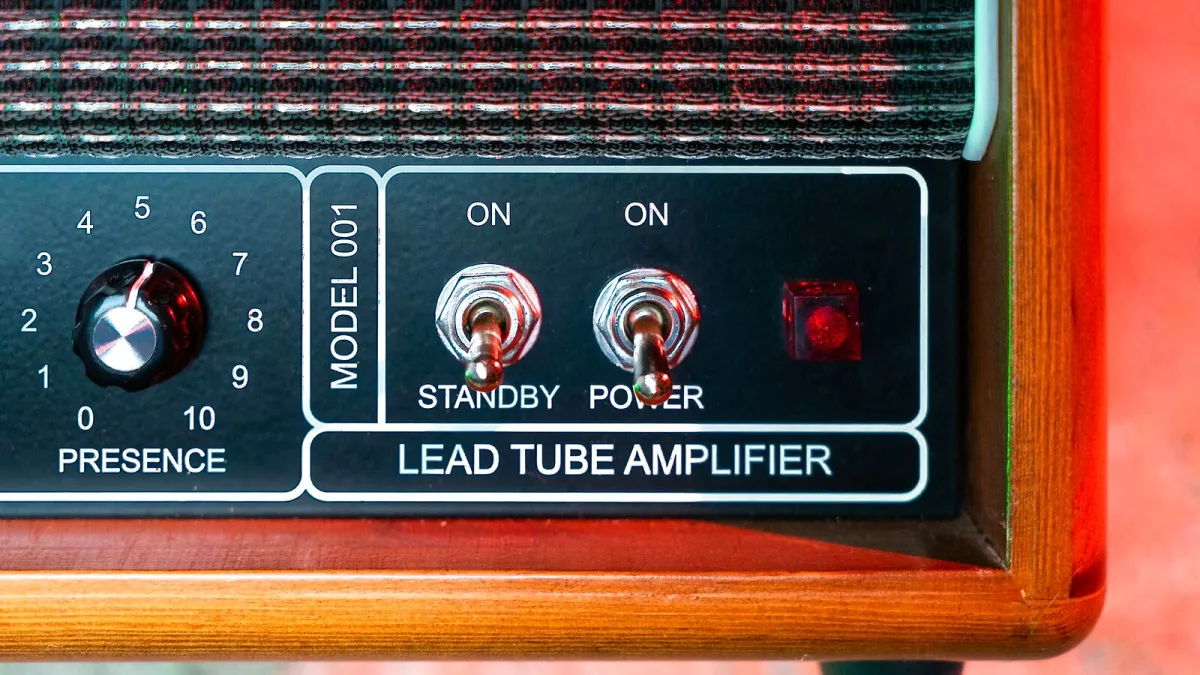
Every loudspeaker in the world needs one thing to make a sound: a signal with enough voltage and current behind it to push a speaker cone back and forth. That job belongs to powered amps. Here's what they actually do, the different forms they take, and how the main circuit types compare.
What Powered Amps Actually Do
In a typical sound system, the signal path runs source, then preamp or mixer, then power amplifier, then loudspeaker. The preamp raises and shapes a weak input signal; the power amp takes that shaped signal and supplies the much larger voltage and current a speaker's voice coil needs to move air. Without that stage, nothing you plug in would be audible beyond headphone volume.
The term covers more ground than a single box, though. Depending on the product, "powered amps" can mean:
- A standalone power amplifier — sits between a mixer or preamp and passive speakers.
- A powered speaker — a cabinet with the amplifier built in.
- A powered mixer — a mixing desk with power amplification integrated.
- An instrument amp — preamp, tone controls, power amp and speaker combined, either as one combo unit or a separate head and cabinet.
A Short History: Tubes to Transistors to Class D
Early power amplifiers relied entirely on vacuum tubes, which produced only moderate output for their size and weight. From the mid-20th century onward, transistors took over most of the market, offering greater reliability, smaller enclosures and higher potential output. Tube designs never disappeared entirely, though — they remain firmly established in guitar and some bass amplification, where musicians actively want the way tubes overload and compress. Today, most professional and touring systems run on efficient Class D circuitry, while Class AB, tube and hybrid designs still hold their ground in specific instrument and hi-fi applications.
Amplifier Classes, Compared
"Class" describes how an amplifier's output devices handle the audio waveform, and it has a big effect on efficiency, heat and, indirectly, size and weight.
| Class | How it works | Main strength | Main limitation |
|---|---|---|---|
| A | Devices conduct the full waveform cycle | Very linear, simple signal path | Inefficient, runs hot |
| B | Separate devices handle each half-cycle | More efficient than Class A | Prone to crossover distortion |
| AB | Devices overlap conduction near the crossover point | Good balance of linearity and efficiency | Heavier and warmer than Class D |
| D | Rapid switching, filtered to reconstruct audio | Highly efficient, compact, lightweight | Needs careful switching and filter design |
A Class D design is not automatically "digital" in the sense of processing a digital audio file — the term refers to a switching output topology, and plenty of Class D designs still accept a straightforward analog input.
Tube, Solid-State or Hybrid?
Tube power sections are prized in guitar and some bass rigs for their gradual overload and harmonic character, though they run hotter, weigh more and need occasional servicing. Solid-state designs trade some of that character for lighter weight, higher reliability and easier upkeep. Hybrid amps try to get the best of both, often pairing a tube preamp with a solid-state or Class D power section. None of the three is objectively "better" — the right choice depends entirely on the sound and the practical demands of the job at hand.
Instrument Amps Versus PA Power Amps
A guitar amp is deliberately part of the instrument's voice; plenty of players push its preamp or power section into distortion on purpose. A PA power amp is generally expected to do the opposite — reproduce the input signal cleanly and reliably, with enough headroom to handle sudden peaks without complaint. Bass sits somewhere in between, often wanting some of a tube's character while still needing serious clean low-frequency output, which is why lightweight Class D bass heads have become so common.
Where to Go From Here
If you're weighing up an actual purchase, our complete buyer's guide covers the specs that matter most. New to the whole idea? Start with our beginner's guide instead. Once you own one, our guide on how to set up and use powered amps walks through safe gain staging step by step, and it's worth checking common mistakes to avoid before you plug anything in.
The Bottom Line
Whatever form they take, powered amps all do the same essential job: turning a small signal into something big enough to move a speaker cone properly. Understanding the classes and circuit types behind that job makes every other decision about buying, setting up or troubleshooting one far easier.





Comments