


Singing Bowl article
Singing Bowl Explained: Features, Types and Tips
A simple shape, a genuinely rich sound, and more marketing myth than most instruments. Here's what a singing bowl actually is.
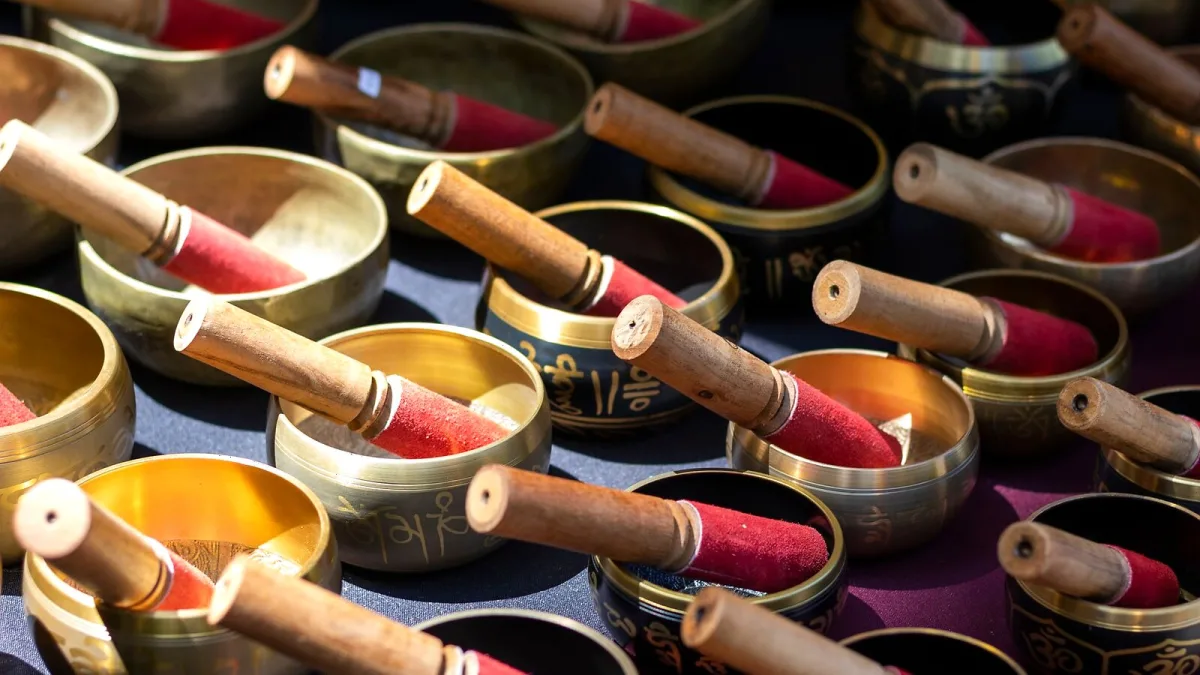
You've almost certainly heard one, even if you've never held one: that long, wavering, bell-like tone that fades in and out during a yoga class or a meditation app. A singing bowl looks simple — a metal or crystal bowl and a small mallet — but there's genuine acoustic science behind that sound, and a fair bit of marketing myth alongside it. Let's separate the two.
What a Singing Bowl Actually Is
It's a type of standing bell: a bell-shaped instrument that rests upright, rather than hanging from above like a church bell. When struck with a mallet, or when the mallet is rubbed steadily around the rim, the bowl's walls vibrate and produce a sustained tone made up of a fundamental pitch plus several audible overtones. That layering of frequencies is exactly what gives the sound its rich, "singing" quality rather than a simple, single-note ring.
Metal and Crystal: The Two Main Families
Nearly every singing bowl you'll come across falls into one of two broad families, and they sound genuinely different.
- Metal (Himalayan-style) bowls — typically hammered or cast from a metal alloy and hand-finished. They tend to produce complex, shifting overtones, audible beating and a warmer, earthier timbre.
- Crystal bowls — made from crushed or clear quartz formed at very high temperatures. These generally give a clearer, more focused, glassier tone with strong projection.
Within those two families, size, wall thickness and shape all shift the pitch and character further, which is why no two bowls, even ones marketed as identical, sound quite the same.
A Note on the "Tibetan" Label
You'll see these instruments marketed almost universally as "Tibetan singing bowls," but the reality is more layered. They're strongly associated with the wider Himalayan region — particularly Nepal and India — and belong to a much older global family of standing bells that includes examples from ancient China. Manufacturer Meinl Sonic Energy notes that only a small proportion of commercially available bowls actually come from Tibet itself, whatever the label says. It's a useful reminder to treat "ancient," "seven-metal" and "Tibetan" as marketing shorthand rather than guaranteed facts about any specific bowl.
What People Actually Use Them For
A singing bowl turns up in a surprising number of settings: Buddhist and Hindu ritual, yoga and meditation instruction, sound-bath sessions, relaxation and music-therapy programmes, and increasingly in ambient, drone and experimental recording. Their appeal in all of these contexts comes from the same acoustic traits — long sustain, drifting pitch, gentle beating between overtones — which make them better suited to atmosphere than to conventional melody.
Worth being clear-eyed about, too: claims that a particular pitch "balances a chakra" or treats a medical condition are wellness interpretations, not established acoustic or clinical facts. Relaxation and a sense of calm are entirely genuine, common experiences; curing illness is not something the evidence supports.
Types at a Glance
| Type | Sound character | Typical use |
|---|---|---|
| Himalayan metal bowl | Complex, warm, earthy overtones | Meditation, ritual, recording |
| Frosted quartz crystal bowl | Clear, sustained, strong projection | Group sound baths, ambient performance |
| Clear quartz crystal bowl | Bright, glass-like, focused | Performance, therapeutic settings |
| Aluminium bowl | Lighter, brighter, more direct | Portable practice, education |
Ready to Try One?
If you're thinking about picking one up, our complete buyer's guide covers exactly what to check before you commit, and our tiered round-up breaks the market down by type and budget. Brand new to actually playing one? Our beginner's guide walks through technique step by step, and it's worth reading our common mistakes guide before your first session too.
The Bottom Line
Strip away the marketing language, and a singing bowl is a genuinely elegant piece of acoustic engineering: a simple shape producing a layered, sustained tone through nothing more than metal or quartz and a moving mallet. That's more than enough reason to appreciate one, without needing to buy into every claim printed on the box.




Comments