


Kalimba article
Kalimba for Beginners: A Complete Guide
No music reading, no calluses, no rush. Here's a gentle, structured way into the kalimba for anyone starting from absolute zero.

If you've never played an instrument before, or you've tried and given up more than once, a kalimba is one of the kindest places to start. There's no reading music required on day one, no calluses to build up first, and a genuinely pleasant sound within your first few minutes. Let's take it step by step, so you know exactly what to focus on and, just as usefully, what you can safely ignore for now.
Choosing Your First Kalimba
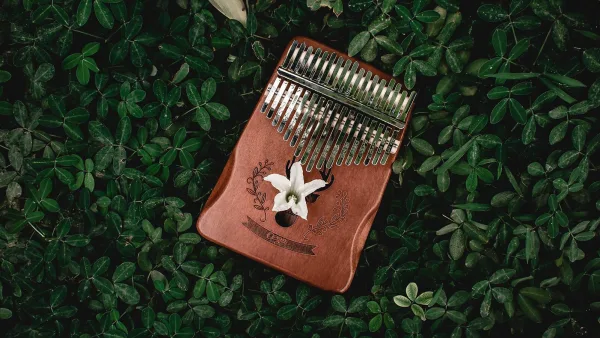
Look for a 17-key diatonic kalimba tuned to C major. It's the standard for good reason: enough range to play recognisable tunes, and simple enough that you're not hunting through dozens of extra keys you don't yet understand. Check that every tine is properly tuned before you commit to it, and that the edges feel smooth rather than sharp against your thumb. If you'd like the fuller picture on what to check before buying, our buyer's guide covers it in detail.
Understanding What You're Looking At
Here's the bit that trips people up first: the layout isn't a straight line like a piano. The lowest note sits in the middle, and pitches climb outward in alternating fashion — left, right, left, right. It looks strange for about five minutes, and then it doesn't. Most instruments come with the notes marked, either as letters or numbers, so you can find your way around before you've memorised anything.
A Simple Way to Learn the Kalimba Layout
Don't try to memorise the whole layout at once. Instead, learn it in three small stages:
- First, find the centre note and play it a few times until your thumb finds it without looking.
- Then, learn the notes immediately either side of it — this gives you a simple three-note phrase to play with.
- Finally, work outward one pair at a time, adding a note on each side before moving further out.
Treat each stage as its own small win. You don't need the whole kalimba mapped out to start making music with it.
Your First Fortnight
Little and often beats one long session. Ten to fifteen minutes a day, most days, will get you further than a single exhausting hour at the weekend. In the first week, your only real goal is comfort: holding it naturally, plucking cleanly, and finding a handful of notes without looking down. In the second week, start attaching those notes to something you already know — a nursery rhyme, a folk tune, anything simple and familiar works far better than a piece written specifically to teach beginners, because you already know how it should sound.
Reading Kalimba Tabs Without Panic
Most online lessons use number notation, where each digit refers to a specific tine rather than a note name. It looks intimidating written down and feels perfectly natural within a session or two, because you're simply matching a number to a position you can already find with your thumb. Letter notation works the same way, just with note names instead of numbers. Neither is "correct" — use whichever your source material happens to give you.
When Something Sounds Wrong
If a note sounds off, the kalimba is very likely just out of tune, not broken and not a sign you're doing anything wrong. This is completely normal and easily fixed with a chromatic tuner and a little patience. Our full guide to setting up and tuning walks through exactly how to do it, step by step.
Encouragement for the Slow Days
Some sessions will feel effortless, and others will feel like your thumbs have forgotten everything from the day before. That's completely ordinary and it happens to every kalimba player, not just you. Progress on a kalimba tends to arrive in small jumps rather than a steady climb, so a flat week doesn't mean you're doing anything wrong — it usually means the next small jump is close. For a wider sense of how the instrument works once the basics feel comfortable, our overview is a good next stop, and it's well worth glancing at the common mistakes other beginners make.
The Bottom Line
You don't need musical experience, and you don't need to rush. Learn the centre note, build outward a pair at a time, play little and often, and trust that the ten minutes you put in today will show up in next week's session, even if you can't feel it happening yet.




Comments