


Dulcimer article
Dulcimer for Beginners: A Complete Guide
You can get a real tune out of this instrument in your first week. Here is exactly how to start, without wasting money or getting discouraged.

You don't need to read music, own a workshop's worth of gear, or have played anything before to get a real tune out of a dulcimer in your first week. That's not a sales pitch — it's simply how the instrument was designed to work. Here's how to start without feeling lost, and without spending money you don't need to spend yet.
Why This Instrument Forgives Beginners
Most instruments ask you to fret several strings accurately before anything musical happens. A dulcimer doesn't. Traditionally, you'll be starting on the mountain (or Appalachian) dulcimer — a slim, hollow-bodied instrument played flat on your lap, with one melody string running over the frets and the rest left open as drones. Those drones hum along underneath whatever you play, so even a wobbly first attempt at a tune still sounds like music rather than a mistake.
The frets help too. They're diatonic, meaning they follow a major-scale pattern rather than offering every possible note, so it's genuinely difficult to fret a note that clashes badly with the drone beneath it.
Getting to Know the Instrument in Your Hands
Before you worry about tunes, spend a few sessions just getting comfortable.
- Sit properly — lap or a table both work; find whichever lets your strumming hand move freely without your arm resting awkwardly.
- Find the melody string — usually the string nearest you, the one your fretting hand will actually press.
- Leave the drones alone — the other strings stay open; resist the urge to fret them while you're finding your feet.
- Learn one tuning first — D-A-A or D-A-D are common starting points, and most beginner tune books assume one of the two.
Your First Tune, Without Reading a Note
Traditional players often used something called a noter — a small stick or bar held against the melody string, moved along the frets while the other hand strums — rather than individually fretting with several fingers. It's a lovely, forgiving way to begin, because it keeps your fretting hand doing one simple job while the drones and the strum carry the rest of the sound. Plenty of beginners still start this way before moving on to fingerpicking.
A soft, flexible pick makes a real difference here too. A stiff guitar plectrum can sound harsh and clattery against these strings; something gentler suits the dulcimer's naturally quiet, warm voice far better.
Habits Worth Building Early
- Check your tuning before every single practice session — a cheap clip-on tuner is enough, and a dulcimer that's drifted out of tune will discourage you for no good reason.
- Practise in short, regular stretches rather than occasional long ones; ten focused minutes most days beats an hour once a fortnight.
- Keep the instrument away from radiators, direct sun and sudden changes in humidity, all of which can pull it out of tune or, worse, warp the wood over time.
- Learn a handful of tunes properly before chasing harder ones — the drone-based sound rewards patience more than speed.
When You're Ready to Grow
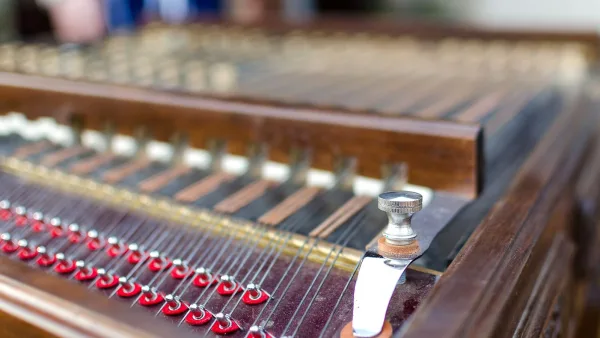
Once a tune or two feels comfortable, there's plenty of room to develop. Fingerpicking lets you pick out melody and drone strings separately rather than strumming across all of them. Crosspicking, hammer-ons, pull-offs and simple chord shapes add colour without abandoning the traditional sound that drew you in. Some players eventually move to a 6½-fret instrument for more major-key flexibility, or try the trapezoidal, hammer-struck dulcimer for something with a completely different feel — our explainer on the two dulcimer families is worth reading once you're curious about that second instrument.
What a Realistic First Month Looks Like
In week one, expect the drones to feel odd and your strumming hand to feel clumsier than your fretting hand. That's completely normal. By week two, most beginners have one simple tune they can play start to finish without stopping, even if it wobbles. By the end of the month, the dulcimer starts to feel like an instrument you're playing rather than one you're wrestling with, and that's exactly the point at which it's worth learning a second tuning or trying a proper pick instead of a noter.
Don't judge your progress against a hammered dulcimer player, or against anyone who grew up around one at a folk session — the lap-held dulcimer rewards steady, unhurried practice far more than natural talent.
Buying Advice, Kept Simple
You don't need the fanciest dulcimer on the page to start well — you need one that holds its tuning and has a level fretboard. If you haven't bought yet, our full buyer's guide covers exactly what to check, and our roundup of the best dulcimers for the money can point you towards a sensible starting tier. It's also worth glancing at the common mistakes newcomers make, if only so you can quietly skip past them.
The Bottom Line
Nobody expects you to sound accomplished in your first week, and this particular instrument is kinder about that than almost any other. Learn the drones, trust the diatonic frets, keep your sessions short and regular, and the rest genuinely does follow.




Comments