


Dulcimer article
Dulcimer Explained: Features, Types and Tips
One name, two instruments. Here is what actually separates the mountain dulcimer from the hammered dulcimer, and how each one works.
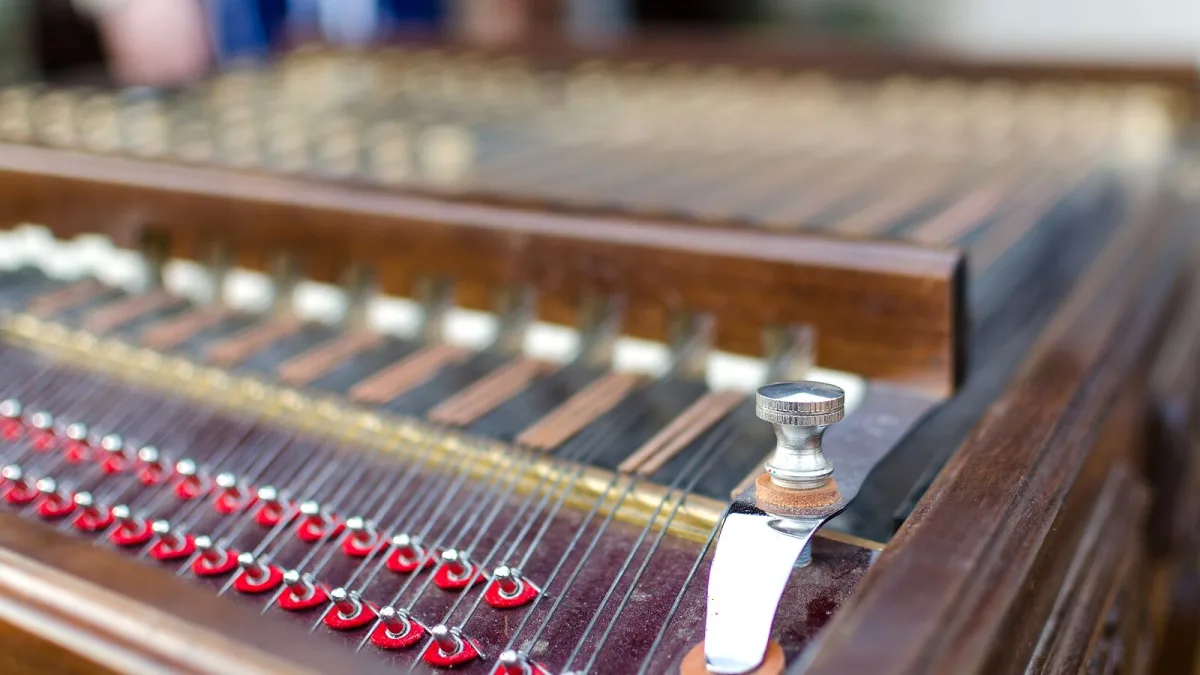
Ask a dozen musicians what a dulcimer actually is and you may get a dozen different answers — a lap-held teardrop of wood strummed at a folk session, or a trapezoid of strings struck with tiny hammers on a table. Both are right. One word covers two genuinely different instruments that happen to share a name and a gentle, old-world charm. Here is what each one really is, how they differ, and where to look next once you know which sound you're chasing.
Two Instruments Wearing One Name
The confusion is centuries old. “Dulcimer” comes from the Latin dulce melos, meaning “sweet sound”, and in Europe it once referred almost exclusively to a struck, trapezoidal zither. When European instrument-making traditions travelled into the Appalachian mountains of the United States, the name attached itself to something rather different: a narrow, fretted box played flat across the knees. The Smithsonian Institution puts it plainly — the two instruments “differ considerably in form, sound, evolution, and manner of playing”, despite sharing the same word. Knowing which one you mean is the first useful thing to learn about the dulcimer family.
The Appalachian (Mountain) Dulcimer
This is the mountain dulcimer most beginners picture first: a slim, hollow-bodied instrument with a long fretboard, laid flat across the lap or a table. It typically carries three or four strings — one melody string running over the frets, and the rest left open as drones, humming a steady note beneath whatever tune is being picked out. Traditional body shapes include the hourglass, the teardrop and the elongated “boat” form, usually built from walnut, cherry, maple or spruce.
- A hollow wooden body, often hourglass or teardrop-shaped
- Three or four strings — one for melody, the rest as drones
- Diatonic frets, following a major-scale pattern rather than every semitone
- Decorative soundholes, a bridge and nut, and simple tuning machines or friction pegs
Frets, Tuning and That Curious Half-Fret
Because the frets are diatonic, older instruments of this kind sit naturally in one key and its close modal relatives — wonderful for old-time tunes, more limiting for anything chromatic. Many modern builds add an extra 6½ fret, which opens up major-key playing without disturbing the traditional, modal character further up the neck. Common tunings include D-A-A, D-A-D and D-G-G, chosen to suit the drone sound a player wants and the tune book they happen to be learning from.
The Hammered Dulcimer
Set this hammered dulcimer beside its Appalachian cousin and you might not guess they share a name at all. This version is trapezoidal, strung with many courses — pairs or groups of strings tuned to the same note — stretched across a soundboard and struck with a pair of lightweight hand-held hammers. Bridges divide each string into two singing sections, often tuned a fifth apart, which is why the layout feels puzzling at first and quietly logical once it clicks.
- A wooden frame, usually trapezoidal, with a thin resonating soundboard
- Multiple bridges dividing the strings into treble and bass sections
- Course counts often described as 12/11 or 16/15, roughly the number of note-pairs on each bridge
- Lightweight mallets, or hammers, rather than fingers or a pick
It belongs to a much wider family of struck zithers found right across Europe and Asia. The Hungarian cimbalom, the German Hackbrett, the Iranian santur and the Chinese yangqin are all close relatives, each shaped by its own regional playing tradition.
How Each One Is Actually Played
The lap-held dulcimer rewards patience rather than dexterity. Strumming and fingerpicking are the obvious starting points, but older players often used a noter — a short stick or bar pressed against the melody string while the other hand strums — to hold a smooth, continuous drone under the tune. From there, crosspicking, hammer-ons, pull-offs and slides add colour without ever abandoning that drone-led sound.
Its trapezoidal cousin, the hammered dulcimer, asks for a different kind of coordination entirely: alternating hands, precise mallet placement and, just as importantly, damping. Because the strings ring on and on, sympathetic vibrations build up quickly, so a good player is constantly muting with fingers or palms as much as they are striking. Once that balance becomes second nature, tremolo, rolls and rapid crossovers give the instrument its shimmering, cascading voice.
Choosing Which One Fits You
If a quiet, portable lap instrument you could pick up within a week appeals, the mountain-style dulcimer is the friendlier start — our beginner's guide to the dulcimer walks through exactly that first stage. If you are drawn to something closer to a miniature piano, with a broader range and a more percussive voice, the hammered version is the one to research properly before buying — our complete buyer's guide covers what to check on both types in detail, and our roundup of the best dulcimers for the money breaks the options down by budget and player. Whichever way you lean, it is worth a look at the common mistakes newcomers make, if only to avoid repeating them yourself.
The Bottom Line
The word dulcimer hides two instruments — one from a lineage of struck zithers, one from a tradition of fretted, drone-strung lap instruments — and neither dulcimer is a lesser version of the other. Work out which family actually interests you, and the rest of the decisions, tuning, fret count, course number, start to make a great deal more sense.






Comments