Skip to content

Button Accordion article

Button Accordion for Beginners: A Complete Guide
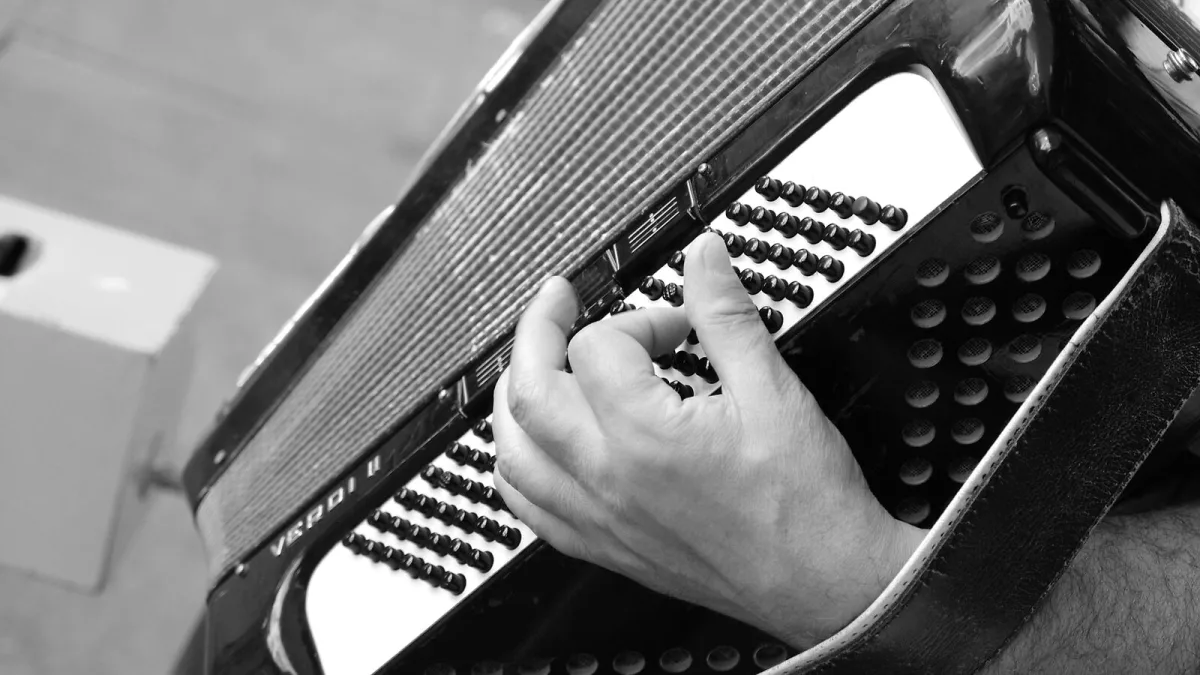
Button Accordion for Beginners: A Complete Guide

A button accordion rewards patience and repetition more than many instruments. The bisonoric layout, the bellows coordination and the Stradella bass system are all learnable within a few months of consistent practice, but each requires a separate focus before they come together as a coherent technique. Starting with the right expectations and the right priorities makes the difference between steady progress and early frustration.

Choosing Your First Instrument

The first decision is also the most important: whether to begin on a diatonic or chromatic button accordion. This choice should be driven by the music you want to play, not by price or availability. A diatonic B/C or C/G two-row instrument is the standard starting point for Irish traditional music and English folk. A chromatic instrument suits players whose goal is Scandinavian, Slavic or concert accordion repertoire. Buying the correct format for your tradition and then sticking with it is more efficient than switching later. The buyer's guide covers the purchasing decision in full.

What to Learn First

Begin with the treble layout alone, without using the bass buttons. Play simple scales and familiar melodies slowly, focusing entirely on which push or pull produces each note. Practise bellows direction changes so they are smooth before worrying about speed or ornamentation. The bass system and treble can be practised separately for the first weeks and then combined once each is reliable on its own.

Lessons and Resources

Learning from an experienced teacher, even for a handful of initial lessons, significantly reduces the time spent on bad habits and misdirected practice. For diatonic traditions, many players are available for online lessons; for chromatic instruments, local music colleges and specialist accordion societies are good starting points. Video resources exist in abundance for Irish and English traditions in particular, but a teacher who knows your specific instrument layout and tuning will cover things that general videos miss.

Common Beginner Habits to Avoid

The most common early problems are tense bellows — gripping the instrument too tightly and making direction changes stiff — and neglecting the bass system until it becomes a secondary skill. Both patterns are hard to reverse once embedded. Use relaxed arm pressure, plan bellows changes around musical phrases, and begin every practice session with a few minutes of bass-only exercises. For the full list of what to avoid, see the mistakes article. The setup guide covers the initial physical setup in step-by-step detail.


Frequently Asked Questions

Is a button accordion hard to learn?

The diatonic version has a steeper initial learning curve than a piano keyboard because of the bisonoric layout — the same button produces different notes on push and pull. This takes a few weeks to internalise, but most beginners find it becomes intuitive more quickly than expected. The chromatic version follows a consistent pattern that transfers across all keys once the initial position is learned.

How long does it take to play simple tunes?

Most beginners who practise consistently for twenty to thirty minutes a day can play simple tunes in their home key within the first three to four weeks. Playing with reasonable fluency in sessions takes longer — usually six to twelve months, depending on how much music you absorb by listening and how consistent your practice is.

Do I need to read music to learn?

Not in most folk traditions. Irish and English folk music is primarily an oral and aural tradition; most players learn by ear, using tablature, ABC notation or video recordings rather than standard staff notation. Learning to read music is a useful supplement, but it is not a prerequisite.

Should I take lessons as a complete beginner?

Yes, at least for the initial sessions. A teacher familiar with your specific instrument and tradition will help you establish correct posture, bellows technique and hand position from the start. Fixing ingrained bad habits takes longer than learning correctly from the beginning.

What is the best button accordion for a first-time player?

A Hohner entry-level melodeon or a used mid-range instrument from a known brand represents the best practical starting point. Avoid the cheapest unbranded imports — inconsistent reed response makes them discouraging to learn on. The buyer's guide covers all the options.

How much practice does a beginner button accordion player need?

Twenty to thirty minutes of focused daily practice is more effective than longer sessions two or three times a week. Consistency matters more than duration, particularly in the early months when muscle memory and ear training are developing alongside each other.

About Laura Mitchell

Laura found her way into music through the folk sessions of Edinburgh's Old Town, where she learned that a song can hold a room without a single amplifier. A festival city upbringing gave her a taste for everything from fiddle tunes to fringe experiments. She writes about acoustic instruments, folk and the craft of songwriting.

Comments

Leave a comment

Comments are read before they appear. Links cannot be published.

Your rating (optional)