


Hang Music Instrument article
Hang Music Instrument for Beginners: A Complete Guide
No wrong notes, no exam to pass — just a calm, unhurried way to begin your first handpan, touch before rhythm, one small step at a time.

There's no exam to pass and no wrong note waiting to catch you out — that's the lovely thing about starting a handpan. Because the whole instrument is built around one scale, almost anything you play on it will sound pleasant together. Here's a calm, unhurried way to begin your first handpan, one small step at a time.
Getting Comfortable With the Handpan First
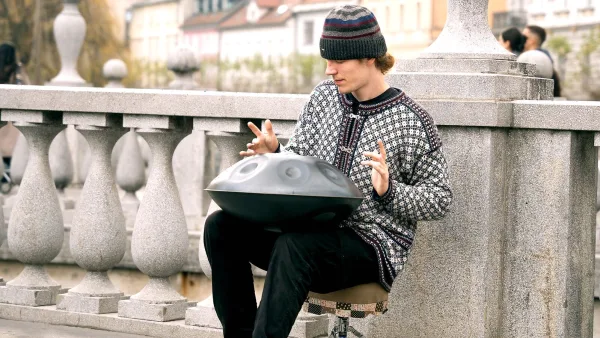
Sit with the handpan resting securely on your lap, tilted slightly toward you, with both feet flat on the floor for stability. There's no need to hunch over it — a relaxed, upright posture actually makes it easier to reach every tone field comfortably. Take a moment before you play the handpan at all just to notice where each note sits under your hands.
Your First Session, Step by Step
- Find the central note, the Ding, and strike it gently with a fingertip. Listen to how long it rings before it fades.
- Move to one neighbouring tone field and alternate between it and the Ding, slowly, focusing purely on a steady, even touch.
- Add a second neighbouring tone field, so you're moving between three notes in total, still slowly and without any set rhythm yet.
- Try a soft thumb strike instead of a fingertip on one of the notes, and notice how the tone changes.
- Rest a finger gently on a tone field just after striking it, to hear how muting shortens the ring.
- Finish by simply improvising for a minute or two across the notes you've explored, without judging what comes out.
That's a complete, worthwhile first session. There's no need to rush toward a "proper piece" — at this stage, you're building familiarity with touch and tone, and that takes exactly as long as it takes.
Building Touch Before Rhythm on a Handpan
New handpan players often reach for rhythm too early and end up striking harder than the instrument wants, which produces a harsher sound rather than a louder one. Spend real time first on touch alone: how gently can you strike a tone field and still get a clear note? That control is the foundation everything else sits on, and it's worth returning to even after rhythm starts to feel natural.
Common Early Worries, Answered Gently
- "I keep hitting the wrong note." There isn't really a wrong note here — the whole scale is built to sound good together. What you're actually learning is where each note sits under your hands, and that comes with repetition.
- "My playing sounds aimless." That's completely normal at first, and it's also somewhat the point. Exploring the instrument without a fixed goal is how you learn its character.
- "Am I hitting it too hard?" If the sound feels harsh rather than warm, yes, most likely. Ease off and notice how much lighter a touch still produces a full, clear tone.
- "How long before I can play something recognisable?" There's no fixed timeline, and it matters less than it might with other instruments — the instrument rewards patient exploration more than it rewards rushing toward a "song."
How Often Should You Practise a Handpan?
Short, frequent sessions suit this instrument particularly well — fifteen minutes most days will build familiarity faster than one long session at the weekend. Because so much of the early learning is about touch rather than memorising anything, little and often genuinely works better here than it does with instruments that rely more on muscle memory for finger patterns. Keep a small notebook if it helps, jotting down which notes or patterns felt good that day, so you can return to them deliberately next time.
A Simple Practice Rhythm to Build On
Once touch feels comfortable, try this gentle pattern: Ding, neighbour, Ding, a different neighbour, repeated slowly and evenly. It's not meant to be a finished piece — it's a scaffold for noticing timing and flow between notes, and you can vary which neighbours you choose once it feels steady.
The Bottom Line
Begin slowly, prioritise a light touch over rhythm, and trust that the instrument's built-in scale is doing a lot of the work for you already. Once the basics feel settled, our ultimate guide fills in the history and terminology, and our buyer's guide is there when you're ready to consider your first instrument. It's also worth reading our list of common mistakes to avoid, and if budget is on your mind, see our round-up of options by budget.



Comments