


Tom Drum article
Tom Drum Explained: Features, Types and Tips
Rack toms, floor toms, concert toms and more — here's what a tom drum is built from, what changes its sound, and a few honest tuning basics.
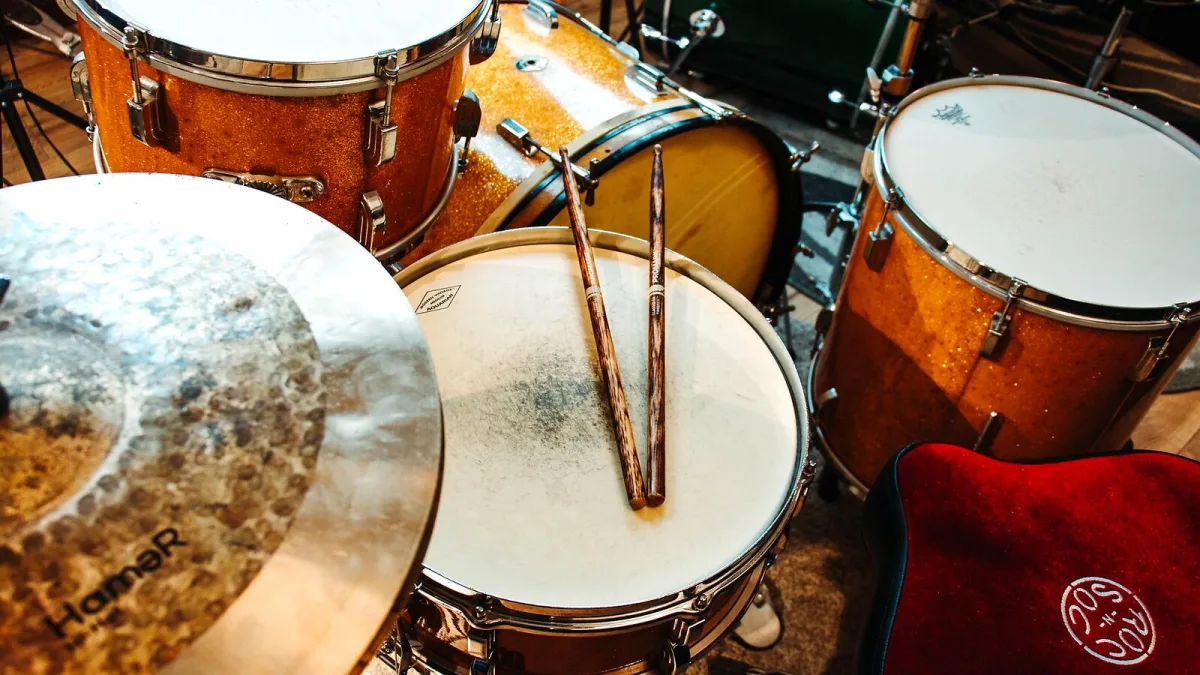
If you've ever sat behind a drum kit and wondered what those cylindrical drums either side of the snare actually do, you've met the tom drum. It's one of the most flexible voices on a kit — not fixed to one pitch like a piano key, but shaped by size, shell and head choice into whatever colour a song needs. Here's what it's built from, the main types you'll run into, and a few honest tuning basics before you reach for a drum key.
What Exactly Is a Tom Drum?
A tom drum, or tom-tom, is a cylindrical drum with no snare wires underneath it. That missing detail is the whole story: without wires buzzing against the head, a tom sounds rounder and less sharp than a snare, more like a tuned note than a crack. Every modern kit builds its fills and grooves around this simple, resonant voice.
The design has been around the drum kit for a century. DRUM! Magazine traces an early fully tunable version back to Ludwig's Jazz Combination in 1922, when two small drums were mounted straight onto the bass drum. Gretsch and Slingerland helped standardise the idea through the 1930s and 40s, and the basic layout — a shell, two heads and some hardware — hasn't really changed since.
Rack Toms vs Floor Toms
Almost every kit splits its toms into two families, and the difference is mostly about size and how they're held up.
| Type | Typical size | Mounting | General sound |
|---|---|---|---|
| Rack tom | 8–13 in. | Bass drum mount, stand or rack | Higher, tighter, more focused |
| Floor tom | 14–18 in. | Three legs | Deeper, fuller, more resonant |
| Concert tom | Various | Stand or frame | Direct, batter-head only, shorter |
| Rototom | Various | Dedicated frame | Bright, short, highly tunable |
| Octoban | Narrow, deep | Rack or stand | High and sharp |
Rack toms sit above or beside the bass drum and generally cover the higher end of a fill. Floor toms stand on their own legs and give the kit its lowest, roundest voice short of the bass drum itself. A single floor tom can carry a surprising amount of a song on its own — plenty of jazz, folk and singer-songwriter kits get by with just one.
What's Actually Inside a Tom Drum
Strip one down and you'll find the same handful of parts every time:
- Shell — the cylindrical body that does most of the tonal work.
- Batter head — the skin you actually hit.
- Resonant head — the head underneath, shaping sustain and response.
- Hoops — metal or wood rims that hold each head in place.
- Tension rods and lugs — the bits your drum key turns to adjust pitch.
- Mounting hardware — brackets for a rack tom, or legs for a floor tom.
- Vent hole — a small port that lets air escape so the head can move freely.
None of this is complicated once you've seen it laid out, but it explains why two toms of the same size can sound worlds apart — the shell is only one part of the equation.
Shell Materials: What Actually Changes the Sound
Most modern shells are plywood, and the wood species nudges the tone one way or another:
- Maple — full, warm, and forgiving across most styles; the default for a reason.
- Birch — punchier attack with more top end, popular in studios.
- Mahogany — warmer still, with less emphasis up top.
- Poplar — the budget-friendly workhorse on student and mid-priced kits.
- Acrylic, fibreglass and metal — louder, more direct projection, often chosen for looks as much as tone.
Treat these as tendencies rather than laws. A tom's bearing edges, head choice and tuning all move the needle at least as much as the timber underneath the wrap.
The Odd Ones Out: Concert Toms, Rototoms and Octobans
Not every tom follows the double-headed rack-and-floor pattern. A concert tom has only a batter head, giving a shorter, more direct thud that suits marching and orchestral settings. A rototom drops the shell almost entirely — just a head in a frame you can spin to change pitch on the fly, a trick some progressive and fusion drummers still lean on. Octobans are narrow, deep-shelled drums arranged in a row for high, ringing runs you'll recognise from countless 1980s fills.
A Few Honest Words on Tuning
You don't need a physics degree to get one sounding right, but a little method helps. Seat the head evenly first, tension the rods finger-tight, then tighten in a star pattern rather than round the rim, checking the pitch near each rod as you go. Whether you set the resonant head higher, lower or equal to the batter head is a matter of taste — higher tends to sound clearer and more responsive, lower gets you a looser, boomier voice. Add damping sparingly; a ring or a bit of gel can tame overtones, but too much kills the very resonance that makes a tom worth having.
Where a Tom Drum Fits Across Genres
Rock drummers tend to favour bigger toms and heavier hits for fills that fill the room. Jazz players usually go the other way, tuning open and playing lighter for a musical, singing tone. Funk drummers often tighten things up for short, punchy accents, while prog and metal players stack extra toms for wider melodic runs. None of this is a rulebook — it's simply where each style has settled over the decades.
The Bottom Line
A tom drum is a simple idea — a tuned, wireless drum — that turns out to be endlessly adaptable once you start changing size, shell and heads. Get familiar with the basics here and the rest is really just personal taste. If you're about to buy your first set, our tom drum buyer's guide walks through exactly what to check before you spend anything. Wondering what's genuinely worth the money at each price point? Have a look at the best tom drums for the money. Brand new to the instrument? Our beginner's guide is the friendlier starting point, and once you've got some toms of your own, it's worth reading up on the common mistakes that trip up even experienced players.





Comments