


Snare article
Snare Explained: Features, Types and Tips
A snare drum looks simple from the outside, but underneath is a genuinely clever bit of acoustic engineering. Here's how the pieces interact.

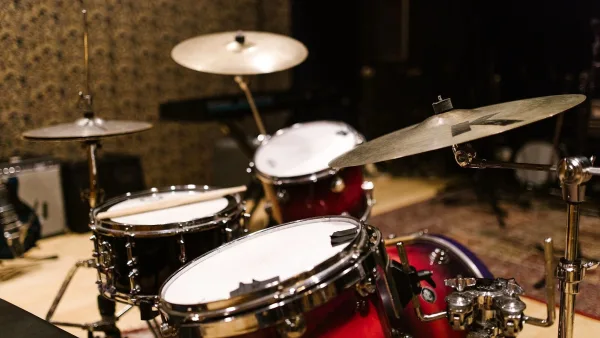
Hit a good one and you'll know immediately — that sharp, dry crack that cuts through a mix without anyone having to turn it up. A snare drum looks simple from the outside: a shallow cylinder, two heads, a scattering of hardware. Underneath that simplicity, though, is a genuinely clever bit of acoustic engineering, and understanding how the pieces interact is the fastest way to get a better sound out of whatever you're already playing.
What's Actually Going On Inside One
The defining feature is a set of tensioned wires — the "snares" themselves — stretched against the underside of the bottom head. Strike the top head, known as the batter head, and the vibration travels through the shell to that lower resonant head, setting the wires buzzing against it. That buzz is what separates a snare drum from an ordinary tom: without the wires engaged, the same shell would just produce a plain, unadorned thud.
A shallow recess called the snare bed lets the wires sit evenly against the resonant head without digging in at the edges. Tension comes from a mechanism called the strainer, or throw-off, on one side of the shell, with a fixed butt plate holding the other end. Get all of that working together and you have a snare drum's whole character in a single strike: stick attack, head pitch, wire buzz and shell resonance, layered on top of each other in a fraction of a second.
Why Two Snare Drums the Same Size Can Sound Completely Different
Shell material has an outsized effect on a snare drum's character. As a rough rule, metal shells push toward brightness, projection and cutting attack, which is why so many rock and punk players reach for steel. Wood shells tend toward warmth and a fuller fundamental tone, which suits genres where a snare drum needs to sit inside the mix rather than slice through it. These are tendencies rather than laws, though — a thick, heavily damped brass shell can end up sounding more controlled than a thin, wide-open maple one.
| Shell material | Typical character |
|---|---|
| Steel | Bright, cutting, strong on rimshots |
| Brass | Powerful, rich, lively with plenty of body |
| Bronze | Deep, complex, broad projection |
| Aluminium | Dry, articulate, tightly controlled |
| Wood (maple, birch, beech) | Warm, fuller fundamental, softer attack |
Beyond the shell, hoops, heads and the wire assembly itself all shift the sound further — a topic our complete buyer's guide covers in more depth if you're weighing up a purchase.
The Main Types You'll Come Across
Not every one is built for the same job. Here are the categories you're most likely to run into:
- Standard kit snares — usually 14 inches across, the all-purpose choice behind most drum kits.
- Piccolo snares — shallow, often 5 inches deep or less, with a sharp, high, quick-decaying voice.
- Concert and orchestral snares — built for dynamic range, from a whisper of brushed texture to a full rimshot.
- Marching and field snares — deeper and built for projection and rudimental precision outdoors.
- Electronic snare pads — trigger-based, useful for silent practice or hybrid electronic setups.
How Tuning Changes Everything
The most reliable general starting point is tuning the resonant head higher than the batter head, with even tension at every lug — a slack or uneven lug is usually the culprit behind a ring, a dead spot or an unwanted rattle. There's no single "correct" pitch; the right tension depends on the snare drum itself, the music and your own ear. If you're just starting to explore tuning, our beginner's guide walks through the process gently, step by step.
Playing Techniques Worth Knowing
A center hit gives maximum body; move toward the edge and you get more overtone and a thinner sound. A rimshot — batter head and rim struck together — delivers the loudest, most cutting accent a snare drum can produce, while a cross-stick lays the stick across the head and taps the rim for a dry, woodblock-like click. Ghost notes add quiet motion between the main beats, and buzz rolls use controlled multiple rebounds to create a sustained texture rather than distinct hits.
Recording It Without Losing Character
A common close-miking approach places a dynamic microphone above the batter head, aimed somewhere between the centre and the rim — move it toward the centre and you'll pick up more attack, move it toward the rim and you'll capture more brightness and overtone. None of that matters much, though, if the tuning underneath is uneven, since a microphone can't fix a dead spot or a lug that's fighting the rest. Overhead and room microphones also play a bigger role than people expect, often shaping how the drum actually sits in a finished mix far more than the close mic alone.
The Bottom Line
A snare drum rewards curiosity — every part of it, from the shell to the wires to the way you strike it, is something you can adjust and learn from. Once you understand the pieces, tuning and technique both make a lot more sense. If you're ready to buy, our buyer's guide covers what to check before spending, and our list of common mistakes to avoid will save you a fair bit of trial and error along the way.




Comments