


Drums Notation roundup
Drums Notation: A Complete Buyer's Guide
You can't buy drum notation itself, but the resource you learn it from matters a lot. Here's how to pick between books, software and courses.
You can't exactly buy "drum notation" the way you'd buy a snare or a pedal — it's a skill and a system, not a product. What you can buy, and what genuinely affects how fast you learn it, is the resource you learn from: a method book, a piece of notation software, or a structured video course. Each does a different job, and picking the wrong one for your situation is a surprisingly common way to stall out early. Here's how to choose properly.
Three Genuinely Different Routes In
| Resource type | Good for | Less good for |
|---|---|---|
| Method books | Structured, page-by-page progression at your own pace | Instant audio feedback on whether you're reading it right |
| Notation software | Writing, editing and playing back your own charts | Teaching you to read in the first place |
| Video courses | Hearing a groove alongside the notation as it's played | The self-directed pacing a book allows |
Most drummers who read comfortably end up using at least two of these together rather than relying on one alone — a book to structure the learning and software or video to hear how it should actually sound.
What to Look For in a Method Book
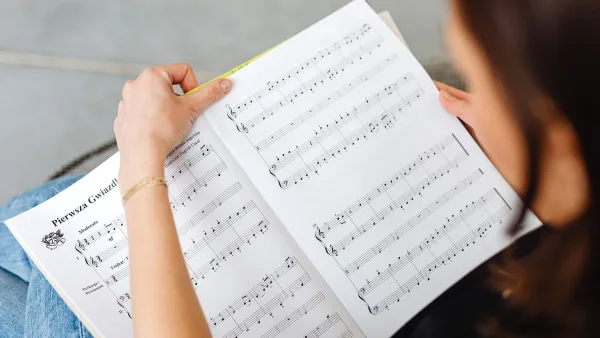
Classic drum-reading method books, such as Ted Reed's Syncopation for the Modern Drummer and similar long-standing titles, remain popular for good reason: they build rhythmic reading skill progressively rather than throwing full charts at you immediately. When comparing method books, check for:
- A clear progression from single-line rhythms to full kit coordination, rather than jumping straight to complex patterns.
- An explained key or notation guide at the front — if the book doesn't explain its own symbols, that's a bad sign.
- Exercises pitched at your actual level, not just the level the cover implies.
- Accompanying audio or backing tracks, where available, so you can check your reading against a reference.
What to Look For in Notation Software
If you plan to write or edit charts yourself rather than only read them, dedicated notation software is worth the investment. Programs built for general music notation — MuseScore is a widely used free option, alongside professional tools such as Sibelius, Finale and Dorico — increasingly include drum-specific input tools rather than treating percussion as an afterthought. Before choosing one, check that it offers:
- A dedicated drum-input palette that lets you place notes by instrument name rather than guessing staff positions manually.
- Customisable drum maps, since the standard layout isn't fixed and you may need to represent an unusual kit.
- Audio playback so you can hear a chart before you attempt to play it yourself.
- Export options such as PDF and MusicXML, useful if you'll be sharing charts with other musicians.
When a Video Course Earns Its Cost
Paid online platforms that teach drumming through video, sometimes bundled with backing tracks and notated lessons, suit players who learn better by watching a groove performed alongside its notation rather than decoding it cold from a page. This route tends to cost more than a single book, so it's worth it mainly if you value structured pacing and want a real drummer's playing to reference directly, rather than relying purely on your own interpretation of the page.
Free vs Paid: Being Honest About the Trade-off
Free resources — software such as MuseScore, and countless free online guides and tutorials — can absolutely get you reading drum notation competently. What you tend to pay for beyond that is convenience: a more polished workflow, structured progression that removes guesswork, or audio and video that a free PDF simply can't provide. Neither route is wrong; it depends whether your limiting factor is money or time.
Before You Commit
If you're still shaky on the fundamentals, our beginner's guide to drum notation is worth reading before you spend anything, and our round-up of the best drum notation resources for the money shortlists specific options across each category above. Once you're reading comfortably, our step-by-step guide to using a chart shows how to put any resource's teaching into practice.
The Bottom Line
Choose your learning resource by how you actually learn best, not by which one looks most comprehensive on the shelf — the goal is fluent reading, not a full bookshelf. A structured book, capable software, or a guided video course can each get you there — the right choice is whichever one you'll actually stick with.



Comments