


Triangle Music Instrument article
Everything You Need to Know About Triangle Music Instrument
It's an easy joke - a bent bit of metal, one job. Spend five minutes learning how the triangle actually works and that joke falls apart fast.
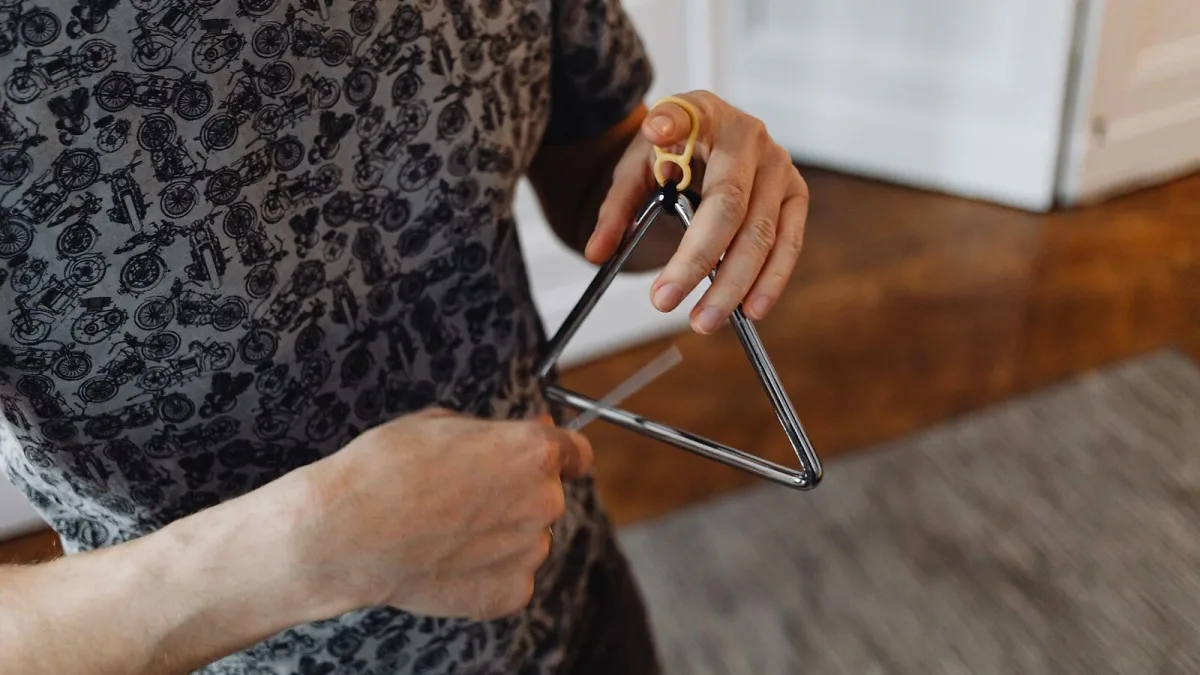
Ask most people to name the least respected instrument in the orchestra and you'll hear "triangle" within about two seconds. It's an easy joke — a bent bit of metal, one job, minimal effort. Spend five minutes actually learning how it works and that joke falls apart fast. Here's the real story of the triangle music instrument: what it is, where it came from, and why a single well-placed stroke can carry an entire orchestral climax.
What It Actually Is
In technical terms, the triangle is an idiophone — an instrument whose entire body vibrates to produce sound, with no strings, membrane or air column involved. It's a steel or bronze rod bent into a triangular shape, left open at one corner rather than fully closed. That open corner isn't a manufacturing shortcut; it's what lets the rod vibrate freely and gives the instrument its long, complex decay rather than a dull, damped clunk.
It's suspended from a cord or a purpose-built clip and struck with a separate beater. As a triangle music instrument, its pitch is generally treated as indefinite in written music, though size, alloy and rod diameter all affect the perceived register — a detail that becomes very relevant when you're choosing between models.
From Janissary Bands to the Concert Hall
The triangle's route into the European orchestra runs through 18th-century Europe's fascination with Ottoman military bands — so-called "Janissary" music, which paired triangles with cymbals and bass drums to evoke a fashionable "Turkish" sound. For a while, that's mostly what it was: a colour instrument standing in for something exotic.
That changed by the 19th century. Composers realised the triangle had real musical value on its own terms, not just as decoration. Franz Liszt leaned on it so heavily in his Piano Concerto No. 1 in E-flat major that the piece is still nicknamed the "Triangle Concerto" today. Edvard Grieg used it too, in "Anitra's Dance" from Peer Gynt. Neither composer needed an exotic effect at those points — they wanted the triangle's actual sound.
Beyond the Orchestra
The triangle's orchestral reputation is only half the story. In Brazilian forró, it's a central rhythmic instrument, not a decoration — players hold it in one hand, using their fingers to mute and open the tone while striking with the other, building genuinely intricate rhythmic patterns rather than the occasional accent you'd hear in a symphony. It also turns up widely across folk, festive and dance traditions, largely because its bright projection cuts through a mix of other instruments with almost no effort.
How Sound Actually Comes Out of It
A handful of variables shape what you hear:
- Striking location — near a corner gives a focused, brilliant attack; along a side is broader and less pointed.
- Beater material — metal is bright and cutting, wood is drier and more pointed, felt softens the attack considerably.
- Suspension — a free-hanging instrument resonates fully; a rigid mount suppresses it noticeably.
- Damping — touching the rod shortens the sound deliberately, from a full multi-second ring down to a short, dry tick.
Rolls — a rapid, sustained shimmer rather than distinct separate strokes — are one of its most recognisable effects, used for slow crescendos, atmospheric texture or reinforcing a climax. If any of this sounds trickier than expected, our beginner's guide walks through the basic technique properly.
Material Matters More Than You'd Think
Most versions of this triangle music instrument are steel, but specialist makers also produce bronze models aimed at a different tonal character. Rod diameter matters too — thinner rods tend to speak quickly with a brighter, more penetrating sound, while thicker rods often produce a fuller, darker tone with different sustain. None of this is marketing fluff; it's genuine acoustic behaviour that any working percussionist will confirm.
The Bottom Line
The triangle music instrument earns its place in a modern percussion section through genuine acoustic complexity, not tradition alone — a long decay, a penetrating spectrum and real expressive range packed into an object you could fit in your coat pocket. Next time someone dismisses it as a joke instrument, point them to Liszt. Ready to actually play one? Have a look at our roundup of the best options for different players, and steer clear of the errors covered in our piece on common triangle mistakes.




Comments