


Djembe article
Djembe for Beginners: A Complete Guide
A complete beginner's guide to djembe: what you need, how to hold it, learning the three basic tones, simple first patterns, practice tips, and resources for continued learning.
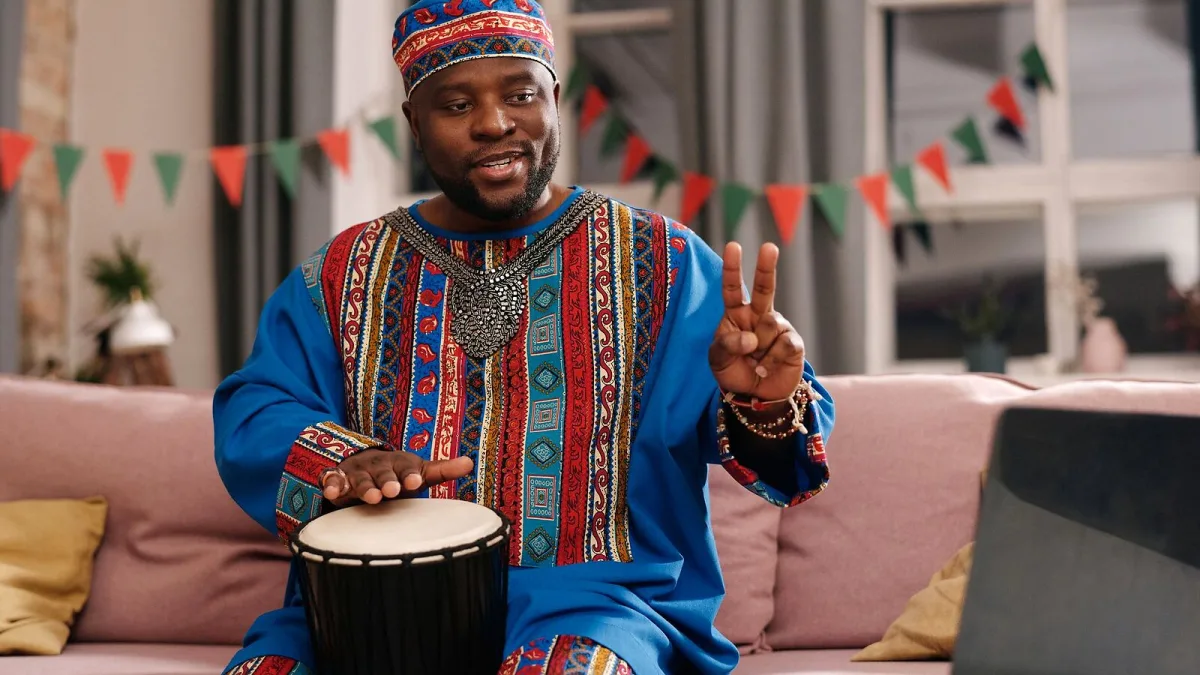
Starting a djembe is one of the most accessible entry points into hand drumming. Unlike pitched instruments where mistakes are immediately obvious, a djembe welcomes beginners who are willing to listen and pay attention to hand position and technique. Whether you join a drum circle, take lessons or teach yourself, the djembe rewards patience and consistent practice with tangible progress in tone quality, responsiveness and musical confidence.
Getting Started: What You Actually Need
A beginner's djembe setup is refreshingly simple. You need the drum itself, ideally one in the £80–£150 range that sounds reasonable and sits comfortably when you hold it. You don't need a stand initially (most beginners play between their knees), though a stand becomes useful as your sessions get longer. You don't need special mallets or brushes; your hands are the primary tool, and building hand strength and callus is part of learning. A case or bag to protect the drum from bumps is worthwhile, but it needn't be expensive.
Beyond the physical setup, you benefit from quiet practice space where you can focus on tone without worrying about disturbing others. Fifteen to thirty minutes of focused, uninterrupted practice is far more valuable than an hour of distracted playing. Many beginners find that drum circles—gatherings where players of all levels share a space and play together—provide both motivation and the chance to learn by ear and observation.
Posture and Positioning
Sit comfortably with the djembe between your knees, tilting it slightly forward at an angle of roughly 30 degrees. Your arms should hang naturally with minimal tension in the shoulders; this allows your hands to move freely and respond to the drum. If using a stand, position it so the drum remains at the same angle and height as if held between your knees.
Keep your back relatively straight (slouching restricts arm movement) and avoid cradling the drum against your chest. The best position allows both your hands to access the drum's head freely and lets your wrists and fingers move with ease. Play for a few minutes, adjust your position until you feel comfortable, and remember that posture develops naturally once you start playing. Don't overthink it; comfort and ease of hand movement are the priorities.
Learning the Three Basic Tones
Spend your first several practice sessions focusing purely on tone production. The goal is not to learn rhythms yet, but to understand how your hands, position and striking technique create different sounds.
The bass. Place your full hand on the drum's head, roughly in the centre, and strike with a quick downward motion, lifting immediately. The hand should make contact with the fleshy part of your palm, not the fingers. Strike with confidence and rebound quickly; hesitation or slow lifting deadens the tone. Practise until the bass is full and round, with a clear attack and sustained resonance.
The tone. Position your fingers 1–2 inches from the edge of the head and strike with the fingers together (not splayed). The fingers should make initial contact, and your hand follows through slightly, landing on the edge of the drum. This is the workhorse sound: flexible, expressive and the foundation of most djembe patterns. Experiment with finger position—closer to the edge produces a sharper, higher tone; further in produces a warmer, lower pitch. Find positions that feel natural on your particular drum.
The slap. Strike the very edge of the head with your fingers held together, using maximum speed and force. Your fingers should hit the drum and immediately bounce away, not rest on the surface. The slap is the highest, brightest sound and demands the most energy. Beginners often struggle with the slap because they hold their hand too tense; stay relaxed, use speed rather than raw force, and let the drum do the work.
Spend a full week or more just playing bass, tone and slap individually. Do not rush to learn patterns. Build muscle memory, develop calluses on your fingertips, and get comfortable with each sound on its own.
Simple First Patterns
Once you're comfortable with the three tones, try basic alternating patterns. A simple exercise is to play a steady bass pulse (on a set beat) with your dominant hand whilst your other hand plays tones or slaps between the bass beats. For example: bass-tone-bass-tone, repeating steadily. This develops hand independence and begins building the rhythmic sense that underpins all drumming.
The "dun-dun" pattern is a traditional Mandinka rhythm: bass, slap, bass, slap. Play it slowly, focusing on clean articulation and even timing. Once it feels comfortable at a slow tempo, gradually increase speed.
Many beginner resources offer simple patterns in written or video form. Look for resources that break patterns down into small, digestible pieces rather than asking you to jump into complex polyrhythms immediately.
Listening and Learning By Ear
One of djembe's gifts is that you can learn effectively by listening and imitating. Spend time listening to djembe music from Mali, Guinea, Senegal and other West African traditions. Isolate one drummer and listen repeatedly to what their hands are doing. You won't understand everything at first, but you'll begin to internalise the language of the instrument.
Watching videos of experienced drummers is invaluable. Slow down the video to quarter or half speed (most video players allow this) and watch where hands move, where contact happens and how the drum responds. This visual learning accelerates understanding far more than written descriptions alone.
The Role of Practice
Consistency matters far more than duration. Twenty minutes daily is vastly more effective than two hours once a week. Daily practice keeps muscle memory engaged, allows calluses to develop gradually (preventing painful blisters), and lets your hands and ear improve steadily.
Structure your practice: spend five minutes on tone work (pure bass, tone and slap without rhythms), then focus the bulk of your time on whatever pattern you're learning. If a pattern feels difficult, slow it down. Practice at tempos where you can execute cleanly, then gradually increase speed only once the pattern is solid at slower tempos.
Don't be discouraged by early frustration. Tone quality improves noticeably within weeks of consistent practice. Rhythm feels uncoordinated at first but becomes natural with repetition. Every drummer you admire was once a beginner struggling with these same basics.
Finding Teachers and Community
You can teach yourself djembe, but a good teacher accelerates learning significantly. An experienced drummer can correct posture problems, refine technique and answer questions that might take months to resolve alone. Many music shops, community centres and online platforms offer djembe lessons. Group classes are often affordable and provide the added benefit of playing alongside peers.
Drum circles are invaluable learning spaces. Beginners participate alongside experienced players, picking up rhythms by ear and gaining confidence through ensemble play. The social and musical energy of a drum circle is motivating and often sustains practice between sessions.
Choosing Learning Resources
Good beginner resources break down patterns into clear steps and provide audio or video so you can hear what you're aiming for. Look for materials that teach hand position and tone production early, rather than jumping straight into complex patterns. Some excellent resources come from drummers with West African training, as they often teach with the traditional approach of listening and imitating rather than relying purely on notation.
When evaluating resources, verify that the djembe sounds clear and resonant (a poor-quality video with a dull-sounding drum can mislead your ear) and that the teacher's hand position matches what you've learned about proper technique.
The Long-Term Outlook
Djembe can be a lifelong pursuit. Many musicians who start as curious beginners in their forties or fifties become deeply skilled players within a few years of steady practice. The instrument rewards attention and intention without demanding years of theory study or equipment investment.
Your progress will accelerate after the first few months. Tone improves, hands develop strength and independence, and rhythm patterns that seem impossible at first become second nature. Enjoy the beginning stages; they form the foundation for everything that comes later, and the joy of early learning is a treasure in itself.



Comments