


Djembe article
Djembe Explained: Features, Types and Tips
The djembe is a West African goblet drum prized for its warm tone and three distinct sounds: bass, tone and slap. Learn its construction, playing techniques, cultural roots and how to select one.
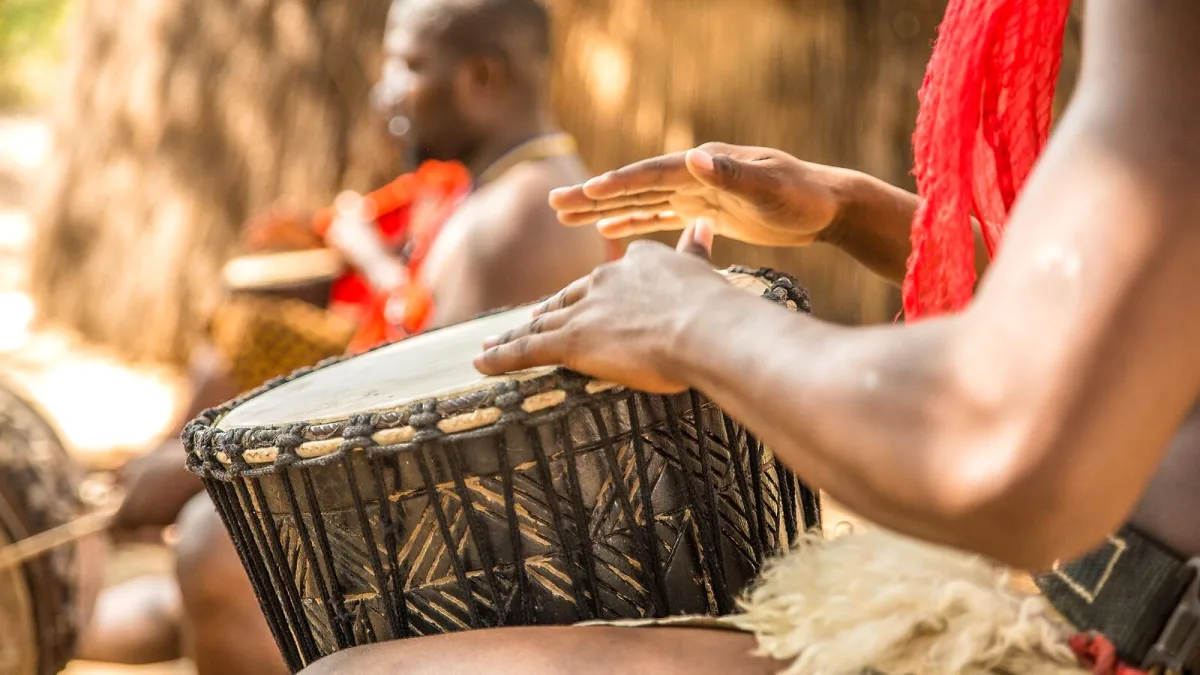
The djembe is a goblet-shaped drum that has become synonymous with West African percussion and world music. Its distinctive warm, resonant tone and responsive playing surface make it a favourite across genres from traditional Mali music to contemporary fusion ensembles. Understanding the djembe's construction, playing techniques and cultural significance is essential for anyone interested in hand drums or world percussion.
What Is a Djembe?
The djembe (pronounced "JEM-bay") is a single-headed frame drum with a goblet or chalice shape. It typically measures between 10 and 14 inches in diameter and stands roughly 18 to 24 inches tall. Unlike many frame drums, the djembe features a distinctive shape that widens at the top and tapers toward the base, with a rope-tuning system that circles the drum's body. This rope tension allows drummers to adjust pitch and tone by hand whilst playing, a feature that distinguishes djembes from most Western drums.
The drum's head is traditionally made from untreated goat or cowhide, stretched across a wooden shell. The wood is typically carved from hardwoods like mahogany or teak, chosen for resonance and durability. The rope tuning system, traditionally made from sisal twine or modern synthetic materials, runs vertically and horizontally around the drum's body, creating the characteristic X-pattern visible on djembes. This design allows players to tighten or loosen the rope to control pitch throughout a performance.
The Anatomy and Sound of a Djembe
A djembe produces three primary tones based on where and how the player strikes the drum. The bass note, played near the centre of the head with a full hand or large mallet, produces a low, resonant tone. The tone note, struck with the fingers roughly one to two inches from the edge, creates a warm mid-range pitch. The slap—the highest and brightest sound—comes from striking the edge of the head with the fingers or hand, creating a sharp attack. This tonal range, achieved through hand position and technique rather than additional hardware, makes the djembe remarkably expressive for a single-headed instrument.
The goblet shape is central to the djembe's acoustic properties. The wooden shell acts as a resonator chamber, amplifying vibrations and projecting sound without the need for electronic amplification. The drum's relatively shallow depth compared to its diameter contributes to the bright, articulate tone that cuts through ensemble playing. The open bottom, which remains unheaded, allows air to move freely beneath the playing surface, affecting both tone and responsive feel.
Types and Variations
Djembes vary significantly in construction quality and material. African djembes carved from solid hardwood and fitted with natural rope tuning are considered the gold standard for tone and playability, though they are also the most expensive and require careful maintenance. Professional-grade fibreglass or reinforced composite shells offer durability and weather resistance without sacrificing tone, making them popular with touring musicians and those in humid climates. Entry-level djembes with synthetic heads and mechanical tuning systems are affordable and require minimal maintenance, though they generally produce a less warm, less responsive tone.
The rope tuning system also varies. Traditional sisal twine offers authentic feel and requires periodic adjustment, whilst synthetic paracord retains tension longer and requires less maintenance. Some modern djembes use mechanical tuning screws instead of rope, which offer greater pitch stability but sacrifice some of the traditional responsiveness that rope tuning provides.
Playing Technique and Execution
Playing djembe effectively demands attention to hand position, strike angle and finger placement. The bass is executed with the palm and fingers together, striking near the drum's centre with a quick, controlled motion. The tone requires the fingers to strike the head roughly 1–2 inches from the edge, with the hand following through slightly to avoid damping the vibration. The slap demands speed and precision: the fingers strike the very edge of the head with maximum force and immediately bounce away, allowing the head to vibrate freely and produce that characteristic bright crack.
Most drum circles and traditional settings use right-hand lead patterns, but djembe is highly adaptable to ambidextrous playing. Many players develop facility on both hands, allowing them to alternate lead roles or execute more complex rhythmic figures. Hand tension, striking speed and the amount of finger or palm contact all influence how the drum responds, making djembe a deeply personal instrument where technique directly translates to sound quality and musicality.
Cultural Roots and Modern Context
The djembe originates from West Africa, particularly the Mandinka and Griot traditions of Mali, Guinea and Senegal. In these cultures, the djembe has been used for centuries in rituals, celebrations and storytelling, where skilled drummers (known as griots) use the drums' tonal range to communicate complex rhythmic narratives. The instrument's migration to global popularity began in the mid-20th century as ethnomusicologists, musicians and cultural enthusiasts brought awareness of West African drumming to Europe and North America.
Today, djembes are found in drum circles, world music ensembles, percussion classes and studio recordings across the globe. The instrument has integrated into contemporary genres from reggae and funk to jazz and electronic music, where its organic tone and rhythmic flexibility add texture to modern compositions. Many community music programmes and cultural organisations use djembe as an entry point to percussion education, appreciating both its accessibility for beginners and its potential for lifelong mastery.
Choosing and Maintaining a Djembe
Selecting a djembe depends on your experience level, budget and musical goals. Beginners benefit from affordable synthetic models that are forgiving and require minimal care. Intermediate players often appreciate quality wooden djembes with rope tuning, which offer warmer tone and greater responsiveness. Professional musicians typically invest in premium African or African-style djembes from reputable makers who source quality hardwood and use traditional construction methods.
Maintenance varies by construction. Wooden djembes with natural rope require periodic retuning, occasional applications of wood oil to prevent cracking, and protection from extreme temperature and humidity changes. Synthetic djembes need only occasional cleaning and informal retuning if the rope loosens. All djembes benefit from protective cases when transported, particularly if travelling between climate zones.
For those just starting their djembe journey, renting or borrowing a drum allows exploration without significant investment. Many music shops and community centres offer trial periods, and seasoned drummers often have spare djembes available for newcomers. Once you've decided the instrument suits your needs and goals, investing in a quality drum that responds well to your playing style will deepen both your technique and enjoyment of the instrument.



Comments