


Cymbals article
Cymbals Explained: Features, Types and Tips
What cymbals are made of, the main types you will meet on a kit, and a few honest tips for choosing wisely — no sales pitch, just the useful stuff.
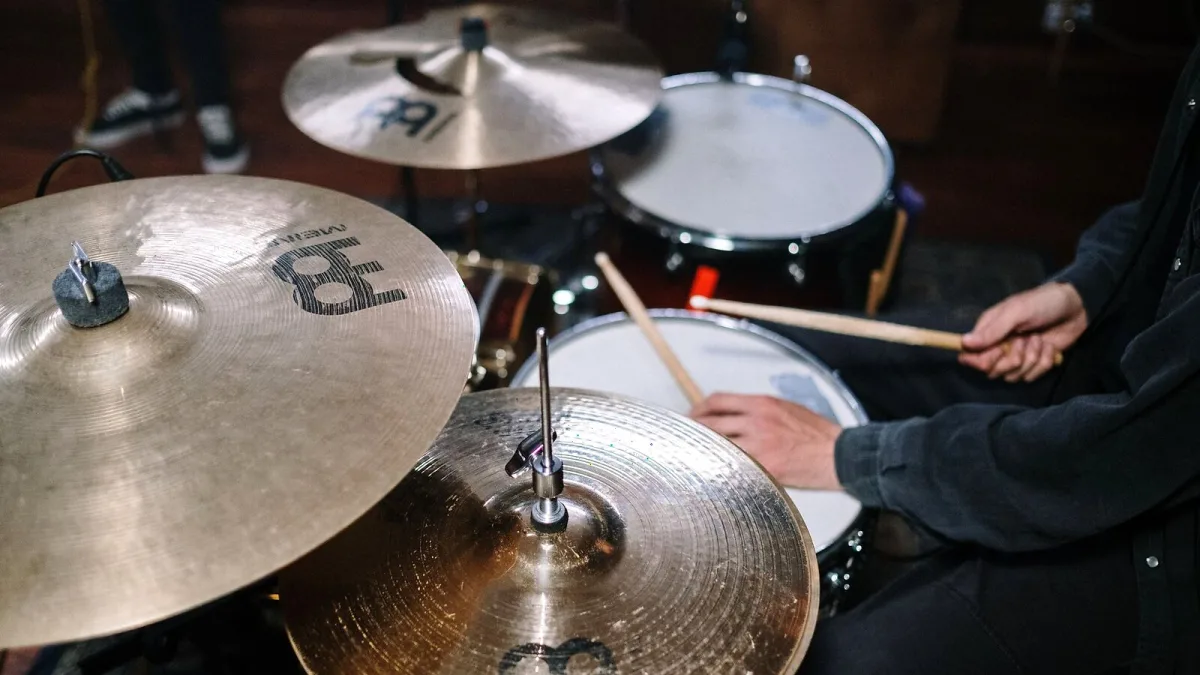
Cymbals are one of those things every drummer eventually has strong opinions about, and for good reason — they shape the character of a kit more than almost anything else on it. Whether you are eyeing up your first hi-hats or trying to work out why one crash sounds nothing like another, this guide walks through what they are made of, the main types you will come across, and a few honest tips for choosing wisely. No sales pitch, just the useful stuff.
What a Cymbal Actually Does
A cymbal is, at its simplest, a shaped metal plate that rings when struck. Hit one and you get a complex mix of sounds layered on top of each other: the attack (the initial crack of stick on metal), the body (the main tone that follows), and the wash (the wider, sustained blend of overtones that lingers after). How long that sound hangs around is its sustain, and how it fades away is the decay.
Most cymbals have a few functional zones worth knowing. The bell (sometimes called the cup) is the raised dome in the centre, and striking it gives a sharp, focused ping that cuts through a mix. The bow is the main sloped playing surface, and the edge is the outer rim, which tends to produce the broadest, most explosive sound. Where the bow meets the edge is the shoulder, and it matters more than you would think on crashes and rides.
The Main Types of Cymbals on a Kit
Cymbals are not a single category — they are several different tools, each doing a different job. Here is the shortlist you will meet on almost any kit:
| Type | Typical size | What it is for |
|---|---|---|
| Hi-hats | 13–14 in (pair) | Timekeeping, foot-controlled “chick” and stick patterns |
| Ride | 20–22 in | Repeated rhythmic patterns, with a clear bell for accents |
| Crash | 14–20 in | Accents — a quick, loud punctuation mark |
| Splash | 6–12 in | Short, fast accents, often layered with a crash |
| China | 16–18 in | Aggressive, trashy accents — the upturned edge is the giveaway |
Most beginner setups start with hi-hats, one crash and one ride, then grow from there as the drummer works out what is missing. If you are putting a first kit together, our beginner’s guide to cymbals covers that first setup in more depth.
What They Are Actually Made From
Almost all proper cymbals are cast from copper-based alloys, and the exact mix has a big say in the sound. B20 bronze (roughly 80% copper, 20% tin) is the alloy most professional cymbals are built from, generally prized for a rich, complex tone — though how it is finished matters just as much as the recipe. B8 bronze (around 92% copper, 8% tin) tends to sound brighter and more direct, and is common on mid-priced instruments. Cheaper, entry-level cymbals are often brass, which is not a bad thing for a beginner instrument, just a different tonal and price bracket.
Alloy is only the start, though. Hammering — the pattern of dents worked into the metal — breaks up the vibrations and adds complexity. Lathing shaves grooves into the surface to brighten and open the sound, while an unlathed finish keeps more of its raw, dark character. Two cymbals of identical size and alloy can sound completely different once you factor in thickness, profile and how they were finished.
Bright, Dark, Dry and Washy: The Vocabulary
Cymbal shops throw a lot of adjectives around, and they are worth knowing even though they describe rather than measure:
- Bright — strong high-frequency content, a sharp, cutting attack.
- Dark — less top-end, a softer attack and warmer, smokier overtones.
- Dry — limited sustain and wash, favouring attack and separation over ring.
- Washy — a fuller, more sustained spread that blooms after the initial hit.
None of these are better or worse in absolute terms. A dry, controlled cymbal that sounds a bit thin on its own might be exactly what a dense mix or a quiet acoustic gig needs, while a big, washy crash that fills a room can swamp a small ensemble entirely.
A Few Honest Tips Before You Choose
Play one before you commit to it, if you possibly can. Recordings and spec sheets only tell you so much — how a cymbal feels under the stick, and how it behaves in the room you will actually use it in, matters more than any brochure. If you are shopping properly, our complete buyer’s guide to cymbals goes through what to check before you hand over any money, and our value-for-money round-up breaks the market into sensible price tiers.
Cymbals are also consumable — every one wears, and eventually cracks, no matter how carefully you look after it. Loose mounting, sensible technique and regular hardware checks all extend a cymbal’s life considerably; our guide to common cymbal mistakes covers the habits that shorten it.
The Bottom Line
Cymbals are simple objects with a genuinely complicated job: shaping the tone, energy and feel of everything played on a kit. Learn the main types, get a rough handle on how alloy and finish affect the sound, and always trust your ears over a spec sheet. Once you know what you are listening for, choosing the right set stops being guesswork.




Comments