


Congas article
Congas for Beginners: A Complete Guide
Congas look a little intimidating at first, but it's a genuinely welcoming instrument to begin on. Let's take it gently, one step at a time.

Congas can look a little intimidating at first — tall, imposing drums with their own vocabulary of tones and Spanish names for every size. But underneath all that, it's a genuinely welcoming instrument to begin on, and you'll be making real, musical sounds much sooner than you might expect. Let's take it gently, one step at a time.
You Only Need One Drum to Begin
It's easy to assume you need a full matching set of congas to get started, but you really don't. One conga or tumba is plenty while you're learning your first hand positions and basic tones. Adding a second and third drum can wait until you know you're enjoying it and you understand what each size actually adds.
Getting to Know Your Drum
Before you even play a note, take a moment to look at what you're holding. The tall body is the shell, usually wood or a durable material like fiberglass. The stretched skin on top is the head, held under tension by a metal rim and a ring of screws called tension rods, which is how the drum gets tuned. Sit or stand with the drum angled so your hands can reach the head comfortably without hunching your shoulders — comfort matters far more than looking a particular way.
Your First Two Sounds: Bass and Open Tone
Rather than trying to learn everything at once, start with just two sounds:
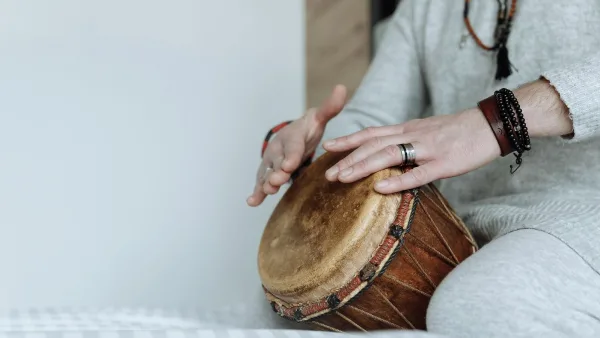
- Bass tone — press your palm into the centre of the head. You should feel and hear a deep, rounded thud.
- Open tone — let your fingers strike nearer the edge and bounce straight back off, rather than pressing in. This gives a clearer, ringing note.
Go slowly, and listen for the difference between the two. There's no rush at all — most experienced players spent a long time on exactly these two sounds before adding anything more complicated.
Adding the Slap and Muffled Tone, Later
Once bass and open tones feel comfortable and repeatable, you can gently introduce the slap (a quick, precise finger action giving a sharp pop) and the muffled tone (struck near the edge with part of your hand resting on the head to quieten it). Don't force the slap early on — it comes from relaxed, controlled hands, not from hitting harder. If anything hurts, stop and rest; some tenderness while your hands adjust is normal, but pain is a sign to ease off.
Sitting or Standing: Whatever Feels Right
Some players sit with their congas angled between their knees, others use a stand and play standing up. Both are completely valid, traditional ways to play. Try both if you can, and choose whichever lets your hands move most naturally, without straining your back or wrists.
Your First Few Practice Sessions
A few gentle habits that will genuinely help:
- Practise little and often rather than in long, tiring bursts.
- Play along to simple recordings and try to lock in with the pulse, rather than practising in silence.
- Don't worry about speed. Accuracy and a relaxed hand come first; speed follows naturally with time.
- Give your hands rest days, especially in the beginning, while they build up a little resilience.
Once you're comfortable with the instrument itself, our full explainer on how congas work is a gentle next read.
Why Congas Feel Different From a Drum Kit
If you've tried a drum kit before, congas ask something different of you. There are no sticks between you and the sound — just your hands, which means every tiny change in angle, speed and tension changes the tone you get back. That can feel strange at first, but it also means you learn to really listen to your own hands in a way that sticks often let you skip past. Give that adjustment time; it's a genuine skill, not something you should expect to feel natural on day one.
Common Beginner Questions, Answered Gently
"Will I hurt my hands?" A little tenderness while you build up calluses is normal, but sharp pain isn't — that usually means you're forcing a stroke rather than relaxing into it.
"Do I need to learn to read music?" Not to begin with. Most conga playing is learned by listening and feeling the pattern, especially early on.
"What if I can't afford three drums yet?" You don't need to. One good drum, learned properly, will teach you almost everything you need before you're ready to add more. Our buyer's guide can help when that time comes.
The Bottom Line
Be patient with yourself, start with one of the congas and two sounds, and let everything else build gradually from there. Congas reward time and gentle repetition far more than they reward rushing, and that's genuinely good news for anyone just starting out.



Comments