


Congas article
Congas Explained: Features, Types and Tips
Tall drums, one head each, played by hand — but there's real craft and a deep tradition behind that simplicity. Here's how congas actually work.
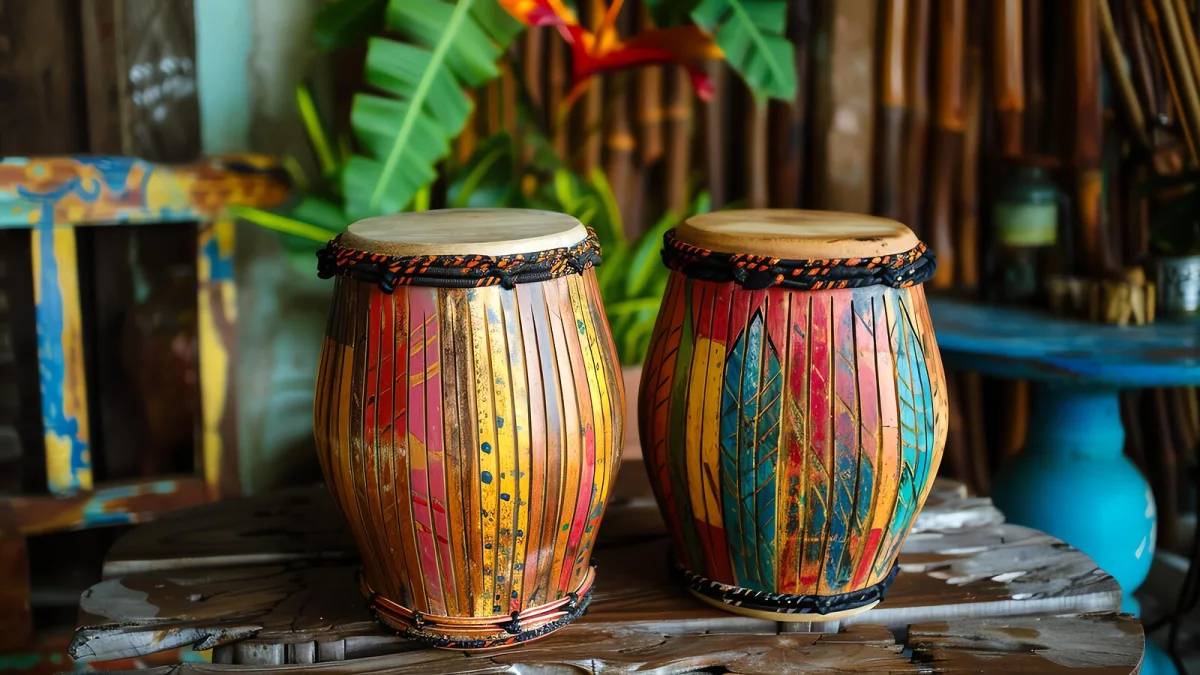
Get within earshot of a rumba, a son montuno or a salsa horn break, and the chances are congas are doing most of the actual rhythmic talking. They look simple — tall drums, one head each, played by hand — but there's real engineering and a deep musical tradition behind that simplicity. Here's how they work, what the terms mean, and a few practical tips.
What Congas Actually Are
Congas are tall, single-headed hand drums, technically classed as membranophones: the sound comes from a stretched drumhead vibrating over a barrel-shaped shell. They developed within Afro-Cuban percussion traditions and remain central to son, rumba, mambo, cha-cha-chá and salsa. Unlike bongos, which share a central bridge between two shells, congas are separate drums, usually played as a set of two or three.
Quinto, Conga and Tumba: The Three Common Sizes
A full set covers three rough sizes, each with a different job in the ensemble:
| Name | Typical diameter | Role |
|---|---|---|
| Quinto | ~10–11 inches | Highest pitch; lead lines and solos |
| Conga (or segundo) | ~11–12 inches | The principal middle drum |
| Tumba (tumbadora) | ~12–13 inches | Largest, lowest-pitched; foundational patterns |
Naming isn't perfectly standardised across manufacturers or regions — "tumbadora" is sometimes used as a general term for the whole instrument rather than just the largest drum — so treat these as useful working categories rather than fixed law.
What They're Built From
Shells are typically wood or fiberglass. Wood, often stave-built from vertically joined pieces like a barrel, tends to be chosen for a warm, traditional sound; fiberglass is valued for durability and better resistance to humidity swings. Heads are either rawhide, offering a traditional feel and complex response, or synthetic, which holds tuning more consistently across changing climates. If you're weighing these trade-offs up before a purchase, our buyer's guide covers the decision properly.
The Basic Strokes
Conga technique is built from a handful of core hand strokes:
- Bass tone — palm strikes the centre, producing a deep, damped sound.
- Open tone — fingers strike near the edge and rebound, giving a clear, resonant pitch.
- Slap — a fast, precise finger action producing a sharp, popping accent.
- Muffled tone — struck near the edge with part of the hand left resting on the head, reducing resonance.
- Touch tone — a light contact used for soft articulation between the main strokes.
Tumbao: How Congas Function in the Groove
The recurring pattern the drums play under a song is generally called the tumbao. It isn't one fixed rhythm — it shifts with genre, tempo and regional style, so a rumba quinto phrase and a salsa tumbao shouldn't be treated as interchangeable. Most players build up open tones on defined beats, bass tones for weight, and muted touches for the subdivisions in between, adding slaps selectively for accent.
Congas in the Studio
Recording them usually means a microphone above the head, angled towards the playing area without sitting so close that individual hand movements cause jumpy level changes. A second mic near the shell can add body, though it also picks up more room noise. Moderate compression helps stabilise accents without flattening the drum's natural dynamics.
A Word on Tuning
The drums are tuned by adjusting tension rods around the rim, generally in small increments and in an opposing "star" pattern so the head tightens evenly rather than pulling unevenly to one side. There's no single universal pitch every player aims for; some instructional approaches suggest tuning a quinto roughly a perfect fourth above the conga, but pitch relationships between drums in a set matter more than hitting an exact note. Rawhide heads also respond to humidity, tightening in dry conditions and loosening in damp ones, so a set that sounded perfect last week may need a small check before today's session.
Players Worth Knowing
Mongo Santamaría, Ray Barretto, Chano Pozo, Cándido Camero, Giovanni Hidalgo and José Luis "Changuito" Quintana all shaped how congas are heard today, from Afro-Cuban jazz through salsa to modern fusion. Listening to their recordings tells you more about phrasing than any written description can.
Where to Go Next
Just starting out? Our gentle beginner's guide walks through your first strokes. Ready to shop? See our best picks for the money, and if you already own a set, it's worth reading the common mistakes worth avoiding.
The Bottom Line
Congas reward patience — the instrument itself is simple, but the vocabulary of tones and the tradition behind it run deep. Learn the strokes, listen to the players who defined the style, and the rest follows with time on the drum.



Comments