


Turntable Cartridge article
Turntable Cartridge Explained: Features, Types and Tips
The turntable cartridge is where music becomes electricity. Understanding what it does — and how each type differs — is the foundation of any serious vinyl setup.
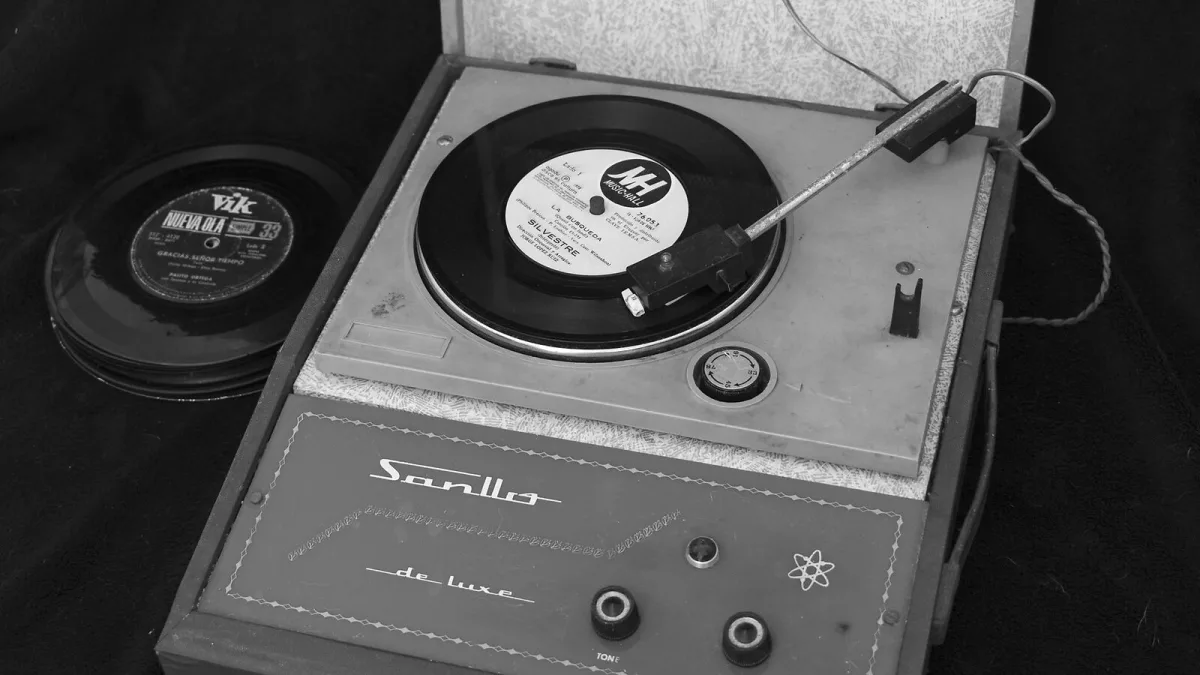
The turntable cartridge is the point where music becomes electricity — the small component mounted at the end of the tonearm that reads the groove and sends a signal to your amplifier. Understanding how it works, what the different types are, and what distinguishes a good one from a mediocre one is the difference between a vinyl setup that genuinely sings and one that merely functions.
What Is a Turntable Cartridge?
A turntable cartridge is a transducer — a device that converts one form of energy into another. In this case, the mechanical energy of a stylus tracing through a vinyl groove is converted into an electrical signal that your phono stage and amplifier can work with. The stylus (the needle), the cantilever (the thin arm connecting stylus to generator), and the generator system together form the complete cartridge assembly.
The generator system is what differentiates the two main cartridge types. Everything downstream — the phono stage, the amplifier, the speakers — depends on what the cartridge gives it to work with. Spend wisely here and everything up the chain rewards you for it.
Moving Magnet vs Moving Coil
There are two fundamental cartridge technologies, and they behave quite differently.
Moving Magnet (MM)
In a moving magnet cartridge, the stylus and cantilever are attached to a small magnet that moves between fixed coils. The moving magnet generates a voltage as it moves — typically between 2.5 and 5 millivolts. This is a relatively high output, which means the signal is strong enough to work with a standard phono stage — the amplification stage designed specifically for turntable signals. Most phono stages have an MM input as standard.
The great practical advantage of a moving magnet cartridge is that the stylus is usually user-replaceable. Worn stylus? Buy a new one and clip it in. No need to send the whole cartridge away. Audio-Technica's VM95 series and the Ortofon 2M range are among the most widely used MM cartridges in both hi-fi and DJ contexts.
Moving Coil (MC)
A moving coil cartridge reverses the arrangement — small coils are attached to the cantilever and move within a fixed magnetic field. Because the coils are lighter than a magnet, many audiophiles consider MC designs capable of tracking groove detail with greater speed and accuracy. The trade-off is a much lower output voltage (typically 0.2–0.5 millivolts) and a stylus that is not user-replaceable on most models — requiring a manufacturer retip when worn.
An MC cartridge requires either a dedicated MC phono stage or a step-up transformer (SUT) to bring the signal to a usable level before the phono stage. This adds to the cost of the overall system. Entry-level MC cartridges from brands such as Denon start around £100–150; at the top end of the market, flagship MC models from van den Hul, Lyra, and others cost several thousand pounds.
The Stylus: Where It All Begins
The stylus tip is the only physical contact point between your cartridge and your records. Its shape matters more than most buyers realise.
- Spherical (conical): A round tip that contacts the groove wall along a relatively large area. Durable and forgiving of alignment errors, but retrieves less high-frequency detail. Often found on budget cartridges and DJ models where robustness matters more than ultimate fidelity.
- Elliptical: A tip with a smaller contact radius on the horizontal axis than the vertical, tracing groove detail more accurately. A significant step up from spherical in terms of high-frequency retrieval and a common choice across mid-range hi-fi cartridges.
- Fine-line (Shibata, MicroLine, SAS): Even narrower contact areas, capable of tracing the finest groove detail — including the high-frequency content added to records by the RIAA equalisation curve during cutting. More demanding of tonearm alignment, but rewarded with superior resolution. Standard on upper-range hi-fi cartridges.
Compliance and Tonearm Matching
Compliance describes how freely the stylus assembly can move laterally — effectively, how springy it is. A high-compliance cartridge moves easily under low-mass tonearms; a low-compliance cartridge needs a heavier arm to work correctly. Mismatching compliance to tonearm mass results in a resonant frequency that falls inside the audible range — which causes tracking errors and audible distortion.
Checking tonearm effective mass against cartridge compliance (measured in cu, or compliance units) before buying is important, particularly for older turntables with fixed tonearms. Online tonearm/cartridge matching calculators are widely available and the maths is straightforward.
Tracking Force and Anti-Skate
Every turntable cartridge specifies a recommended vertical tracking force (VTF) — the downward pressure the stylus applies to the groove, measured in grams. Most hi-fi cartridges specify between 1.5 and 2.5 grams; DJ cartridges often track heavier (2–4 grams) to resist stylus bounce under vigorous use.
Setting the VTF accurately with a stylus gauge is important: too light and the stylus will skip and mistrack; too heavy and it accelerates groove and stylus wear. Anti-skate — the counterforce applied to the tonearm to prevent it being pulled inward by the groove — should be set to approximately match the VTF, though many listeners fine-tune this by ear.
Cartridge Alignment
A cartridge mounted at the wrong angle in the headshell will produce audible distortion, particularly at the inner grooves. Proper alignment uses a protractor to set the cartridge so the stylus traces the groove at the geometrically correct angle across the record surface. The two most common alignment standards are Baerwald and Loefgren — both are valid choices, with different trade-offs in where distortion is minimised across the playing surface.
Most turntables ship with a basic alignment gauge. If yours did not, paper protractors are downloadable free of charge from various vinyl community websites, or quality plastic protractors are available for a few pounds.
DJ Cartridges vs Hi-Fi Cartridges
DJ cartridges are optimised for a different set of priorities: robust tracking under back-cueing and scratching, high VTF tolerance, and resilience against physical abuse. Spherical styli are common because they handle groove contact from unusual angles. The Ortofon Concorde series and Shure's M44-7 became classics in this context — well-established in DJ booths over many decades.
Hi-fi cartridges prioritise resolution, low distortion, and faithful groove tracing over durability under abuse. The choice between them is straightforward: DJ rigs use DJ cartridges; home listening setups use hi-fi cartridges.
If you are buying your first cartridge and want guidance on what to actually spend, the turntable cartridge buyer's guide covers the practical considerations at each budget level. If you are new to vinyl, the beginner's guide to turntable cartridges starts from the beginning.
The Cartridge in Context
A turntable cartridge is not something to economise on at the expense of everything else. An excellent cartridge on a decent turntable will outperform a mediocre cartridge on an expensive one. It is the start of the signal chain — and its fingerprints are on every note that follows.




Comments