


Bongo Drumming article
Everything You Need to Know About Bongo Drumming
From eastern Cuba to salsa clubs and bedroom studios, here is everything worth knowing about bongo drumming: history, anatomy, the martillo pattern and basic technique.
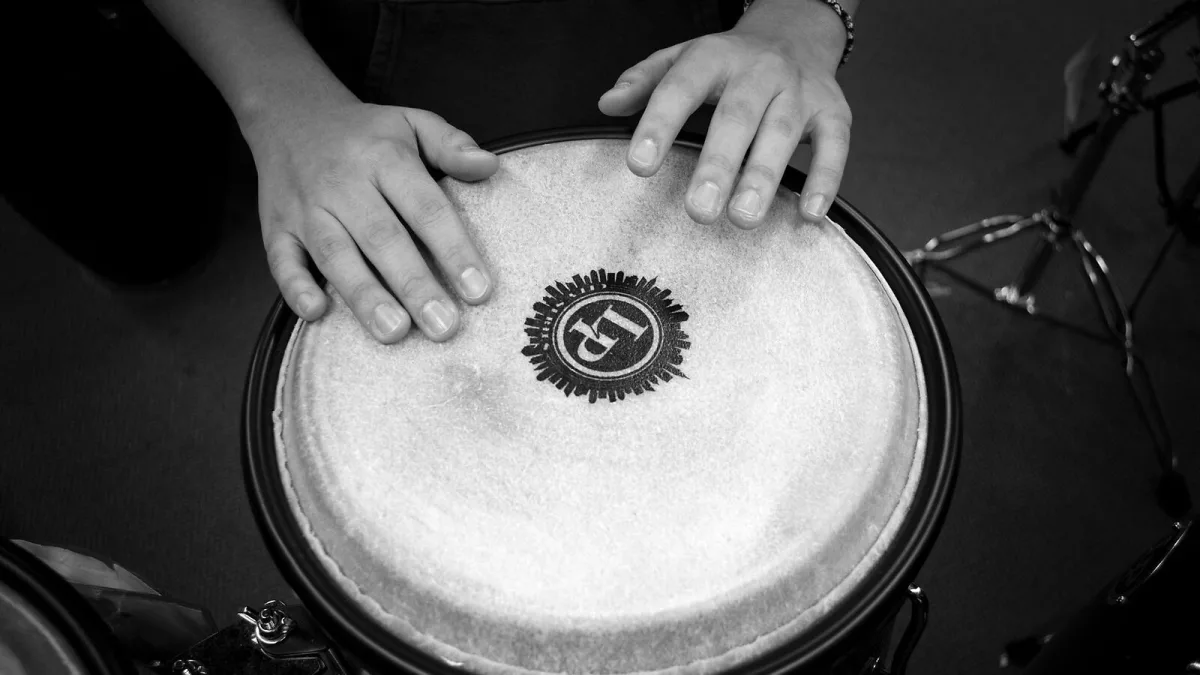
Two small drums, joined at the hip and played entirely with the hands — that is bongo drumming in a nutshell, but there is far more going on underneath. From its roots in eastern Cuba to its place on pop records and drum-circle mats the world over, it rewards a bit of background before you ever sit down to play. Here is what actually matters: where the instrument came from, how it is built, the pattern that defines it, and how it compares to its percussion cousins.
Where Bongo Drumming Comes From
The instrument traces back to eastern Cuba in the late nineteenth century, where the paired drums became central to son and changüí — rural and urban musical styles that eventually fed into salsa. The instrument’s open-bottomed build and its role in a wider family of hand drums point to African-derived traditions, but the modern bongó, as historians describe it, was shaped through Cuban musical practice rather than copied wholesale from a single older drum. It is best understood as an Afro-Cuban instrument formed in Cuba, not one borrowed unchanged from anywhere else.
From those Cuban dance halls, the sound spread outward through touring bands, recordings and, eventually, Latin jazz and mainstream pop. American percussionist Jack Costanzo picked up the nickname “Mr Bongo” for his part in that mid-century crossover, while Cuban players such as Mongo Santamaría, Cándido Camero and Armando Peraza carried Afro-Cuban percussion into jazz clubs and studio sessions across the United States.
Macho and Hembra: How the Drums Are Built
A bongó is a pair of open-bottomed drums of different sizes, traditionally cradled between the knees with the smaller drum on the player’s left. That smaller, higher-pitched drum is the macho (“male”); the larger, lower-pitched one is the hembra (“female”). Left-handed players, and plenty of others besides, are free to reverse that layout — there is no rule carved in stone, only what feels stable and controlled.
| Part | Job |
|---|---|
| Macho & hembra shells | Traditionally wood; also fibreglass or other synthetic shells today |
| Drumheads | Natural hide or synthetic skin, stretched over the shell |
| Bearing edge | The rim the head is stretched across — its evenness affects tone and tuning |
| Rims & lugs | Hardware that tensions the head |
| Centre block | Joins the macho and hembra into one playable pair |
The open bottoms are not just tradition for its own sake — they are doing acoustic work, letting the shell resonate and project. Cover or obstruct them and the tone dies noticeably.
The Martillo: The Heartbeat of the Pattern
If there is one thing to understand about bongo drumming, it is the martillo (“hammer”) — the repeating, syncopated pattern that alternates between the two drums and underpins son and much of salsa. It weaves open tones, muted tones and accents into a groove that leaves space for the singer, the tres guitar, the bass and the claves, while still giving the bongocero (the bongo player) room to step forward into looser improvisation, sometimes called a repique, during instrumental passages.
Exact sticking and ornamentation for the martillo vary by region, teacher and ensemble, so no single written version should be treated as the only correct way to play it — it is a living pattern, not a fixed formula.
Bongos, Congas and Timbales: Not the Same Family
Bongos are often lumped in with other Afro-Cuban percussion, but the instruments themselves are quite different:
- Congas are taller, single-headed drums, usually played standing or seated in sets of two or more.
- Timbales are shallow metal drums, typically played with sticks rather than bare hands.
- Batá drums are double-headed, Yoruba-derived drums used in both ritual and secular Cuban music.
Bongos sit apart from all of them: smaller, paired, open-bottomed, and played almost exclusively with the fingers, thumbs and palms.
Tone, Tuning and Everyday Technique
The core vocabulary of bongo drumming includes the open tone (a resonant strike near the edge), the muted tone (fingers stay on the head to shorten the sound), the slap (brighter and sharper, but never something that should hurt to produce), and the bass tone (struck nearer the centre for a fuller pitch). Beginners are generally better off chasing clean rebound and steady timing than raw volume.
There is no single universal tuning pitch for bongos — players tune the macho higher than the hembra to create a clear interval, working gradually and evenly around the head rather than cranking one lug at a time. Natural skin heads respond richly but are sensitive to humidity and temperature; synthetic heads trade a little of that character for stability, which is one reason many working musicians keep a synthetic-headed pair for gigging.
Where You Will Hear It
The style long ago outgrew Cuban son. It underpins salsa and Latin jazz, turns up in merengue and other Caribbean styles, found its way into rock and psychedelic records in the 1960s, and remains a fixture of drum circles, studio overdubs and singer-songwriter arrangements. Ensembles such as the Buena Vista Social Club, the Fania All-Stars and Irakere all helped carry the sound to new audiences, alongside percussionists like Giovanni Hidalgo and Changuito, who pushed the instrument’s technical vocabulary further still.
Getting Started
If this has whetted your appetite, our beginner’s guide to bongo drumming walks through posture, first tones and a sensible practice routine, while our buyer’s guide covers what actually separates a decent pair of bongos from a frustrating one. And before you settle into bad habits, it is worth a look at the common mistakes players make early on.
The Bottom Line
Bongo drumming is a small instrument with an outsized musical footprint: born in eastern Cuba, built around the conversation between the macho and the hembra, defined by the martillo, and now heard everywhere from salsa clubs to bedroom studios. Understand where it came from and how the two drums work together, and the rest — tone, tuning, technique — starts to make a lot more sense.



Comments