


Direct Drive Turntable article
Direct Drive Turntable for Beginners: A Complete Guide
A direct drive turntable is a precision instrument that rewards careful setup — here's everything a first-time owner needs to know to get it right from the start.
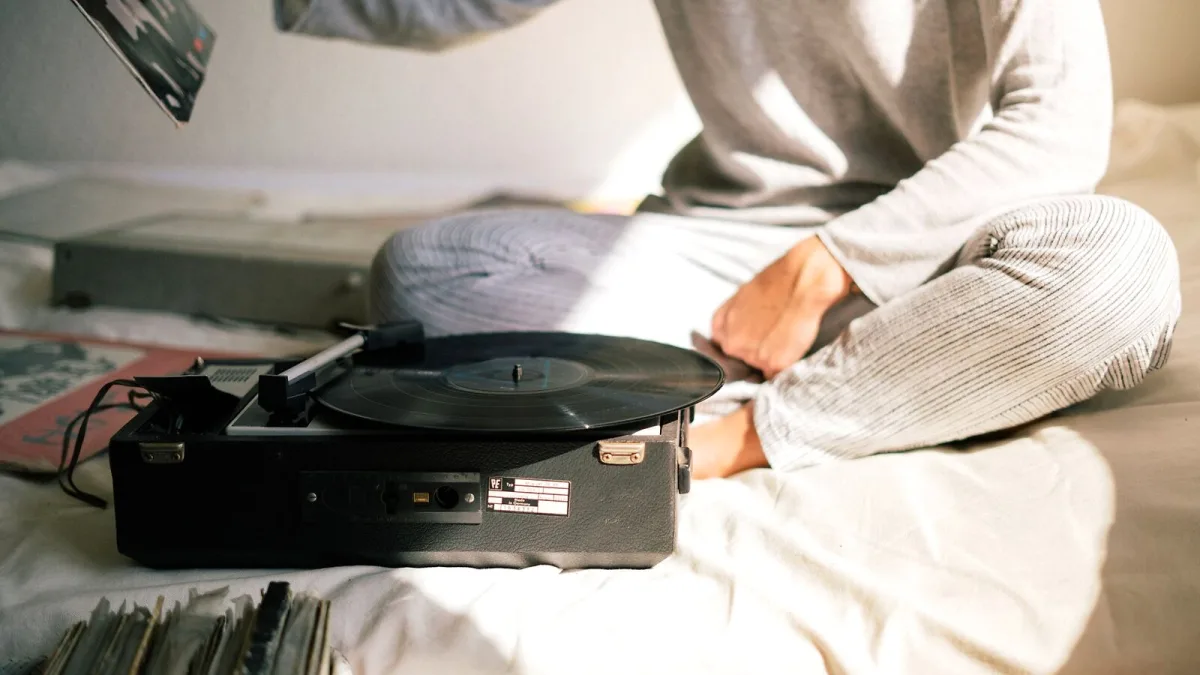
Getting into vinyl for the first time — or deciding to take it more seriously after years of casual listening — raises a lot of questions that nobody seems to give you straight answers to. This guide is for people who have either just bought a direct-drive turntable or are strongly considering one, and want to understand what they have actually got, how to set it up properly, and what to expect from it.
First Things First: What Are You Actually Playing Records Through?
A direct drive turntable is the start of a signal chain, not the whole of it. Before you press start, it helps to understand the path the music takes from the groove of a record to your ears:
- The stylus — a very small diamond or sapphire tip that traces the groove in the record.
- The cartridge — converts the stylus’s physical movement into a very small electrical signal.
- The phono preamplifier — amplifies that tiny signal and applies a standard frequency correction called the RIAA curve, because records are cut with bass reduced and treble boosted to fit more music on the disc. The phono stage reverses that.
- The amplifier or receiver — amplifies the line-level signal from the phono stage to speaker-driving levels.
- The speakers or headphones.
Your turntable may have a built-in phono stage (often switchable between “phono” and “line” positions). If it does, connecting to a standard auxiliary or line input on your amplifier is straightforward. If it does not, you need either an amplifier with a dedicated phono input or a separate phono preamplifier.
Setting Up Your Direct Drive Turntable
The setup steps below apply to most direct-drive models. If your specific turntable’s manual gives different instructions, follow those.
- Place the turntable on a solid, level surface. A table that wobbles, a shelf that bends, or a surface directly adjacent to a subwoofer will all affect performance. Ideally the surface is at a height comfortable for handling records.
- Balance the tonearm. Most tonearms have an adjustable counterweight at the back. Move it until the tonearm floats horizontally without the stylus touching the record. Then set the tracking force (stylus pressure) using the counterweight to the value specified in your cartridge’s manual. This usually means twisting the counterweight to zero and then rotating the tracking-force ring to the recommended value — typically 1.5–3 grams for most moving-magnet cartridges.
- Set anti-skate. Anti-skate counteracts the inward force the stylus groove applies to the tonearm. A starting point is to match the anti-skate figure to the tracking force value, then refine only if there is clear audible asymmetry or tracking issues.
- Connect the turntable. Use the RCA cables to connect to your phono stage, receiver or amplifier’s phono input. If your turntable has a ground wire, connect it to the ground terminal on the phono stage or amplifier — this reduces hum.
- Check the speed setting. Make sure the speed selector is set to 33 for 12-inch LPs or 45 for singles before playing.
- Play a record. Cue the tonearm to the lead-in groove at the outside edge of the record and let it drop gently using the cueing lever if your turntable has one.
Understanding Tracking Force and Why It Matters
The tracking force is the weight the stylus applies to the groove. Too light, and the stylus skates across the record, misreads high-frequency detail and can damage the groove. Too heavy, and it applies unnecessary wear and may distort. The cartridge manufacturer specifies a recommended range — staying within that range is important for both sound quality and record preservation.
You do not need to guess: most tonearms have a tracking-force dial or ring calibrated in grams. A small stylus pressure gauge is also available cheaply and gives a more accurate reading than the tonearm markings alone if you want to be certain.
What “Direct Drive” Feels Like
One of the first things you notice when using a well-made direct-drive machine is how quickly the platter reaches speed. Press start and within half a rotation it is running. The platter feels solid and confident under your hand. If your model has a pitch control — a slider that adjusts the playback speed slightly — this changes the motor speed, which you will hear as a slight rise or fall in pitch on whatever is playing.
The motor runs continuously beneath the platter while the unit is on. The design aims to keep motor vibration isolated from the stylus, and on a decent unit you will hear no hum or low-frequency buzz through the speakers under normal conditions.
Looking After Your Records and Stylus
A direct-drive turntable is robust, but the cartridge and stylus are not. A few habits will protect both your records and your investment:
- Always cue the tonearm gently — use the cueing lever rather than dropping it by hand.
- Keep the stylus clean. A carbon-fibre brush or proper stylus cleaning fluid removes dust that accumulates with every play.
- Clean records before playing, especially second-hand ones. Dirt in the groove causes crackle that has nothing to do with the turntable, and an anti-static brush before each play reduces audible static.
- Replace the stylus at the manufacturer’s recommended interval, or sooner if you hear distortion on high-frequency material like cymbals or sibilant vocals.
- Store records vertically and in their sleeves. Horizontal stacking over long periods can cause warping.
What to Expect in Terms of Sound
A good direct-drive machine played through a decent phono stage into a reasonable amplifier and speakers will reveal considerably more detail, warmth and dynamic range on a well-pressed vinyl record than you might expect. Surface noise — the faint background crackle on older records — is a characteristic of the format, not a fault in the turntable. A flat, warp-free record played with a well-maintained stylus through a good chain will often sound strikingly alive.
Do not be discouraged if your first few plays are not revelatory. Give yourself time to set the tracking force correctly, let the stylus and cartridge settle, and keep the stylus clean. The improvement with attention to these details is real.
The Bottom Line
A direct drive turntable is a precision mechanical instrument that rewards careful setup. Get the basics right — level surface, correct tracking force, clean records, proper connections — and you will have a source of genuine musical pleasure for many years. The motor-driven directness of the design means it is forgiving to use and consistent in performance, whether you are listening quietly at home or learning to DJ.
Once you want to go deeper into what you’ve bought, our full technical explainer covers the mechanism, the history and the key terminology. And if you are still deciding which model to buy, our buyer’s guide covers what to look for before you spend.




Comments