


Direct Drive Turntable article
Direct Drive Turntable Explained: Features, Types and Tips
A direct drive turntable couples the motor directly to the platter for fast startup, high torque and stable speed — here's how it works and why it matters.
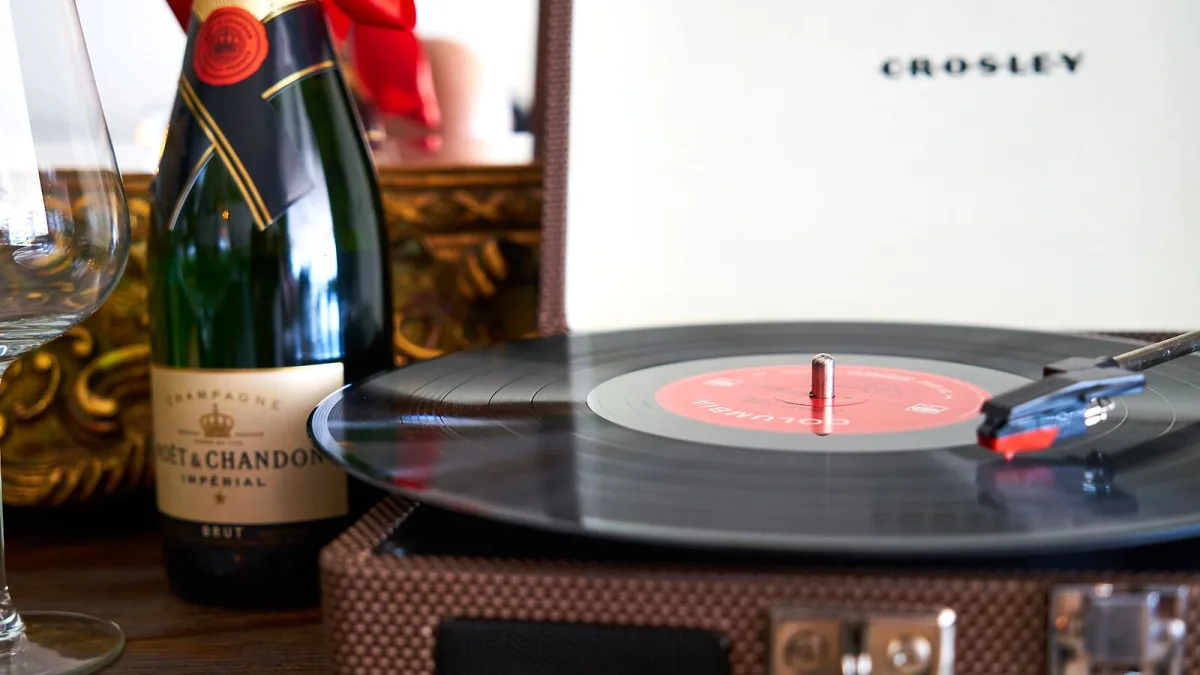
There are three ways to spin a record: belt drive, idler wheel drive, and direct drive. Each has its loyalists, its use cases and its trade-offs. The direct-drive turntable has been the instrument of choice for working DJs since the 1970s, and it remains central to professional DJ performance and an increasingly popular choice for home listeners who want speed stability without the faff of belt replacement. Understanding exactly how it works — and where its strengths actually lie — is worthwhile before you invest in one.
What Is a Direct Drive Turntable?
In a direct-drive turntable, the motor is coupled directly to the platter. The platter is typically mounted over the motor’s central spindle or integrated with the rotor, so the motor’s rotation drives the platter without any belt or intermediate wheel in between. This is the defining mechanical distinction: the motor and platter are, in effect, one rotating assembly.
By contrast, a belt-drive turntable uses an elastic belt looped between a motor pulley and the platter rim. That belt introduces some compliance into the drive system, which can isolate motor vibration from the platter but also adds an extra wear component and reduces startup torque.
How Direct Drive Works
Most modern direct-drive designs use a low-speed electronically controlled motor positioned beneath the platter. The motor is designed to run at the playback speed — typically 33⅓ rpm or 45 rpm — rather than a high-speed motor that drives through a reduction system.
Speed is regulated electronically, and many designs use a quartz-locked system that compares the platter’s actual speed with a stable reference frequency and adjusts the motor continuously to compensate for any deviation. This kind of closed-loop control can maintain very precise speed even when the platter is loaded, manipulated or subjected to drag from the stylus.
The platter itself carries most of the rotational mass. A heavier platter tends to smooth out instantaneous speed variations because its inertia resists sudden changes — the same principle that makes a flywheel useful. Technics noted that the original SL-1200’s design brought its “large and heavy-duty platter to the rated rotation speed in just 1/2 of a turn” while maintaining minimal rotational irregularity.
Direct Drive versus Belt Drive
The comparison is a recurring debate among turntable enthusiasts, and it has generated more confident opinions than it strictly warrants. Here are the practical differences:
| Consideration | Direct drive | Belt drive |
|---|---|---|
| Startup speed | Very fast, high torque | Slower, lower torque |
| Speed under manipulation | Recovers quickly, resists drag | Belt may stretch or slip |
| Motor vibration | More challenging to isolate | Belt provides natural buffer |
| Maintenance | No belt to replace | Belt needs eventual replacement |
| Pitch control | Common, especially DJ models | Less common on home models |
Neither system is inherently superior for sound quality. A well-engineered direct drive with good motor control and a well-isolated bearing can match or exceed a mediocre belt-drive design. According to What Hi-Fi, the principal direct-drive advantage is “higher torque” producing faster startup and greater resistance to external forces, which makes the distinction clearest in DJ and professional contexts rather than quiet domestic listening.
The Technics SL-1200: Why It Defined the Category
No discussion of direct drive is complete without the Technics SL-1200. Introduced in 1972 and revised repeatedly over subsequent decades, the SL-1200 became the world standard for club and professional DJ work — and arguably the most widely deployed turntable model of all time. Its combination of high starting torque, quartz speed control, durable tonearm bearings, pitch control and robust construction established what a professional DJ turntable should be.
The SL-1200’s influence on music history is substantial. Hip-hop, house, techno, drum and bass, garage, jungle and countless subgenres were developed by producers and DJs who used it as a fundamental instrument. Its resilience on tour and in clubs, where it endured nightly abuse, cemented its reputation in a way that no laboratory specification could.
Types of Direct Drive Turntable
The category divides broadly into two groups, though the line between them is not always clear:
DJ and Performance Turntables
These prioritise high torque, fast startup, precise pitch control, platter braking and reverse functions. They are built to withstand the physical demands of scratching, back-cueing and continuous use in club environments. Typical examples include the Technics SL-1200 family, the Audio-Technica AT-LP120XUSB and various Pioneer DJ and Reloop models. Build quality and serviceability are important for professional use.
Audiophile and Home Listening Models
Some manufacturers produce direct-drive designs specifically for high-fidelity playback, with less emphasis on DJ features and more on motor smoothness, low noise and refined speed regulation. These may omit pitch control, start/stop acceleration controls and target lights, instead focusing on platter mass, bearing precision and effective vibration isolation.
Key Technical Terms You Should Know
- Wow and flutter: Slow (wow) and fast (flutter) variations in platter speed, which cause pitch instability. Lower figures are better, but comparison is meaningful only when measurements are made under similar conditions.
- Torque: The rotational force the motor applies to the platter. High torque means fast startup and resistance to external forces. It does not directly determine sound quality.
- Rumble: Low-frequency noise generated by the motor, bearings or chassis that reaches the stylus and can be heard through the speakers as a low hum or mechanical noise.
- Quartz lock: An electronic speed-control system that compares platter speed with a quartz-stabilised reference frequency, continuously adjusting to maintain accuracy.
- Phono preamp: A cartridge generates a very small, equalised signal that requires amplification and frequency correction before it reaches a standard audio input.
Practical Tips
- Place the turntable on a rigid, level surface away from speakers — even a well-isolated design benefits from avoiding structure-borne vibration.
- Set tracking force to the cartridge manufacturer’s recommended value. Guessing is not good enough, and both under- and over-tracking cause record wear.
- Do not judge speed solely by how quickly the platter reaches full rotation. Sustained speed accuracy — checked with a strobe disc or test record — matters more.
- For DJ use, check that your slipmat, tonearm height and cartridge tracking force are appropriate for the techniques you intend to use.
- A dirty stylus sounds like a failing turntable. Clean it regularly before drawing conclusions about the turntable’s performance.
The Bottom Line
A direct drive turntable succeeds by combining mechanical simplicity with electronic precision: the motor drives the platter without intermediaries, and clever speed regulation keeps it true. For DJs, this translates into a tool that is fast, tough and responsive. For listeners, a well-designed direct drive can be just as quiet and musically accurate as any belt-drive equivalent. The key is always the quality of execution — not the label on the box.
If you are thinking of buying, our complete buyer’s guide covers what to look for before you spend your money. New to vinyl altogether? Our beginner’s guide will give you a solid foundation.




Comments