


Cdj article
Cdj Explained: Features, Types and Tips
CDJs are the industry standard for professional DJing. Learn what makes them different from turntables, how they work, and why they're essential for club DJs.
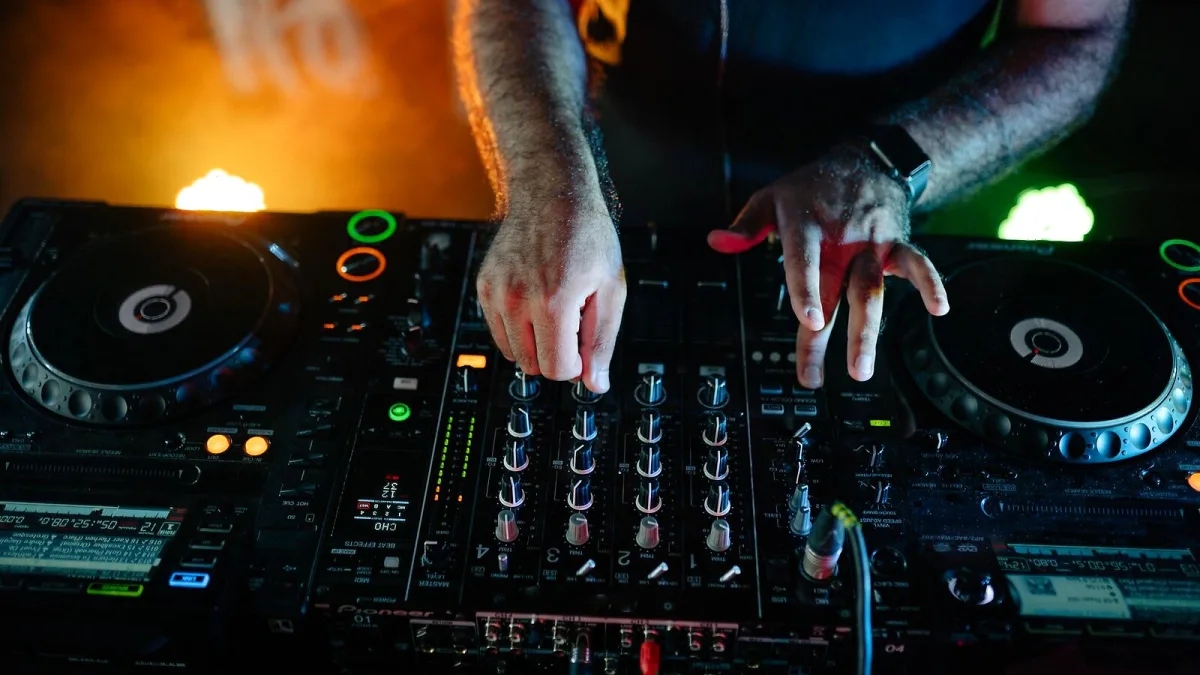
When you walk into a professional DJ booth, you'll notice CDJs are the beating heart of everything. They're not turntables—though many people confuse them with decks—and they're not just CD players either, despite their name. A CDJ is a standalone media player designed specifically for DJs, packed with features that turntables or traditional decks simply don't have. If you've watched a DJ perform and wondered what those sleek black devices with the jog wheels are, you've been watching CDJs at work.
What Is a CDJ?
CDJ stands for Compact Disc Jockey player, a name that dates back to the 1990s. Modern CDJs read digital files from USB drives or SD cards rather than CDs. The name stuck because it's iconic. Think of it as the industry standard for professional DJ performance. A CDJ is a highly specialised media player built with DJing workflows in mind.
The key things that make it different from a regular player: large jog wheels for scratching, colour-coded buttons for instant cueing, pitch faders to speed music up or slow it down, waveform displays showing exactly where you are in a track, and built-in features like hot cues, effects, and loop controls. Everything is designed so a DJ can manipulate music in real time.
CDJs in the Real World
The majority of clubs, festivals, and professional venues worldwide have CDJs installed in their booths. This is why many working DJs learn on them even if they prefer other equipment at home. You might walk into a club anywhere and find the exact same model, which means you can pick up and play immediately.
At home, you might find DJs using turntables, vinyl, or controllers connected to laptops. But if you want to play bigger clubs or festivals, understanding CDJs is genuinely essential.
The Standard Features
Every CDJ has a jog wheel—the large rotating wheel on the right side. You use this for cueing tracks, scratching, or nudging the tempo during performance. Most also have a pitch fader—a vertical slider on the left that lets you increase or decrease tempo for beatmatching.
There's a display screen showing track information and waveforms. Hot cues let you jump instantly to marked points. Effects buttons add reverb, delays, or filters. Loop controls let you isolate and repeat sections. All work together to let a DJ shape music in real time.
Types of CDJ
Pioneer makes the most common models, particularly the CDJ-2000NXS2 and CDJ-3000, which are the current industry standards. You'll find these in perhaps 80 per cent of clubs globally. Roland makes CDJs too, but Pioneer's dominance is remarkable.
Entry-level models are simpler, with fewer effects. Professional club-grade CDJs are built to survive thousands of hours of use and include every feature. Portable models are lighter and more compact than club versions.
Learning to DJ on a CDJ
The learning curve is steeper than a controller connected to a laptop, mainly because everything is physical. You can't pause and think—the booth is running. But this forces better timing and quicker decision-making, making you a stronger performer overall.
Many clubs offer practice sessions. Some DJs get comfortable on controllers first, then graduate to CDJs when ready for bigger venues. There's no shame in that progression—you're learning different tools for the same purpose.
CDJ vs. Turntables vs. Controllers
This is the eternal debate. Turntables give vinyl culture and tactile enjoyment, but they're fragile and require actual records. Controllers are flexible and affordable, but they require a laptop—take your computer away and you've got nothing. CDJs offer consistency, reliability, and access to professional venues worldwide.
The Investment and Getting Started
A single quality CDJ costs several thousand pounds. Most DJs buy pairs since booths typically run two simultaneously. Many people learn on controllers first and only buy CDJs after booking paid gigs.
Renting booth time at clubs where you can practise on actual CDJs is smarter than buying. You get hands-on experience with equipment you'll use professionally without the financial commitment.




Comments