


Brass article
Brass Explained: Features, Types and Tips
What actually makes an instrument brass, how the main families differ, and why bore shape and valves matter more than the metal.

Ask most people what makes a brass instrument “brass” and they will point at the metal. That is only half the story. What really defines the family is the way the sound begins: the player’s lips buzz against a cup-shaped mouthpiece, and that buzz sets the air inside the tubing vibrating. Everything else — the valves, the bell, the polished finish — exists to shape and steer that buzz. This guide walks through how the main brass instruments differ, why they sound the way they do, and how the pieces fit together.
What Actually Makes an Instrument “Brass”?
The term describes a method of sound production, not just a metal. A brass player forms an embouchure — the precise shape and tension of the lips, jaw and facial muscles — and blows through it so the lips vibrate like a pair of tiny reeds. That vibration excites the column of air inside the tubing, and the tubing and bell reinforce the frequencies that reach your ear. Brass alloy is simply a practical, workable, corrosion-resistant material for building that tubing; it is not what makes the sound.
This is also what separates brass instruments from their orchestral neighbours. Woodwinds set air vibrating with a reed or by splitting air across an edge; strings are bowed or plucked; percussion is struck. Brass instruments are unique in relying entirely on the player’s own lips as the vibrating source.
The Main Families, at a Glance
Most brass instruments you will meet in an orchestra, brass band or jazz group fall into five broad groups. Each has its own typical role and character, though a good player can stretch any of them well beyond the stereotype.
| Family | Bore shape | Typical character |
|---|---|---|
| Trumpet & cornet | Cylindrical (trumpet), conical (cornet) | Bright and direct (trumpet); rounder and warmer (cornet) |
| French horn | Largely conical | Broad, blended, capable of great subtlety |
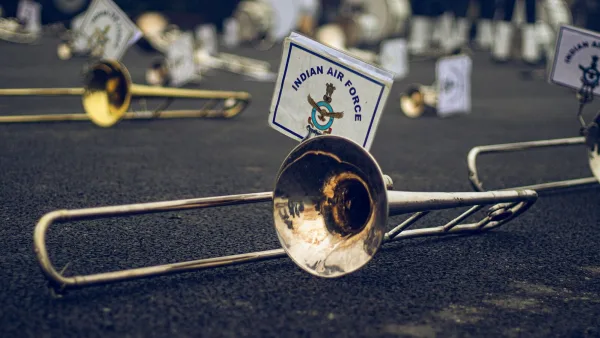
| Trombone | Cylindrical, slide-operated | Powerful, vocal, capable of true legato glissando |
| Euphonium & baritone horn | Conical (euphonium especially) | Rich, singing tone in the middle-low register |
| Tuba & sousaphone | Conical, large-bore | Deep foundation; sousaphone built for marching |
If you are trying to decide which of these suits you, our companion guide to brass for beginners goes into the practical side of that choice.
Cylindrical or Conical? Why the Bore Matters
Look inside the tubing and you will find one of two basic shapes. A cylindrical bore keeps roughly the same internal diameter for most of its length, as on the trumpet and trombone, and tends to give a brighter, more focused sound. A conical bore gradually widens from mouthpiece to bell, as on the cornet, flugelhorn, euphonium and tuba, and tends to give a rounder, darker tone. The French horn is mostly conical too, which is part of why it blends so readily with other sections.
- Mostly cylindrical: trumpet, trombone
- Mostly conical: cornet, flugelhorn, euphonium, tuba, French horn
These are useful generalisations rather than fixed rules — mouthpiece, bell flare and the player’s own approach all leave their mark on the final sound.
How Valves and Slides Change the Note
Left alone, a length of tubing will only sound the notes of its harmonic series — the family of pitches produced by different vibration modes of that particular air column. Early brass instruments without any mechanism were genuinely limited to those notes. Modern instruments solve this in one of two ways.
Piston valves, found on trumpets, cornets, flugelhorns, euphoniums and many tubas, redirect the air through an extra loop of tubing when pressed, instantly lengthening the column and lowering the pitch. Rotary valves do the same job with a turning mechanism rather than a piston, and are the norm on French horns and some tubas. The trombone takes a different route entirely: its slide lengthens the tubing continuously rather than in fixed steps, which is why it alone can glide smoothly between notes.
Mouthpieces: The Small Part With a Big Say
The mouthpiece is easy to overlook, but its cup depth and width shape almost everything about how an instrument feels and sounds. A shallower cup tends to favour a brighter tone and an easier top register; a deeper cup tends to favour a fuller, darker sound but asks for more air and control. There is no single correct choice — the right mouthpiece depends on the instrument, the music being played and the player’s own physiology, which is exactly why it is worth trying more than one before settling on it.
Choosing and Living With a Brass Instrument
Once you know roughly which family appeals, the next questions are practical ones: what to check when buying, what a fair budget actually buys you, and how to keep the instrument in good order. Our complete buyer’s guide covers the checks worth making before you hand over any money, while our look at the best brass for the money breaks down what changes as you move up the price tiers.
Day-to-day care is simpler than it sounds: empty the water key after playing, wipe the exterior, oil piston valves regularly with the correct type of oil, and have a technician handle anything stuck rather than forcing it. If you want the fuller list of what goes wrong when players skip these steps, see our roundup of common brass mistakes.
The Bottom Line
Every brass instrument, from the smallest cornet to the largest tuba, works on the same basic principle: buzzing lips, a resonating column of air, and a bell that sends the result out into the room. Once that clicks, the differences between the families stop looking arbitrary and start looking like sensible engineering choices, each suited to a particular sound and role. Whichever one you end up with, understanding how it makes a note is the surest way to start making better ones.





Comments