


Pan Flute article
Pan Flute for Beginners: A Complete Guide
The pan flute is simpler than it looks. No keys, no finger holes, no mouthpiece—just your breath and intention. Here's how to make your first note and build from there.
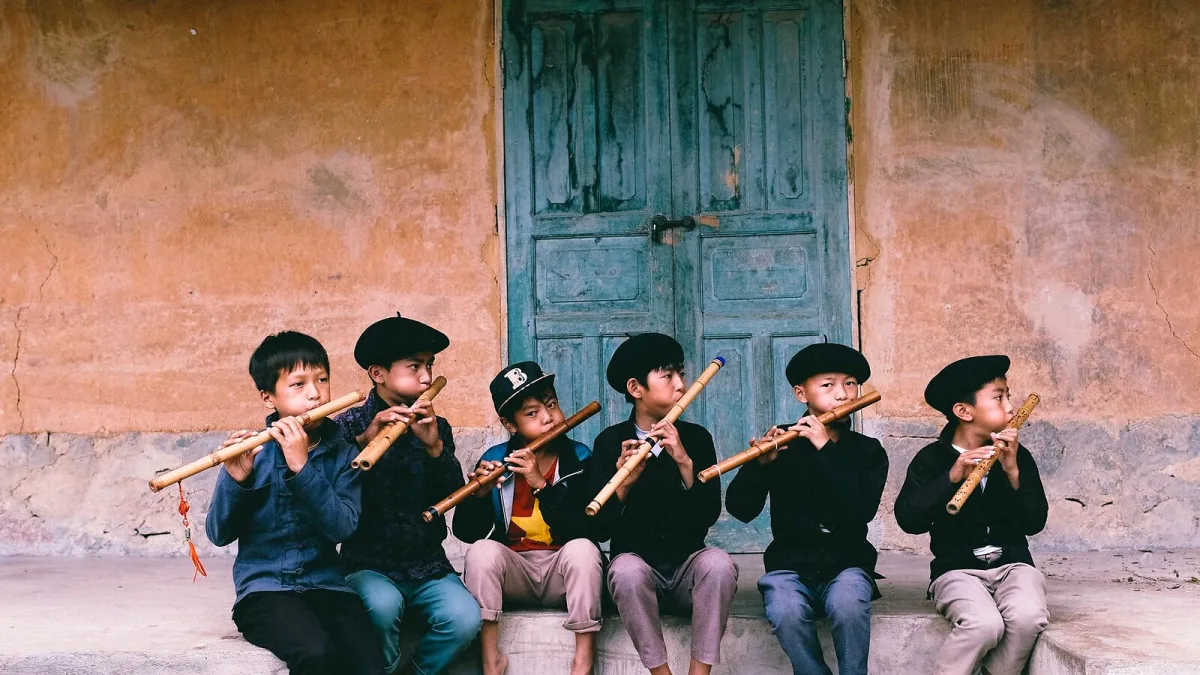
The pan flute looks simpler than most instruments, and in a way, it is. There are no keys to master, no finger holes to navigate, no mouthpiece mechanics to calibrate. Yet many beginners approach the instrument with understandable anxiety: without these intermediaries, how do you actually produce a note? This guide walks you through those first, crucial steps and shows you why the apparent simplicity of the pan flute is actually one of its greatest gifts.
You Don't Need a Music Reading Background
One of the pan flute's most welcoming qualities is this: you can begin making music almost immediately, even if you've never read a note. The instrument works through direct physical control. You're not learning complex fingering patterns or managing mechanical devices. You're learning to shape your breath, position your mouth and move your hands with intention. If you can follow a picture or listen to a recording and imitate it, you can learn the pan flute. Formal music reading is valuable, but it's not a prerequisite.
The First Challenge: Finding Your Embouchure
The trickiest part of learning a pan flute is coaxing out that first clear note. You're not blowing through a mouthpiece or into a reed. You're blowing across the open rim of a tube, much like you'd blow across the top of a bottle to make it whistle. This is called the embouchure.
Here's the practical sequence:
- Hold the pan flute so the open ends of the tubes face upward and slightly toward you.
- Bring your upper lip close to the rim of the first (longest) tube. You're not covering the hole—you're positioning your lip just below it.
- Form a small, focused airstream. Think of it as a thin pencil of air, not a broad gust.
- Blow gently across the edge. You should feel the air split—some going into the tube, some going past it.
- Adjust the angle, distance and intensity until the tube speaks clearly.
This takes patience. You might get a squeak, a gurgle, or nothing at all. That's completely normal. Most beginners need a few practice sessions before a clear note emerges consistently from the pan flute. Don't be discouraged; this is the hardest threshold to cross.
From One Note to Many
Once you've found your embouchure on one tube, the next step is almost embarrassingly straightforward: move your mouth to the next tube. That's it. You're not pressing anything, changing your fingers, or adjusting your technique. You're simply shifting the focus of your airstream sideways.
At first, this feels clumsy. Your mouth wants to stay put, and your brain hasn't yet learned the physical spacing of the pipes. This is where practice becomes your friend. Spend time on simple adjacent-note patterns: play the first tube, then the second, back and forth. Once that feels natural, expand to three consecutive tubes. The pan flute rewards this kind of deliberate, unhurried repetition.
A useful trick: lightly mark the tubes with coloured thread or pencil dots in groups of five. This gives your eye a reference point and helps your mouth learn the layout. Most experienced players eventually remove the markings and play by feel, but they're invaluable scaffolding at the beginning.
Intonation and Pitch Control
One of the delights of the pan flute is that you're not locked into a fixed pitch. By adjusting your embouchure, breath speed and blowing angle, you can bend notes expressively and correct intonation problems. If a note sounds flat, you can sharpen it slightly by blowing faster or adjusting your lip position. This is why the pan flute sounds so vocal and expressive in the hands of skilled players—they're constantly fine-tuning.
For beginners, this is both liberating and slightly tricky. It means you have control and expressiveness built in, but it also means some of your early notes will sound out of tune because you're still finding the exact embouchure for each tube. This is part of learning; it's not a flaw of the instrument.
Finding Your Practice Rhythm
Unlike a piano, where every C is always C, the pan flute demands that you produce each pitch yourself. This means that short, focused practice sessions work better than long, unfocused ones. Twenty minutes of attentive practice, listening carefully to your tone, will teach you more than an hour of half-hearted noodling.
Practise slowly. If you can't play a simple tune at a conversational pace without getting muddled, trying to speed it up will only ingrain sloppy technique. The pan flute respects patience. Play a simple scale up and down, four or five times a day, and you'll feel genuine progress within a week.
Consider Finding a Teacher or Guide
The pan flute's directness is wonderful, but it also means that if you're learning an incorrect embouchure, you'll internalise it quickly. A teacher or experienced player watching you in person can spot problems with breath support, mouth position or hand posture that you'll struggle to fix alone. Even a few lessons—perhaps in person or via video—can prevent months of frustration.
If a teacher isn't available, there are online videos and guides. Choose ones that show slow, clear demonstrations of embouchure and technique. Listen to accomplished pan flute players in the tradition you've chosen (Romanian nai, Andean siku, etc.). Your ear is your teacher too.
Your First Repertoire
Don't start with complex folk melodies or fast passages. Find simple tunes that use an adjacent group of pipes: nursery rhymes, folk melodies with narrow range, or exercises designed for beginner pan flute players. As your accuracy and confidence grow, expand to wider ranges and more demanding pieces. You'll be astonished at how quickly the pan flute becomes an extension of your musical intention.
The Beauty of Slowness
Here is what makes the pan flute perfect for nervous beginners: it invites you to slow down. There's no way to rush learning this instrument. Every note emerges from your own breath, your own embouchure, your own intention. That slowness—that directness—is not a limitation. It's an invitation to listen deeply, to feel the instrument in your hands, and to discover that making music is far simpler than you'd feared. Trust the process, and trust yourself.



Comments