


Pan Flute article
Pan Flute Explained: Features, Types and Tips
The pan flute is a simple yet profound instrument: tubes of graduated length bound together, each producing a single pitch. Across millennia and continents, regional traditions have shaped it into the Romanian nai, the Andean siku, the Chinese paixiao and more.
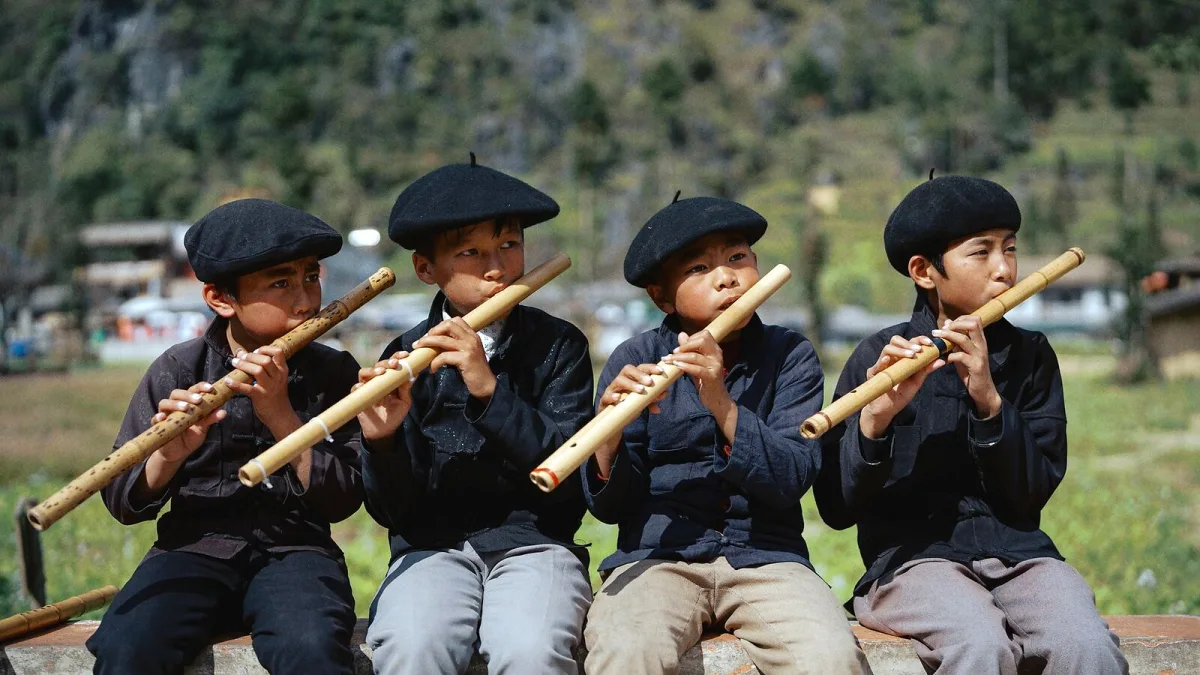
A pan flute is among the most ancient of wind instruments, yet its essential design—a bundled set of tubes of graduated length—remains unchanged across millennia and continents. The instrument speaks directly to something elemental in human music-making: the discovery that when air passes across an open tube, sound emerges. In this article, we explore what a pan flute actually is, how it produces its distinctive sound, and the remarkable diversity of regional traditions that share this family name.
What is a Pan Flute?
The pan flute is an aerophone—a wind instrument that produces sound through vibrating air. Unlike a recorder or transverse flute, which have finger holes and a mouthpiece, the pan flute relies entirely on lateral movement. Each tube, normally closed at one end and open at the other, corresponds to a single pitch. To play a melody, you move your mouth sideways from pipe to pipe, directing a focused airstream across the open rim of each tube in turn. The name itself recalls Greek mythology and the god Pan, though similar instruments emerged independently in cultures across Africa, Asia, the Andes and Oceania.
Most modern pan flutes contain between 20 and 25 pipes, though this varies considerably. Bamboo, cane, and wood remain the most traditional materials; contemporary makers also work with plastic and composite materials. A typical pan flute is tuned to a major key—most commonly C or G—though you will encounter regional exceptions that follow different scales and modes.
How the Pan Flute Works: The Physics Behind the Sound
To understand how a pan flute produces its characteristic breathy, almost vocal tone, you need to grasp a simple acoustic principle: tube length determines pitch. A longer pipe resonates at a lower frequency and sounds a lower note; a shorter pipe resonates faster and produces a higher note. This is why pan flutes are built as a graduated sequence, with tubes arranged from longest to shortest.
When you blow across the open end of a tube, your airstream doesn't pass through a mouthpiece or vibrate a reed. Instead, the air jet itself sets the column of air inside the tube into vibration. The player controls pitch selection entirely through physical movement—shifting the focus of the airstream from one tube to another. This makes the pan flute a remarkably direct instrument: there are no valves to press, no keys to operate, no fingerings to memorise in the conventional sense.
Tone quality and intonation also depend on factors beyond the tube's inherent length. The player's embouchure—the shape and position of the lips and mouth—affects how the airstream couples to each tube. Breath speed, air pressure, and the angle of approach all influence the final sound. A skilled player can bend pitches expressively, an ability particularly valued in Romanian and Andean traditions.
Regional Pan Flute Traditions
One of the most important lessons about the pan flute is that "pan flute" is not a single standardised instrument. Rather, it is a broad family of instruments, each with its own construction, tuning system, playing technique and cultural context. These regional forms are not interchangeable; each belongs to a distinct musical tradition.
| Tradition | Common Names | Distinguishing Features |
|---|---|---|
| Romania | Nai | Typically curved or slightly angled; played in solo art music and folk contexts |
| Andes (Peru, Bolivia, Ecuador) | Siku, zampoña, antara | Often made from cane; siku and zampoña commonly feature two offset rows; frequently part of ensemble traditions |
| Ancient Greece | Syrinx | Mythological and historical ancestor associated with pastoral music |
| China | Paixiao | Used in court music and ceremonial contexts; distinct tuning and scale system |
| Oceania and Africa | Various regional names | Diverse designs reflecting local materials, scales and ensemble practices |
The Romanian nai, which features a gentle curve and is traditionally played solo, has become the dominant form in modern international consciousness, largely through the virtuoso recordings of Gheorghe Zamfir. His interpretations brought the pan flute into European popular music, film soundtracks and easy-listening contexts from the 1970s onwards. Yet Zamfir's prominence has sometimes led Western listeners to assume that "pan flute" means primarily the Romanian style. This is an incomplete picture. The Andean siku and zampoña, which often involve interlocking or hocketed ensemble playing, represent a fundamentally different approach. The Chinese paixiao, with its distinct scale and ceremonial role, offers yet another perspective. Each pan flute tradition carries its own musical logic.
Building and Materials
Pan flutes are constructed from tubes bound together, typically in a single row or "raft" arrangement, though some traditions employ bundled or curved layouts. The choice of material affects both the instrument's tone and its durability. Bamboo and cane, particularly river cane, offer warmth and a characteristic softness favoured in many folk and world music settings. Wood—often rosewood, beech or other hardwoods—provides stability and is common in concert instruments. Plastic and synthetic materials offer affordability and climate resistance, making them popular for student and beginner models.
The tubes themselves must be carefully cut and tuned. Clean, even cuts at the closed end are essential; bore consistency from tube to tube affects tone response and ease of playing. Professional instrument makers often tune their pan flutes to A=440 Hz, the international pitch standard, though this is not universal in traditional settings. The bindings that hold the tubes together must be secure and stable, as loose joints will compromise both tone and intonation.
The Pan Flute in Modern Music
Beyond its traditional contexts, the pan flute has found roles across a surprising range of modern genres. Classical crossover ensembles use it for its distinctive voice and ensemble colour. World music practitioners draw on Andean traditions, Balkan influences and other folk lineages. Film composers favour the pan flute for its expressive, almost vocal quality, which works well in adventure soundtracks, fantasy narratives and intimate scene-setting. The new-age and relaxation music market has also embraced the instrument, though such usage sometimes obscures the pan flute's rich cultural heritage beneath a veil of generic "Eastern" aesthetics.
This breadth of application reflects one of the pan flute's greatest strengths: its voice is compelling precisely because it is not instantly familiar to most Western listeners. There is something plaintive, airy and human-like about the sound that can move an audience even when they cannot name the instrument they are hearing.
Getting Started with a Pan Flute
If you are drawn to the pan flute, the first step is to decide which tradition appeals to you most. A Romanian nai will feel different in your hands and mouth than an Andean siku. Each has its own learning curve, tuning system and repertoire. Once you have chosen a direction, seek out a respectably made instrument in the key and range that suits the music you wish to play. A student-level pan flute in C or G, well-tuned and durably constructed, is a sensible starting point. Listen to accomplished players in your chosen tradition, and if possible, find a teacher or guide who understands that particular style.
The pan flute rewards patience and attentive listening. Learning to coax a clean, centred tone from each tube takes time. Developing accuracy and speed in moving between pipes is a matter of deliberate, mindful practice. Yet these challenges are precisely what make the instrument worthwhile: every improvement in your playing is your own direct doing, unmediated by keys or mechanisms.
Conclusion
The pan flute stands apart in the world of wind instruments. Its simplicity—tubes of different lengths, nothing more—masks profound possibilities. Whether you explore the curved elegance of the Romanian nai, the ensemble traditions of the Andes, or the ceremonial contexts of East Asia, you are connecting with music-making traditions that stretch back centuries and across continents. The pan flute, in all its regional varieties, reminds us that music is fundamentally about breath, intention and the willingness to listen carefully to what the instrument wants to tell you.






Comments