


Oboe Instrument article
Oboe Instrument Explained: Features, Types and Tips
From its French origins to the double reed that gives it that unmistakable voice, here's how the oboe actually works and where its family fits in.
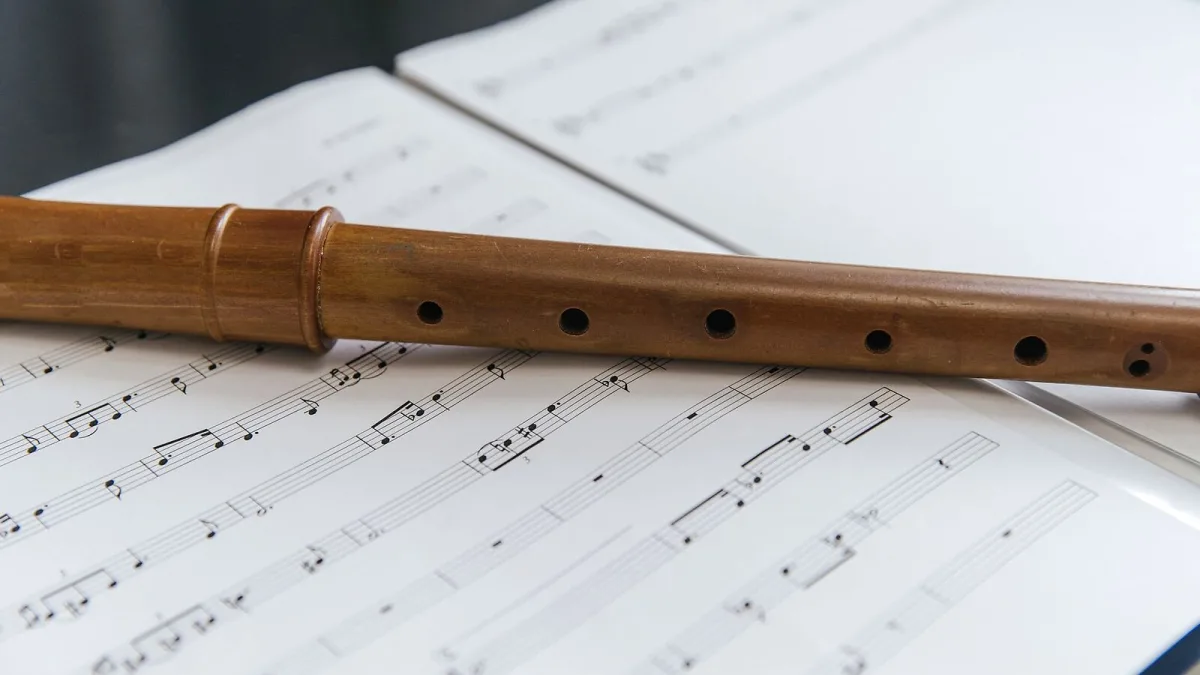
There's a particular sound that cuts through an orchestra before you've even worked out where it's coming from — reedy, focused, faintly plaintive. That's the oboe, and once you know its voice you'll hear it everywhere, from film scores to folk-tinged chamber pieces. This is the long version of the story: what it actually is, how its sound is made, and where its curious family of relatives fits in.
A Voice with a Long Memory
The modern oboe grew out of earlier double-reed traditions, most directly the French hautbois and, further back, the shawm. Its story as a recognisable orchestral instrument is usually traced to France in the mid-17th century, with one commonly cited account placing its orchestral debut around 1657. Its early development is often linked to French court musicians including Jacques Hotteterre and Michel Philidor, though it's fairer to think of the oboe's evolution as a gradual, collaborative refinement than the work of any single inventor.
The Baroque oboe had a simpler mechanism than the one we play now. Over the eighteenth and nineteenth centuries, makers steadily expanded the keywork and refined the bore, and by the early twentieth century the modern "conservatory system" had settled into something close to what you'd find in a shop today — a complex arrangement of, typically, fifteen or more principal keys, depending on how you count auxiliary mechanisms.
How the Oboe's Sound Is Actually Made
Unlike a clarinet or saxophone, which use a single reed against a mouthpiece, the oboe is a double-reed instrument: two small, carefully shaped pieces of cane, tied to a narrow metal staple, vibrating against each other when the player blows a controlled stream of air between them. That vibration excites the air inside a conical bore — a tube that gradually widens from the reed towards the bell — and it's this shape, as much as the reed itself, that gives it its penetrating, focused projection.
The reed sits only shallowly in the mouth. A sealed but relaxed embouchure, steady breath support and a good deal of patient practice do the real work; biting or clamping down usually produces a pinched, unstable tone from the oboe rather than a clearer one.
The Oboe in Three Parts
- Upper joint — holds the reed socket and much of the upper key mechanism.
- Lower joint — carries the lower finger holes and keywork.
- Bell — the flared lower opening that shapes projection and response.
Most professional oboes are made from a dense hardwood, typically grenadilla, prized for its response and tonal character. Plastic, resin and composite oboes exist too, and they're considerably less troubled by humidity swings — a genuine practical advantage, whatever romance the wood carries.
The Oboe's Wider Family
The oboe has several relatives, built at different pitches for different colours:
| Instrument | Pitch | Character |
|---|---|---|
| Oboe | In C | Standard soprano voice; bright and penetrating |
| Oboe d'amore | In A | Lower, generally warmer; associated with Baroque music |
| English horn (cor anglais) | In F | Larger, lower, with a bulb-shaped bell and curved bocal |
| Bass oboe | Sounds an octave lower | Rare, specialist low voice |
| Heckelphone | Sounds an octave lower | Large bass relative with distinctive build |
Despite the name, an English horn isn't a horn at all in the brass sense — it's simply an older, slightly misleading label for a larger member of the oboe family, and "cor anglais" is the name you'll more often hear used interchangeably.
Why the Orchestra Tunes to the Oboe
Walk into most orchestral rehearsals and you'll hear the same ritual: the oboist sounds a single A, and the rest of the ensemble tunes around it. That's down to the oboe's stable, cutting projection — a pitch that's simply easy for a whole orchestra to hear and match, even from the back desk of the second violins. No other woodwind in the section carries quite that clarity of pitch.
Wood or Synthetic Oboe?
There's no single right answer here, and be wary of anyone who insists otherwise. Wooden oboes are often chosen for response and tonal nuance; synthetic and composite oboes resist cracking from temperature and humidity changes, which matters enormously for school use, outdoor gigs or unpredictable climates. Any claim that one material makes for a universally "better" instrument is closer to personal preference and marketing than settled fact.
A Demanding but Rewarding Instrument
Ask any oboist and they'll tell you the same thing: this is not the easiest woodwind to pick up, nor the easiest to keep in good adjustment. Reeds need regular attention, the mechanism needs periodic professional servicing, and intonation asks more of the player's ear than on many other instruments. None of that is meant to discourage — it simply explains why the oboe's voice carries such a distinct, hard-won character wherever it turns up, whether that's a Mozart concerto, a wind band arrangement, or a few plaintive bars in a film score.
Where You'll Hear It
Listen out and its voice turns up in far more places than the concert hall. Baroque concertos and cantatas lean on it for lyrical solo lines; Classical and Romantic symphonies use it to state melodies the strings then take up; wind bands and opera orchestras rely on it for colour that nothing else in the section quite supplies. Film composers reach for the same reedy, slightly melancholy timbre whenever a scene needs a pastoral or wistful edge, and it turns up more often in jazz-adjacent and contemporary chamber writing than most casual listeners realise. Once you know the sound, you'll start noticing it everywhere.
The Bottom Line
The oboe is a demanding instrument to learn and, by most accounts, a demanding one to keep in good adjustment — but that reedy, singing tone is unmistakable once you've heard it, and there's nothing quite like it in the rest of the woodwind section. If you're weighing up buying one, our complete buyer's guide walks through the practical choices, and the best options for the money breaks things down by tier. And if you're just starting out, our beginner's guide takes things a good deal more gently.




Comments