


Baritone Saxophone article
Baritone Saxophone Explained: Features, Types and Tips
The full explainer on the baritone saxophone: why it's built the way it is, how its transposition works, and where it fits across jazz, funk and classical music.
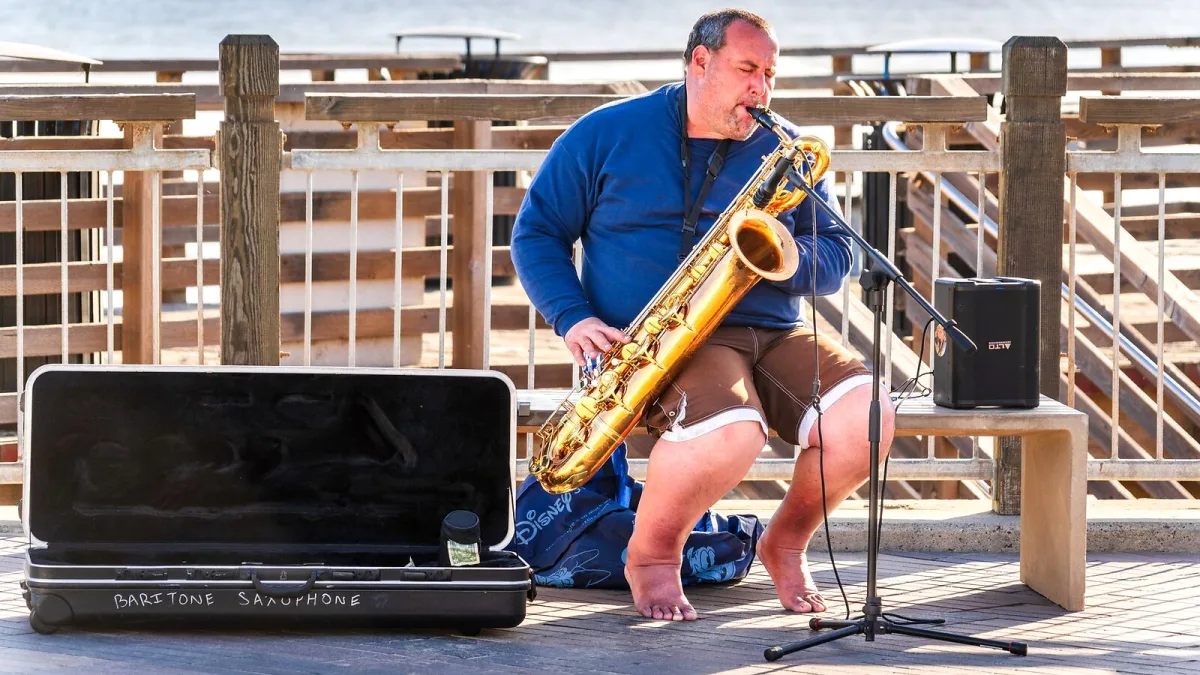
Ask most people to picture a saxophone and they'll think of the alto or tenor. The baritone saxophone rarely gets top billing, which is a shame, because it's the instrument doing a huge amount of the quiet, essential work in big bands, funk horn sections and film scores alike. Here's what it actually is, how it's built, and why it sounds the way it does.
What Is a Baritone Saxophone?
The baritone saxophone — the "bari sax" to most players — is the largest of the four saxophones you'll commonly encounter, sitting below the soprano, alto and tenor. It's pitched in E♭, an octave below the alto and a fifth below the tenor, which gives it that deep, powerful, harmonically rich voice you feel as much as hear. Adolphe Sax developed the whole saxophone family in the 1840s, with the baritone generally dated to 1846, so this is very much part of the instrument's original design, not a later add-on.
Why It Looks the Way It Does
The size is the whole story here. To reach such a low pitch, the instrument needs a very long tube, so that tube gets folded into the distinctive U-shaped bows and topped with a curled "pigtail" neck to keep the overall footprint manageable. Add a conical brass body that gradually widens toward a large flared bell, a single-reed mouthpiece noticeably bigger than an alto's, and you've got an instrument that's heavier, bulkier and altogether more physically demanding than its smaller siblings.
How the Pitch Actually Works
Like every saxophone, it's a transposing instrument, but the transposition is more dramatic here than on alto or tenor: a written middle C sounds as concert E♭, a full octave plus a major sixth lower than written. That's what lets a player use familiar saxophone fingering while the instrument itself produces a genuinely low register. Most baritone parts are still written in treble clef, with the transposition built in rather than left to the player to calculate on the fly.
Types and Key Features Worth Knowing
Not every baritone saxophone is built the same. A few features worth understanding before you go any further:
- Low B♭ versus low A — most instruments reach down to low B♭, but some modern models add a low-A extension, useful in certain classical and commercial settings.
- High F♯ key — common on contemporary instruments, extending the upper end of the standard range.
- Student, intermediate and professional builds — these differ in keywork refinement, intonation stability and overall build quality rather than in the fundamental design.
Where the Baritone Saxophone Actually Gets Used
Its role shifts noticeably depending on the setting:
| Setting | Typical role |
|---|---|
| Big band / jazz | Bass foundation, sectional weight, occasional solo voice |
| Concert band | Low saxophone voice reinforcing brass and woodwind harmony |
| Funk and soul | Aggressive articulation, riffs, strong low-register punch |
| Marching band | Strong projection with an emphasis on secure physical support |
| Classical repertoire | Blended, controlled tone with careful intonation |
Jazz history gave the instrument some genuine star turns, too — Harry Carney's decades with the Duke Ellington Orchestra proved it could carry real weight in an arrangement, while Gerry Mulligan later showed it could front a small group as a genuinely agile lead voice, a world away from its usual supporting role.
What Makes It Physically Different to Play
Compared with an alto or tenor, this instrument asks more of you: more air to fill that long tube, a more relaxed and open embouchure to speak clearly in the low register, and a proper harness or strap system so the weight doesn't drag on your shoulders and neck over a long session. None of that should put you off — it's manageable with the right setup — but it's worth knowing going in. If you're specifically shopping for one, our complete buyer's guide covers exactly what to check, and if you're picking one up for the first time, our beginner's guide walks through getting started properly.
The Bottom Line
It's a genuine original from Adolphe Sax's 1840s family, built specifically to carry the low end of the saxophone choir with real character rather than just volume. Once you understand its size, its transposition and the physical demands it makes, the rest of the instrument — from big band bass lines to funk riffs to the occasional show-stealing solo — starts to make a lot more sense.




Comments