


Singing Mic article
Singing Mic for Beginners: A Complete Guide
You don't need every spec on the box to get a decent result from your first singing mic. Here's what actually matters when you're starting out.
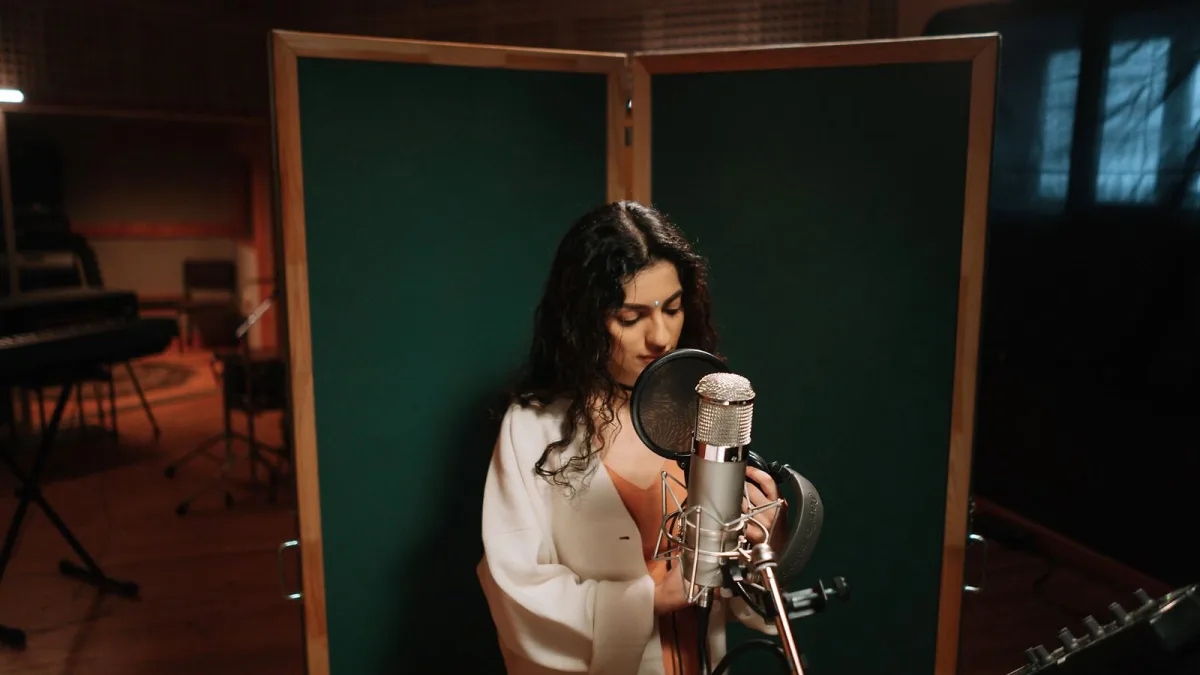
If you're picking up your first singing mic, the good news is you don't need to understand every spec on the box to get a decent result. You need to understand a handful of basics, hold the thing correctly, and practise a bit of technique. Here's what actually matters when you're starting out.
Start With One Simple Choice of Singing Mic: Dynamic
For almost every beginner, a dynamic cardioid microphone is the sensible first purchase. It's rugged, it handles loud singing without distorting, it doesn't need any extra phantom power, and it copes well with an untreated room or a slightly enthusiastic performance. Save condensers and their extra sensitivity for later, once you know more about how and where you'll actually be using the mic.
How to Actually Hold It
This trips up more beginners than anything else: hold your singing mic by its body, never cupped over the grille. Covering the grille changes how the microphone picks up sound and makes feedback far more likely on a PA system. Point it towards your mouth at a fairly consistent angle and distance — a rough starting point is one to three inches away for normal singing, backing off a little when you belt a loud note.
Understanding Why Distance Changes Your Tone
Move closer to most microphones and you'll notice the bass gets fuller — that's called the proximity effect, and singers use it on purpose. Lean in slightly during a soft, intimate line for extra warmth, then back off a touch during a powerful chorus so the mic doesn't overload and the bass doesn't turn muddy. It takes a little practice to do this smoothly rather than obviously, but it's genuinely one of the most useful techniques a new singer can learn.
Dealing With Plosives and "S" Sounds
Hard "P" and "B" sounds send a burst of air straight at the capsule, which can cause an unpleasant pop through the speakers or recording. Angling the microphone slightly off to one side of your mouth, rather than straight on, softens this considerably without losing much level. In the studio, a pop filter helps too, though it's a support for good technique rather than a replacement for it.
A Beginner's Guide to Not Causing Feedback
On a PA system, feedback happens when sound from the speakers gets back into the microphone and loops. As a beginner, the simplest habits that help are: keep the mic reasonably close to your mouth rather than far away, never point it directly at a stage monitor or speaker, and don't crank your own level up just because you can't hear yourself — ask for more monitor instead. These few habits solve most early feedback problems without you needing to understand the deeper acoustics behind them yet.
You Don't Need to Buy Much Else Yet
A cable, a stand or clip, and the singing mic itself is genuinely enough to get started, whether that's practising at home or singing with a band. Don't feel pressured into a wireless system, a fancy interface or a second microphone before you've spent real time with the first one. Our complete buyer's guide is there for when you're ready to think about upgrading, and our full guide to how vocal microphones work fills in more of the technical background whenever you're curious.
Be Patient With the Basics
Good mic technique is a skill like any other, and it develops with regular singing, not by reading about it. Give yourself time to get comfortable holding the mic properly and managing your distance before worrying about anything more advanced. And before you buy your first one, it's worth a quick look at our list of common mistakes buyers make — small things that are easy to avoid once you know about them.




Comments