


Audio Technica Headphones roundup
Audio Technica Headphones: A Complete Buyer's Guide
A practical, no-nonsense walkthrough of what to check before buying Audio-Technica headphones — from impedance to comfort to warranty.
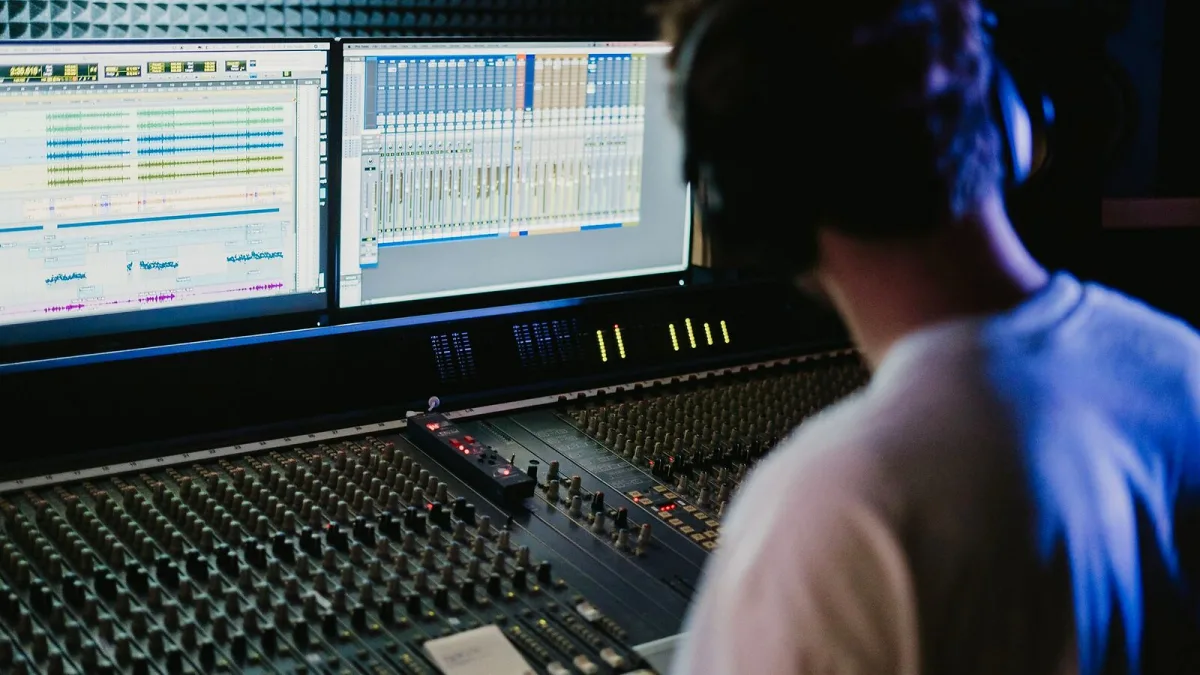
Right, let's sort this out properly. Buying Audio-Technica headphones isn't complicated once you know what you're actually buying for — the range is wide, but the decisions that matter come down to a handful of practical questions. Work through them in order and you'll land on the right pair without paying for anything you don't need.
Start with the job, not the model number
Before you look at a single spec sheet, answer this: will these headphones be near a live microphone, or not? That single question decides your first fork in the road.
- Yes, there's a mic involved (tracking vocals, an instrument, a podcast) — you need a sealed, closed-back design so sound doesn't leak into the recording.
- No, you're mixing, editing or just listening — an open-back design can work, and often sounds more natural in a quiet room.
Audio-Technica splits its studio range along exactly that line: the M-Series is closed-back, the R-Series (launched at NAMM 2025) is open-back. Get this decision right first and half your shortlist disappears.
The specs that actually matter
Manufacturers print a lot of numbers. Here's what to actually weigh up when you're comparing Audio-Technica headphones on paper:
| Spec | What it tells you | What to check |
|---|---|---|
| Impedance | How much power is needed to drive the headphone | 38–47 ohms across the M-Series is easy for laptops and interfaces; higher-impedance gear may want a dedicated amp |
| Sensitivity | How loud the headphone gets for a given signal | Higher figures (mid-90s dB and up) play nicely with portable sources |
| Frequency response | The manufacturer's stated operating range | A wider printed range isn't proof of better accuracy — it's a starting point, not a verdict |
| Weight | Comfort over long sessions | Sub-300 g models are easier on the neck across a full day's work |
| Cable setup | Practicality and repairability | Detachable cables (the M50x ships with three) let you replace a damaged lead cheaply |
Don't get talked into thinking a bigger number always wins. Impedance and frequency response describe the headphone's design, not a guarantee of how it will actually sound to you — that's still down to fit, driver quality and your own ears.
Wired or wireless?
If you're buying for critical work — mixing, editing, tracking — stick with a wired pair. Wireless models like the ATH-M50xBT2 are genuinely good for what they're built for (commuting, casual listening, very long battery life), but Bluetooth introduces compression and latency that you don't want anywhere near a serious mixing decision.
Comfort is not an afterthought
You can have the best specs on paper and still hate a pair of Audio-Technica headphones after forty minutes if the fit is wrong. Clamp force, pad depth and headband pressure vary between models, and reviewers have flagged that even well-regarded models like the R50x won't suit every head shape despite their open-back design. If you can, try before you buy, or buy from a retailer with a fair returns policy.
Budget tiers worth knowing
- Entry point: the ATH-M20x — a 40 mm closed-back design with a fixed cable, built as a first proper studio pair rather than a lifetime purchase.
- Mid-range workhorse: the ATH-M40x or ATH-M50x — the M50x in particular is the model most engineers reach for first, thanks to its detachable-cable flexibility.
- Open-back entry: the ATH-R30x, which began reaching shops through 2026 as the accessible end of the new R-Series.
- Serious mixing and mastering: the ATH-R50x or the flagship ATH-R70xa, aimed at transparent, detailed reproduction in a treated room.
What's in the box, and what isn't
Check exactly what ships with the model you're considering — cable count and length, a carry pouch, and whether pads are user-replaceable down the line. The M50x's three-cable setup (short straight, long straight, coiled) is a genuinely useful inclusion if you move between a desk and a bag often; cheaper models typically fix you to one cable length.
Buy from somewhere that'll back the warranty
Stick to authorised UK retailers or Audio-Technica directly. Grey-market imports can be cheaper but often carry a shorter or unenforceable warranty, and if a driver fails or a cable connector wears out, you'll want a straightforward replacement path rather than an argument.
The bottom line
Buying Audio-Technica headphones well comes down to matching the design — closed or open-back — to what you'll actually be doing with them, checking impedance and comfort rather than chasing the widest frequency number on the box, and buying from somewhere that stands behind the warranty. For a wider look at the whole range, our overview guide is a good starting point, and if you want specific picks by budget, see our best-for-the-money round-up. New to all this? Our beginner's guide starts a step further back.




Comments