


Audio Technica Headphones article
A Guide to Audio Technica Headphones
From the closed-back M-Series to the new open-back R-Series, here's what Audio-Technica actually makes — and which pair suits which job.
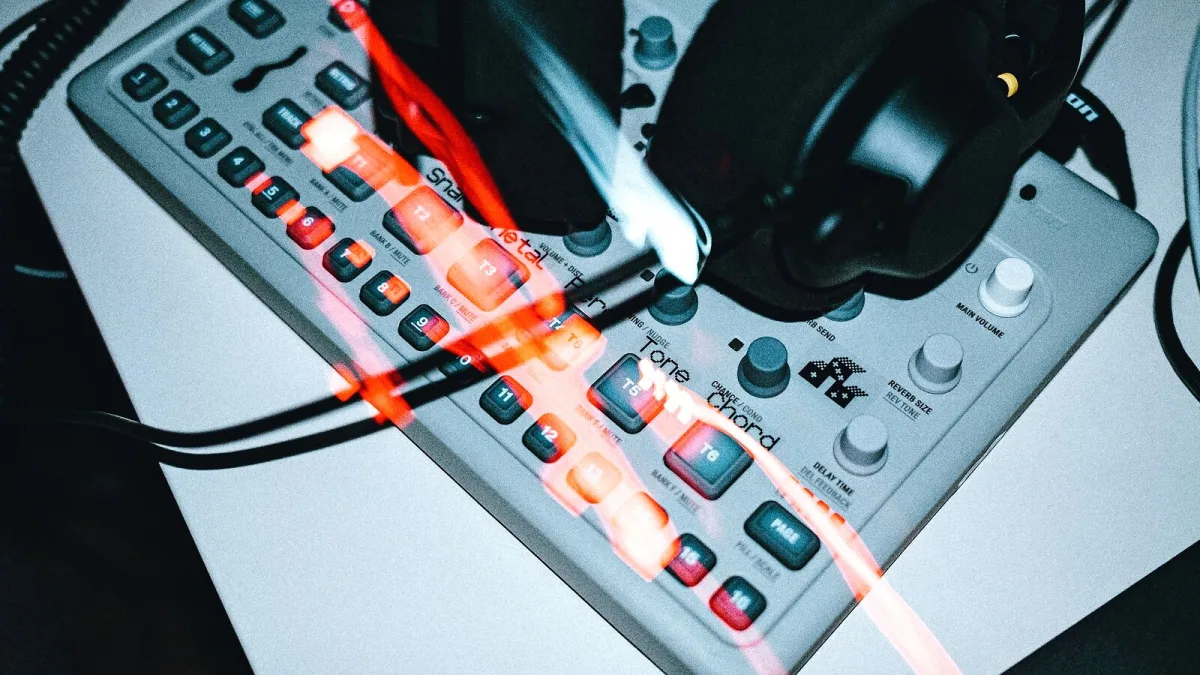
Audio-Technica headphones turn up everywhere in music-making: on the heads of home-recording beginners, in the racks of professional mix rooms, and increasingly as wireless everyday listening cans too. That spread is exactly why the range can feel confusing from the outside. This guide walks through what the Japanese manufacturer actually makes, how the two main headphone families differ, and which model suits which job — no marketing fluff, just the facts.
Two families, two different jobs
Almost everything Audio-Technica builds for studio use sits in one of two lines. The M-Series is closed-back — the earcups are sealed, so sound doesn't leak in or out much. The newer R-Series is open-back, meaning the rear of the earcup is vented and air moves through it. That single design choice shapes almost everything else about how a pair behaves.
Closed-back Audio-Technica headphones are the ones you'll see on tracking sessions, DJ booths and commutes, because isolation matters when there's a microphone nearby or a train carriage full of strangers. Open-back models trade that isolation for a more spacious, less boxed-in sound, which is why engineers reach for them at the mixing and mastering stage, in a quiet room where leakage isn't a problem.
The M-Series: the closed-back mainstay
The M-Series is where most people meet Audio-Technica headphones for the first time, and the ATH-M50x is the model that made the range's reputation. It runs 45 mm drivers at a low 38-ohm impedance, quotes a 15 Hz–28 kHz frequency response, weighs 285 g and ships with three swappable cables — short straight, long straight and coiled — so it folds neatly into a gig bag or a desk setup.
| Model | Type | Driver | Impedance | Typical use |
|---|---|---|---|---|
| ATH-M20x | Closed-back | 40 mm | 47 ohms | First studio pair, basic home recording |
| ATH-M40x | Closed-back | 40 mm | 35 ohms | General studio monitoring, tracking |
| ATH-M50x | Closed-back | 45 mm | 38 ohms | All-purpose monitoring, cable flexibility |
| ATH-M50xBT2 | Closed-back, wireless | 45 mm | — | Commuting, casual listening on the move |
The M20x is the entry point: a fixed 3 m cable and a slightly narrower published range make it a sensible first pair rather than a long-term studio centrepiece. The M50xBT2 wireless version keeps the familiar M50x sound signature but adds Bluetooth and, per RTINGS' testing, well over 60 hours of battery life — genuinely useful if your listening happens as much on the bus as at the desk.
The R-Series: open-back and built for critical listening
Audio-Technica introduced the R-Series at the 2025 NAMM Show, and it's the clearest signal yet that the brand wanted a proper open-back reference line to sit alongside the M-Series. Three models cover the range: the ATH-R30x at the accessible end (it began reaching shops in 2026 after being previewed at NAMM), the mid-tier ATH-R50x, and the flagship ATH-R70xa.
Audio-Technica pitches the R70xa — a 199 g headphone with a quoted 5 Hz–40 kHz range — at mixing, monitoring, dialogue editing, Foley and game-sound work, describing it as offering "transparent reproduction of every detail in the mix." That's a manufacturer's own framing rather than an independent verdict, so it's worth treating as a starting point rather than gospel; some reviewers, including SoundGuys, have flagged that the R50x's fit won't suit every head shape despite its open-back positioning.
A wider published frequency range doesn't automatically mean a more accurate or better-sounding pair of Audio-Technica headphones — it's simply the manufacturer's stated operating window, not a neutrality guarantee. Numbers on a spec sheet are a starting point for comparison, never the whole story.
Closed-back versus open-back, side by side
- Isolation: closed-back seals sound in and out; open-back leaks both ways.
- Feel: open-back tends to sound more spacious and less "boxed"; closed-back can feel more contained but travels anywhere.
- Best environment: closed-back suits noisy rooms and anywhere a mic is live nearby; open-back wants a quiet space to itself.
- Portability: closed-back wins for buses, trains and busy studios; open-back is a stay-at-home tool.
Beyond the studio lines
Not every pair Audio-Technica makes is aimed at engineers. The ATH-WP900SE, a limited-edition portable wooden headphone with a three-tone sunburst finish borrowed from guitar aesthetics, announced in March 2026, shows the brand's audiophile and lifestyle side — built for enjoyment rather than critical monitoring, and none the worse for it.
Choosing by the job in hand
Rather than picking by price alone, it helps to start from what you'll actually be doing:
- Basic home recording on a budget — ATH-M20x.
- General studio monitoring and tracking — ATH-M40x or ATH-M50x.
- One closed-back pair for everything, including gigging — ATH-M50x.
- Commuting and casual wireless listening — ATH-M50xBT2.
- Mixing in a treated, quiet room — ATH-R30x, ATH-R50x or ATH-R70xa.
- Enjoyment-first portable listening — ATH-WP900 or the WP900SE.
If you're weighing up which model to actually buy, our complete buyer's guide goes through specs and pitfalls in more depth, and our round-up of the best options for the money breaks the range down by budget tier.
The bottom line
Audio-Technica headphones cover an unusually wide brief: closed-back workhorses for tracking and travel, open-back references for mixing in a quiet room, and wooden, style-led models for pure listening enjoyment. No single pair does every job brilliantly, so match the design — closed or open — to the room and the task first, then let budget narrow things down. If you're just starting out, our beginner's guide is the gentler place to start, and it's worth reading through some common buying mistakes before you commit to a pair.




Comments